
How Can You Choose the Right Conveyor Pizza Oven Without Wasting Money?
Choosing a commercial conveyor pizza oven sounds simple until inconsistent baking, excessive energy costs, slow production, and frequent maintenance begin affecting daily operations. Many restaurant owners purchase equipment based only on price, only to discover that poor airflow, unstable temperature control, or undersized conveyor systems reduce food quality and customer satisfaction. These problems become even more serious during peak business hours when every minute matters. The good news is that selecting the right oven becomes much easier when you compare heating technology, production capacity, construction materials, energy efficiency, and long-term service support. Whether buying a new unit or evaluating used pizza conveyor ovens, understanding these technical factors helps reduce operating costs while ensuring consistent pizza quality and higher kitchen productivity.
What Is the Best Way to Select a Conveyor Pizza Oven?
The best commercial conveyor pizza oven combines precise temperature control, high-quality stainless steel construction, suitable production capacity, excellent energy efficiency, and reliable after-sales support. As an experienced Manufacturer and Supplier, our company also provides flexible OEM and ODM solutions to meet different commercial kitchen requirements worldwide.
In the following sections, we will explain the key engineering principles behind conveyor pizza ovens, compare important technical specifications, and answer the most common buyer questions to help you choose equipment that delivers reliable performance for years.
Technical Guide to Choosing a Commercial Conveyor Pizza Oven
What are common pizza oven problems?
Many operational problems originate from incorrect equipment selection rather than poor operation. Understanding these issues before purchasing can significantly reduce maintenance costs and production interruptions.
- Uneven baking caused by poor heat circulation or inaccurate thermostat calibration.
- Temperature fluctuations resulting from low-quality heating elements or insufficient insulation.
- Conveyor belt tracking issues leading to inconsistent cooking results.
- Excessive energy consumption caused by inadequate thermal insulation.
- Difficult cleaning because of complicated internal structures or poor belt design.
- Frequent downtime due to low-quality motors or electronic control systems.
Professional buyers should prioritize equipment manufactured from food-grade 304 stainless steel, equipped with independent upper and lower heat control, and designed with removable conveyor belts for easier maintenance. High-quality insulation materials also help maintain stable chamber temperatures while reducing energy loss.
| Common Problem | Main Cause | Recommended Solution |
|---|---|---|
| Uneven pizza color | Poor airflow design | Balanced forced-air circulation |
| Long recovery time | Weak heating system | High-efficiency heating elements |
| Frequent maintenance | Low-quality drive motor | Industrial-grade conveyor motor |
| High electricity or gas bills | Insufficient insulation | Multi-layer thermal insulation |
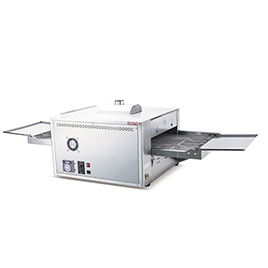
Are conveyor pizza ovens energy efficient?
Modern commercial conveyor pizza oven technology has improved significantly in energy efficiency compared with older generations. Manufacturers now optimize heating chambers through better insulation, precise airflow management, and intelligent electronic controllers.
Several design factors directly influence operating costs:
- Double-layer insulation minimizes heat loss.
- PID digital temperature controllers improve heating accuracy.
- Variable conveyor speed adjustment reduces unnecessary energy use.
- Independent heating zones allow partial-load operation.
- High-density ceramic insulation stores heat efficiently.
Both electric and gas conveyor pizza ovens offer advantages depending on local utility prices. Electric models provide highly accurate temperature control and easier installation, while gas models often deliver lower operating costs in high-volume production environments.
When comparing new equipment with used pizza conveyor ovens, buyers should carefully evaluate insulation condition, burner efficiency, electrical components, and conveyor motor lifespan. Lower purchase prices may result in significantly higher long-term operating expenses if energy efficiency has deteriorated.
| Specification | Electric Model | Gas Model |
|---|---|---|
| Temperature Range | 80°C–350°C | 80°C–400°C |
| Temperature Accuracy | ±2°C | ±5°C |
| Startup Speed | Fast | Medium |
| Operating Cost | Depends on electricity price | Generally lower for high output |
How long does it take to cook a pizza in a conveyor oven?
Cooking time depends on several engineering variables rather than temperature alone. The conveyor speed, baking chamber length, airflow distribution, pizza thickness, dough hydration, topping quantity, and heating method all influence final baking performance.
Typical production settings include:
- Thin-crust pizza: approximately 3–4 minutes.
- Regular pizza: approximately 4–6 minutes.
- Deep-dish pizza: approximately 6–8 minutes.
The advantage of conveyor technology is consistency. Once operators establish the correct combination of belt speed, temperature, and airflow balance, every pizza receives nearly identical cooking conditions. This dramatically reduces labor dependence and improves product consistency across multiple shifts.
Advanced digital controllers also allow operators to store multiple cooking programs for different menu items, reducing setup time while improving production efficiency during busy service periods.
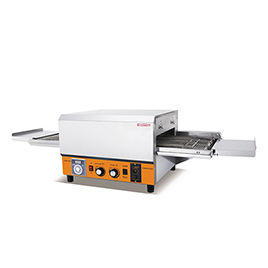
What makes a conveyor pizza oven ideal for busy kitchens?
Busy restaurants require equipment capable of continuous operation without sacrificing food quality. Selecting the right design involves much more than simply choosing a larger oven.
Premium Construction Materials
High-quality units use 304 stainless steel for food safety, corrosion resistance, and easier sanitation. Heavy-duty insulated panels increase structural durability while minimizing heat loss.
Electric or Gas Options
Professional kitchens often choose between:
- Electric models for precise temperature management and simpler installation.
- Gas models for lower operating costs in high-volume production.
Multiple Pizza Capacity Options
Different businesses require different baking capacities. Professional ovens commonly support:
- 12-inch pizza capacity
- 18-inch pizza capacity
- 32-inch pizza capacity
Choosing the appropriate conveyor width ensures maximum production efficiency without purchasing unnecessary capacity.
High Temperature Resistance
Industrial ovens should maintain stable performance under continuous operation at temperatures reaching 350–400°C. Reliable insulation and premium heating components significantly improve service life.
Non-Stick Conveyor Belt Design
A non-stick conveyor belt minimizes food residue, improves baking consistency, and reduces cleaning frequency. Removable belt structures further simplify daily maintenance.
Easy Cleaning and Maintenance
Modern equipment should include removable crumb trays, accessible heating chambers, detachable conveyor assemblies, and simplified control systems. These features shorten maintenance time while reducing labor costs.
As an experienced global Manufacturer and Supplier, we understand that every commercial kitchen operates differently. Therefore, we provide flexible OEM and ODM manufacturing services, allowing distributors, restaurant chains, and equipment brands to customize dimensions, heating systems, conveyor width, electrical specifications, branding, and control configurations according to local market requirements.
Conclusion
Selecting the right commercial conveyor pizza oven requires balancing performance, energy efficiency, durability, and production capacity. Contact our experienced Manufacturer team today to discuss your OEM, ODM, or wholesale project and receive a professional solution tailored to your business.



 English
  Español
  Français
  Italiano
  日本語
日本語  Deutsch
  Русский
  한국어
한국어  简体中文
简体中文