
Supplier Verification: How to Prevent Supply Chain Crises in Commercial Kitchen Equipment
Choosing the wrong supplier can turn a promising restaurant project into a costly procurement failure. Suppliers may offer attractive prices, beautiful pictures, and confident promises, but mask problems such as insufficient production capacity, outsourced manufacturing, unstable quality control, or incomplete compliance documentation. Once the order enters mass production, defects, delays, or missing certifications become apparent, and the situation becomes very serious. If risks are only discovered after shipment, the buyer may face rework costs, installation delays, customer complaints, cash flow pressure, and damage to market reputation. Therefore, for importers, distributors, and project contractors, the real challenge is not finding the cheapest supplier, but verifying whether commercial kitchen equipment manufacturers can reliably deliver on promised specifications, quality, documentation, and after-sales support.
Qualified suppliers should possess genuine factory production capabilities, stable production processes, a traceable quality system, valid compliance certificates, verifiable customer reviews, transparent commercial terms, and extensive export experience. Our company will assess these factors before recommending a procurement solution to help buyers distinguish between genuine Chinese kitchen equipment manufacturers and trading intermediaries or unreliable suppliers.
Now, let’s move beyond the limitations of supplier websites and sales presentations. The following sections will reveal how experienced buyers can use practical verification points to uncover hidden risks in the supply chain, verify a factory’s production capacity, and negotiate with suppliers from a more advantageous business position.
Commercial and Factory Evidence: Verifying the Supplier’s Authenticity
The first step is to verify the supplier’s true business identity. In the commercial kitchen industry, a company that primarily engages in trading, project coordination, or outsourcing procurement may claim to be a manufacturer. This isn’t necessarily unacceptable, but buyers must be clear about exactly which company they are contracting with.
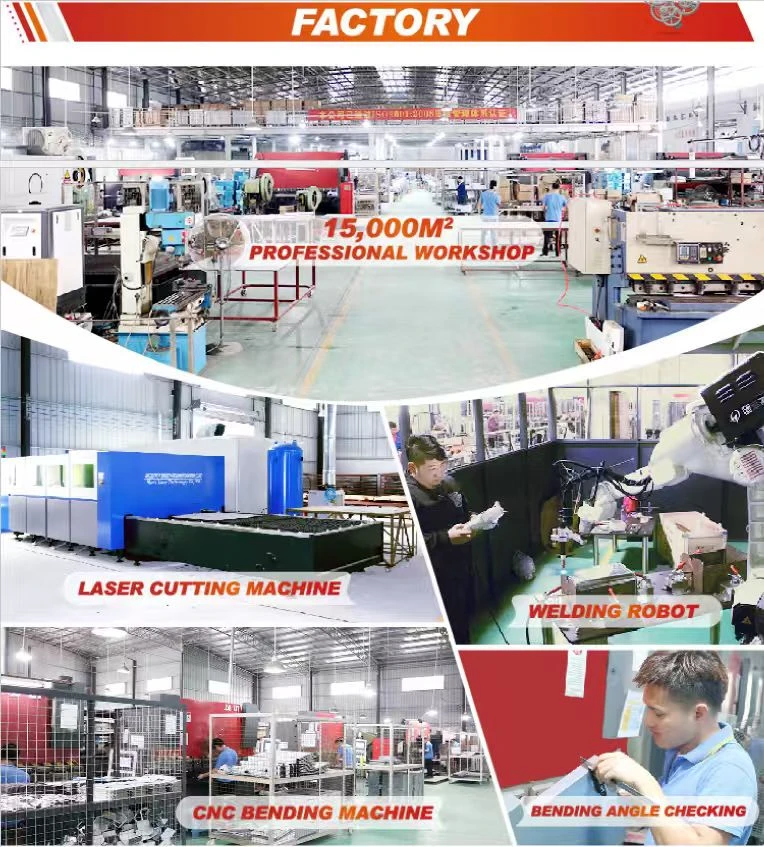
Request the company’s legal registration information, production address, export records, product range, ownership structure, and factory photos. More importantly, compare these documents with what you observe during an on-site factory visit or remote factory audit. A legitimate manufacturing company should establish a logical relationship between its product range, equipment, number of employees, production area, and claimed annual capacity.
- Verify the legal entities listed on the quotation, contract, invoice, and bank account.
- Confirm that the production address matches the factory address declared by the supplier.
- Check whether the factory’s machinery is appropriate for its claimed products.
- Review the supplier’s export experience and major destination markets.
- Identify which processes are performed internally and which are subcontracted.
- Confirm the supplier’s ability to provide spare parts, technical drawings, manuals, and after-sales support.
A credible restaurant equipment supplier should be comfortable answering these questions. Excessive reluctance, inconsistent company information, unexplained changes in bank accounts, or pressure to pay before documentation is verified should be treated as commercial red flags. For large projects, buyers should also conduct a factory audit before signing a high-value purchase agreement.
Production-Process Audit: Do Not Judge a Factory by Its Showroom
A showroom can demonstrate appearance, but it cannot prove manufacturing consistency. The more important question is whether the supplier has a controlled production process capable of reproducing the approved specification across hundreds or thousands of units.
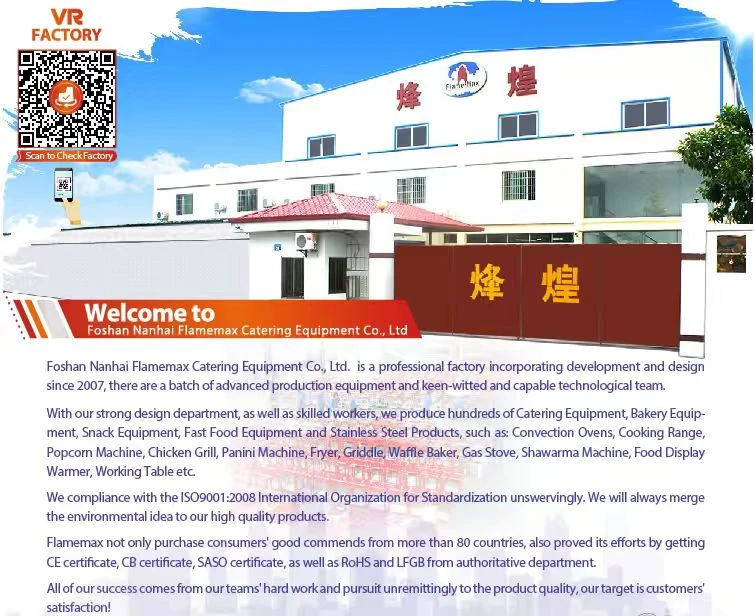
During a production audit, buyers should follow the manufacturing route from raw materials to finished goods. For stainless-steel equipment, for example, this may include material receiving, cutting, bending, welding, grinding, polishing, assembly, electrical installation, testing, cleaning, packaging, and final inspection.
- Incoming material inspection: confirm material grade, thickness, dimensions, and supplier traceability.
- Fabrication control: examine cutting accuracy, bending tolerances, welding quality, and workmanship standards.
- Assembly control: verify that components match approved drawings and specifications.
- Electrical or gas safety checks: confirm correct components, wiring, protection devices, and functional testing.
- Final inspection: establish measurable acceptance criteria before shipment.
- Packaging inspection: verify protection against moisture, impact, corrosion, and transportation damage.
The audit should also identify the supplier’s critical control points. For example, a commercial refrigeration product may require different controls from a stainless-steel preparation table. A buyer should not accept generic statements such as “we have strict quality control.” Instead, request evidence showing what is inspected, who performs the inspection, what records are retained, and what happens when a defect is discovered.
Quality-System Documents: Certificates Are Evidence, Not Decoration
Quality documentation is one of the most frequently misunderstood areas of international procurement. A supplier may display multiple logos on its website, but buyers need to determine whether those documents are genuine, current, applicable to the actual product, and issued to the correct legal entity.
Depending on the destination market and equipment category, relevant documentation may include ISO 9001, CE marking, ETL, UL, NSF, RoHS, food-contact documentation, electrical test reports, gas safety documentation, energy-efficiency records, or other market-specific requirements. The exact requirement depends on the product and importing country, so buyers should define compliance requirements before placing the purchase order.
| Document or Evidence | What the Buyer Should Verify | Potential Risk if Ignored |
|---|---|---|
| ISO 9001 | Certificate holder, validity, scope, issuing body | False compliance assumption |
| CE documentation | Applicable directives, technical file, test evidence, product model | Customs or market-access risk |
| Electrical test reports | Model number, standards, laboratory, test date | Safety and liability exposure |
| Material certificates | Grade, thickness, batch or heat number where applicable | Material substitution risk |
| Inspection records | Inspection criteria, results, responsible personnel | Quality inconsistency |
Professional procurement means matching documentation to the exact products being purchased. A certificate covering one model does not automatically prove compliance for every model in the supplier’s catalogue. Buyers should also ensure that the commercial contract clearly states which technical specifications and compliance documents form part of the agreed purchase requirement.
Sample and Reference Checks: Turn Claims into Verifiable Evidence
Before approving mass production, a buyer should treat samples as a controlled reference rather than simply a free product. The approved sample should establish the expected appearance, dimensions, material, functionality, accessories, packaging, and workmanship level.
For complex commercial kitchen projects, the buyer should prepare an approved sample standard or golden sample. Photographs alone are often insufficient because they cannot reliably communicate surface finish, steel thickness, welding quality, component specifications, noise levels, temperature performance, or operational details.
Reference checks are equally important. Ask the supplier for export references in markets comparable to your own. Ideally, references should involve similar products, order volumes, project complexity, or distribution requirements.
- Compare the sample against the final technical specification.
- Record approved dimensions and tolerances.
- Confirm component brands or equivalent-performance requirements.
- Document acceptable surface finish and workmanship.
- Test functional performance before mass production.
- Keep photographs and inspection records as part of the quality dossier.
Do not rely entirely on references supplied by the sales representative. Where commercially appropriate, ask whether the customer relationship can be independently verified. A supplier with genuine long-term customers should normally be able to demonstrate consistent market experience without relying only on anonymous testimonials.
Technical Specification Control: The Foundation of a Reliable Purchase Order
Many international purchasing disputes do not begin with bad intentions. They begin with vague specifications. A buyer may request a “heavy-duty stainless-steel work table,” while the supplier interprets that phrase according to its own normal production standard. The resulting product can technically satisfy the quotation while failing the buyer’s commercial expectations.
Every important product should therefore have a clear technical specification. This should define dimensions, material grade, material thickness, structure, load requirements, electrical specifications, voltage, frequency, plug standard, gas type where relevant, temperature range, accessories, packaging, surface finish, and applicable compliance requirements.
| Specification Area | Recommended Procurement Detail |
|---|---|
| Material | Grade, thickness, finish, and acceptable alternatives |
| Dimensions | Overall size, working dimensions, tolerances |
| Electrical | Voltage, frequency, power, plug, protection requirements |
| Performance | Capacity, temperature range, load, recovery time, output |
| Accessories | Exact quantity, material, dimensions, and included components |
| Packaging | Carton, foam, wooden crate, moisture protection, markings |
| Compliance | Destination-market standards and required documentation |
This document becomes the foundation for supplier quotation comparison, sample approval, production inspection, and final acceptance. Without it, comparing two commercial kitchen equipment manufacturers is often a comparison of different products disguised by similar product names.
Supplier Quotation Analysis: The Lowest Price Is Rarely the Full Cost
Experienced buyers evaluate Total Cost of Ownership rather than simply comparing the unit price. A lower quotation may exclude installation accessories, spare parts, export packaging, testing, documentation, replacement components, or after-sales support.
When comparing a kitchen equipment manufacturer china with another supplier, normalize the quotations first. Make sure every supplier is pricing the same material, specification, quantity, packaging standard, delivery term, and compliance requirement.
- EXW / FOB / CIF / DDP terms should be clearly identified.
- Freight and local destination charges should be separated where necessary.
- Tooling and customization costs should be disclosed.
- Packaging upgrades should be priced before production.
- Spare-parts requirements should be included in the purchasing plan.
- Payment terms should reflect the buyer’s cash-flow risk.
A professional supplier should explain why its price is different rather than simply promising to match the lowest offer. Significant price gaps can indicate differences in material, components, labor, production route, packaging, or compliance scope. The buyer’s objective should be to identify the reason for the difference and determine whether it represents genuine value or hidden quality risk.
Production Capacity and Delivery Risk: Verify the Factory’s Real Workload
Delivery promises should be evaluated against actual production capacity. A supplier may accept a large order because it wants the business, even when its production schedule is already overloaded. This creates a classic capacity risk that can damage the buyer’s project schedule.
Ask how many production lines are available, what the normal monthly output is, what percentage of capacity is currently committed, and which processes are bottlenecks. For customized equipment, determine whether engineering resources are available to complete drawings and revisions before manufacturing starts.
Buyers should distinguish between lead time and shipping time. Manufacturing lead time begins only after all necessary approvals, deposits, drawings, and technical confirmations are completed. Shipping time is a separate logistics period. A professional purchase agreement should identify the trigger date for production and the conditions that can legitimately extend delivery.
- Approve technical drawings.
- Approve samples where required.
- Confirm material and component availability.
- Release the purchase order and agreed payment.
- Monitor production milestones.
- Complete pre-shipment inspection.
- Release final shipment documentation.
This milestone approach reduces the possibility of discovering a production problem only when the vessel is already scheduled.
Inspection and Acceptance: Build Quality Control into the Contract
Quality inspection should not be an afterthought. It should be integrated into the procurement process from the beginning. Depending on order size and product complexity, buyers may use Pre-Production Inspection, During Production Inspection, and Pre-Shipment Inspection.
The most effective inspection plan is based on measurable criteria. For example, “good welding” is subjective, while a documented visual standard with defined acceptable and unacceptable conditions provides a more reliable basis for acceptance.
- Define AQL or another agreed sampling methodology where appropriate.
- Identify critical defects, major defects, and minor defects.
- Define functional testing requirements.
- Verify dimensions against approved drawings.
- Check model numbers and quantities.
- Inspect packaging and shipping marks.
- Confirm required compliance documents are complete.
Importantly, inspection does not replace supplier selection. A weak supplier with poor engineering and production discipline may repeatedly generate defects that inspection merely discovers. The stronger strategy is to combine supplier qualification, process auditing, specification control, and final inspection.
Commercial Risk Management: Payment, Warranty, and After-Sales Protection
A successful procurement strategy must also address commercial terms. Even a technically capable restaurant equipment supplier can create problems if the contract does not clearly define payment milestones, warranty responsibilities, spare-parts availability, delivery obligations, and procedures for defective goods.
For larger projects, buyers should avoid concentrating all protection at the end of the transaction. Instead, commercial milestones can be connected to engineering approval, production progress, inspection results, and shipping documentation.
The warranty clause should define more than a duration. It should explain what constitutes a warranty defect, who pays transportation costs, how replacement parts are supplied, expected response times, and what exclusions apply. For equipment installed in restaurants, downtime can create substantial business losses, so after-sales response time can be commercially more important than a small difference in purchase price.
Key Contract Controls
- Incoterms and delivery responsibility
- Payment milestones and banking details
- Approved technical specifications
- Inspection and acceptance procedure
- Warranty period and warranty exclusions
- Spare-parts pricing and availability
- Replacement and corrective-action procedure
- Documentation requirements
- Delay and cancellation provisions
- Confidentiality and intellectual-property protection where relevant
The contract should eliminate assumptions. If a feature is important to the buyer’s business, it should appear in writing.
Red Flags That Should Trigger a Second-Level Supplier Audit
Experienced procurement teams rarely reject a supplier because of one isolated warning sign. Instead, they look for patterns. Several small inconsistencies can combine into a significant supplier risk profile.
- Factory address differs across documents.
- Bank-account ownership does not match the contracting entity without a satisfactory explanation.
- Supplier cannot clearly explain which processes are outsourced.
- Product catalogue is unusually broad compared with factory capability.
- Certificates contain inconsistent company names or model numbers.
- Sales staff avoid detailed technical questions.
- Price changes dramatically after technical specifications are clarified.
- Supplier refuses reasonable inspection arrangements.
- Production samples differ significantly from catalogue products.
- Delivery promises appear unrealistic compared with factory workload.
None of these points automatically proves misconduct. However, they justify a deeper due diligence process. The correct response is evidence-based investigation rather than emotional judgment.
How to Build a Professional Supplier Verification Workflow
For importers, wholesalers, contractors, and distributors, supplier verification becomes much easier when standardized into a repeatable workflow. Instead of asking different suppliers different questions, use the same qualification framework for every candidate.
- Define the product specification before requesting quotations.
- Shortlist suppliers based on product capability and target market experience.
- Verify business identity and manufacturing location.
- Collect certificates and technical documents.
- Conduct a factory or remote audit.
- Review production processes and critical control points.
- Request samples and document approval criteria.
- Check customer references and export experience.
- Compare normalized quotations rather than headline prices.
- Negotiate commercial terms based on measurable deliverables.
- Implement production inspection before shipment.
- Evaluate supplier performance after delivery and maintain a supplier scorecard.
A useful supplier scorecard can assign different weights to quality capability, compliance, price competitiveness, delivery reliability, engineering support, communication, and after-sales service. This prevents procurement decisions from being dominated by price alone.
Manufacturer or Trading Company: Which Is Better for Your Project?
The answer depends on the buyer’s requirements. A manufacturer can offer stronger control over engineering, production, customization, and cost structure. A capable trading company may provide broader product sourcing, consolidated purchasing, project coordination, and access to multiple factories.
The real issue is transparency. A trading company should openly explain its role and identify how quality and warranty responsibilities are managed. Likewise, a manufacturer should not exaggerate its internal capabilities if important processes are subcontracted.
For buyers sourcing complete restaurant projects, the ideal restaurant equipment supplier may therefore be the company that provides the best combination of product knowledge, factory access, quality management, compliance support, logistics coordination, and after-sales capability.
When evaluating commercial kitchen equipment manufacturers, do not ask only, “Are you a factory?” Ask, “Which processes do you control, what evidence can you provide, and how will you protect my project if something goes wrong?” That question produces much more useful commercial information.
Final Supplier Selection Checklist
Before issuing a substantial purchase order, procurement managers should be able to answer “yes” to most of the following questions:
- Have we verified the supplier’s legal business identity?
- Have we confirmed the actual manufacturing location?
- Have we reviewed the supplier’s production capacity?
- Have we identified outsourced processes?
- Have we verified applicable compliance certificates?
- Have we approved a detailed technical specification?
- Have we tested or inspected a representative sample?
- Have we checked relevant customer references?
- Have we compared quotations on an equal specification basis?
- Have we agreed a realistic lead time?
- Have we defined inspection criteria?
- Have we documented warranty and spare-parts responsibilities?
- Have we established a clear process for handling non-conforming goods?
If several answers are “no,” the supplier may still be worth considering, but the buyer should recognize that the transaction carries unresolved commercial risk. The purpose of due diligence is not to eliminate every risk; it is to identify, quantify, and control the risks before money and reputation are committed.
Conclusion: Choose Evidence Over Promises
The right supplier isn’t just the one with the lowest price. When choosing a partner, consider their factory qualifications, process control, complete and reliable documentation, and trustworthy export execution capabilities. Before placing your next order, please feel free to contact us to discuss your product needs, supplier vetting requirements, and commercial kitchen procurement projects.


 English
  Español
  Français
  Italiano
  日本語
日本語  Deutsch
  Русский
  한국어
한국어  简体中文
简体中文