
Why Supply Chain Failures Can Derail OEM Commercial Kitchen Equipment Projects
Purchasing OEM kitchen equipment is far more complex than comparing prices between factories. Buyers frequently encounter delayed deliveries, inconsistent quality, unclear engineering communication, hidden compliance gaps, and uncontrolled production changes. These issues become even more serious when multiple stakeholders, custom specifications, and international regulations are involved. A single mistake in supplier qualification or project management can increase costs, postpone market launches, damage customer relationships, or even result in rejected shipments. The most successful importers minimize these risks by selecting a professional commercial kitchen equipment manufacturer with mature engineering processes, transparent project control, and comprehensive quality management instead of focusing only on the lowest quotation.
A qualified supplier should provide complete engineering support, verified manufacturing capability, transparent quality control, internationally recognized ISO 9001 management, appropriate CE, NSF, or other required certifications, documented factory audits, controlled production procedures, and responsive after-sales service. Our company combines more than 20 years of export experience with comprehensive OEM project management to reduce procurement risks.
In the following sections, we reveal the practical supply chain methods, engineering checkpoints, quality verification procedures, and commercial risk controls that experienced buyers use when selecting a reliable partner for custom kitchen equipment manufacturing projects.
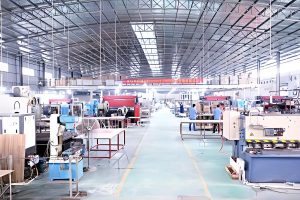
Requirement and Drawing Review: Building the Foundation Before Production Begins
The success of any OEM kitchen equipment project begins long before production starts. Professional suppliers invest significant engineering resources during the requirement review stage because correcting mistakes after manufacturing begins is substantially more expensive than identifying them during technical discussions.
An experienced commercial kitchen equipment manufacturer should organize cross-functional reviews involving engineering, purchasing, production, quality assurance, and export teams. Every drawing, specification, and performance requirement should be evaluated before materials are ordered.
Key Engineering Review Points
- Product application environment
- Dimension verification
- Material specification confirmation
- Electrical and mechanical standards
- Welding requirements
- Surface finishing expectations
- Packaging requirements
- Shipping container optimization
- Target market regulations
- Expected product lifecycle
Engineering review should also include a detailed Design Review (DR) process to verify manufacturability, production efficiency, and maintenance accessibility. Any missing information should be clarified through engineering meetings before tooling investment.
Professional suppliers also perform DFM (Design for Manufacturability) analysis to optimize production efficiency without affecting product functionality. This process helps buyers reduce long-term production costs while improving manufacturing consistency.
| Review Item | Business Risk if Ignored |
|---|---|
| Drawing accuracy | Rework, tooling modification, production delays |
| Material specification | Quality disputes, reduced durability |
| Electrical standards | Compliance failure, customs rejection |
| Packaging design | Transportation damage, customer complaints |
| Label requirements | Import non-compliance, shipment detention |
Prototype and Approval: Reducing Commercial Risk Before Mass Production
Prototype development is not merely about producing a sample. It serves as the most important opportunity to validate engineering assumptions, manufacturing capability, and customer expectations before committing to full-scale production.
For every custom kitchen equipment project, prototype evaluation should include structural inspection, functional testing, safety verification, ergonomic assessment, packaging validation, and shipping simulation whenever possible.
Recommended Prototype Approval Process
- Engineering drawing confirmation
- Prototype manufacturing
- Internal quality inspection
- Customer sample evaluation
- Performance testing
- Revision implementation
- Final customer approval
- Mass production authorization
A professional commercial kitchen equipment manufacturer maintains documented approval records throughout this stage. Every design modification should be traceable through Engineering Change Notice (ECN) documentation to prevent confusion between approved and obsolete drawings.
Sample approval should also define measurable acceptance criteria including dimensions, welding appearance, finishing quality, operational performance, packaging standards, and labeling accuracy. These documented standards later become the benchmark for incoming inspections and final quality verification.
Compliance Responsibility: Protecting Global Market Access
Regulatory compliance is one of the most misunderstood responsibilities in international sourcing. Many buyers incorrectly assume that every supplier automatically understands destination market regulations. In reality, compliance responsibilities should be clearly defined before production begins.
Depending on the destination country and product category, OEM kitchen equipment may require different certifications, testing procedures, and documentation.
Typical Compliance Requirements
- ISO 9001 Quality Management System
- CE conformity for applicable markets
- NSF certification for food-contact equipment
- RoHS material compliance where required
- REACH chemical compliance
- Factory Audit
- Social Audit
- Product Inspection
- Material Traceability
A responsible commercial kitchen equipment manufacturer provides complete technical files, inspection reports, material certificates, and product documentation before shipment. Buyers should verify document validity rather than relying solely on supplier declarations.
Well-managed compliance systems significantly reduce the probability of customs delays, legal disputes, product recalls, and costly market withdrawals.
| Compliance Area | Primary Objective | Commercial Benefit |
|---|---|---|
| ISO 9001 | Quality management | Consistent manufacturing |
| CE | European conformity | EU market access |
| NSF | Food safety | Higher customer confidence |
| Factory Audit | Capability verification | Lower sourcing risk |
| Final Inspection | Shipment validation | Reduced quality claims |
Production and Change Control: Ensuring Stable Quality Throughout Manufacturing
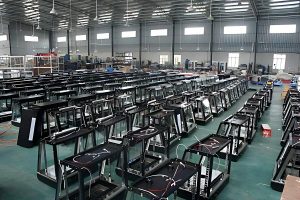
Once production begins, uncontrolled modifications become one of the greatest risks in international manufacturing. Even minor design changes can affect tooling, assembly processes, compliance status, production schedules, and product consistency.
Experienced buyers therefore require strict Change Control procedures throughout every production stage. Every modification should be documented, reviewed, approved, and communicated before implementation.
Critical Production Control Activities
- Incoming Quality Control (IQC)
- In-Process Quality Control (IPQC)
- Final Quality Control (FQC)
- Pre-Shipment Inspection (PSI)
- Corrective Action (CAPA)
- Supplier Performance Review
- Batch Traceability
- Production Record Management
A mature commercial kitchen equipment manufacturer integrates engineering, procurement, production, quality assurance, warehouse management, and export documentation into a unified workflow. This integrated management minimizes communication delays while improving production transparency.
For custom kitchen equipment, buyers should request regular production updates including photographs, inspection reports, milestone confirmations, and shipment schedules. Transparent communication significantly reduces uncertainty and allows corrective actions before problems escalate.
Professional manufacturers also maintain documented Risk Assessment, preventive maintenance schedules, supplier qualification systems, and continuous improvement programs. These management practices contribute to stable product quality over long-term OEM partnerships and support consistent supply chain performance even during periods of market volatility.
Choose a Supply Chain Partner That Delivers Long-Term Value
Selecting the right commercial kitchen equipment manufacturer means choosing proven engineering expertise, reliable quality assurance, verified compliance, disciplined project management, and transparent communication. Contact our company today to discuss your next OEM kitchen equipment or custom kitchen equipment project with an experienced global export team.

 English
  Español
  Français
  Italiano
  日本語
日本語  Deutsch
  Русский
  한국어
한국어  简体中文
简体中文