
Which ranges of convection oven with better cooking effect?
**Problem:** Many commercial kitchen operators struggle to achieve consistent cooking results using standard ovens, resulting in unevenly baked bread, pastries, or roasted dishes. This issue often arises from the oven’s design, motor placement, or heat distribution.
**Agitation:** Inconsistent cooking affects product quality, customer satisfaction, and ultimately profits. Many operators waste time and resources trying to adjust settings without addressing the root cause.
**Solution:** Selecting the right **convection oven range**—whether side motor, rear motor, or rotary—ensures even heat circulation, precise temperature control, and high-quality results in a commercial environment.
Choosing the right **commercial convection oven** can dramatically improve cooking performance, reduce baking errors, and enhance kitchen efficiency. Understanding the differences between side motor, rear motor, and rotary ovens is crucial for maximizing results.
Before diving into the detailed comparison, it is essential to understand why these oven types matter and how they influence your cooking outcomes. Read on to learn which oven range best fits your commercial needs.
How to tell difference of the side motor convection oven, rear motor convection and rotary oven?
When selecting a **bread oven commercial** for a professional kitchen, understanding the **mechanical layout** is critical. A **side motor convection oven** features a fan and motor mounted on the side of the cooking chamber. This design typically produces strong lateral airflow, which is ideal for baking uniform batches of bread or pastries. In contrast, a **rear motor convection oven** positions the fan and motor at the back of the chamber, directing airflow from rear to front, often providing gentler circulation suited for delicate baked goods.
Meanwhile, a **rotary oven** uses a rotating drum or rack system to turn food constantly during cooking. This unique design ensures even heat exposure on all sides, minimizing hotspots and reducing the risk of burning. By visually inspecting the motor placement and fan orientation, operators can identify the oven type and select the most suitable option for their menu.
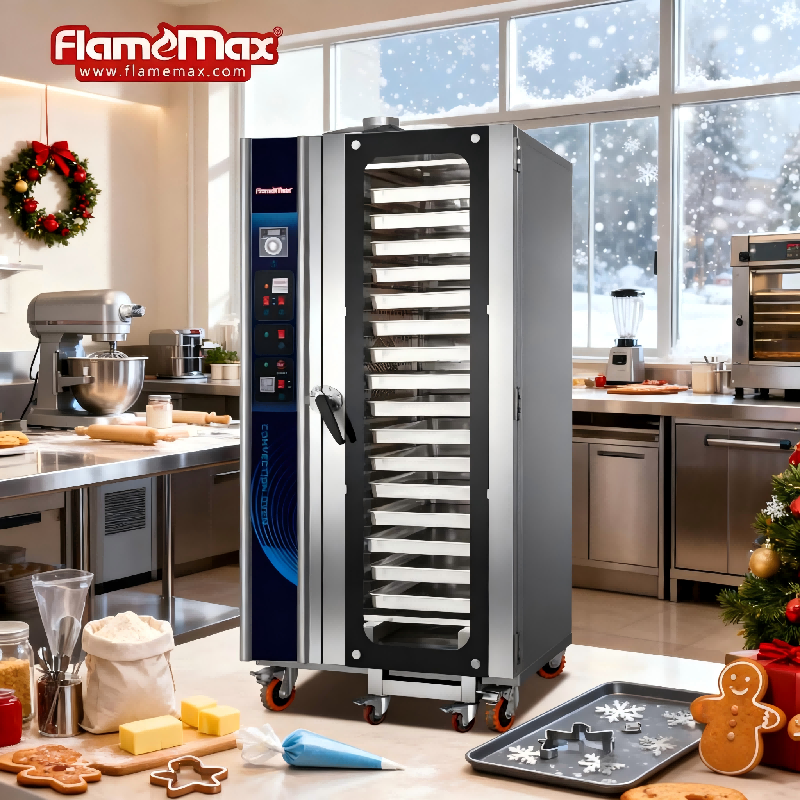
Side motor convection oven, rear motor convection oven and rotary oven, which one is the best range?
Determining the best **convection oven** depends on kitchen needs and product types. **Side motor ovens** are highly versatile and efficient, making them ideal for high-volume baking. They circulate air laterally, ensuring that loaves of bread and trays of pastries receive consistent heat. This is why many wholesalers and suppliers prefer side motor models for commercial kitchens.
**Rear motor convection ovens** offer gentler airflow, reducing the chance of drying or cracking delicate items. They are commonly used in bakeries specializing in fine pastries or cakes, where a subtle and even heat distribution is required. For OEM and ODM customers, these ovens provide customization opportunities for precise heat control and appearance design.
**Rotary ovens** excel for roasting and baking items that require 360-degree heat exposure, such as chicken, pizza, and specialty baked goods. Their rotating mechanism allows even cooking without constant monitoring, which can save labor costs. In terms of versatility, side motor convection ovens are generally more suitable for a broader range of bakery and catering applications, while rotary ovens serve niche high-volume roasting needs.
What are the benefits of each range convection oven?
Side Motor Convection Oven Benefits
**Side motor convection ovens** offer multiple advantages for commercial kitchens. First, the **even lateral airflow** ensures uniform baking, reducing undercooked or overcooked products. Second, their design allows for **high-volume cooking**, which is ideal for wholesalers and suppliers serving large-scale operations. Third, many table top ovens are side motor models, providing flexibility for small kitchens and OEM customization.
Rear Motor Convection Oven Benefits
**Rear motor convection ovens** provide gentle and precise airflow, perfect for delicate baked goods. This controlled heat distribution helps maintain moisture, structure, and flavor of pastries, cakes, and artisanal bread. Additionally, these ovens often allow for customizable settings and panels, making them an excellent choice for manufacturers looking for OEM or ODM solutions tailored to specific culinary needs.
Rotary Oven Benefits
**Rotary ovens** are designed for continuous rotation, ensuring even exposure to heat and preventing hotspots. They are highly efficient for roasting meats, baking pizzas, or cooking items requiring uniform golden-brown finishes. Rotary ovens save labor and time, as food does not need frequent repositioning. For commercial operations, this translates to higher throughput, consistent quality, and fewer human errors.
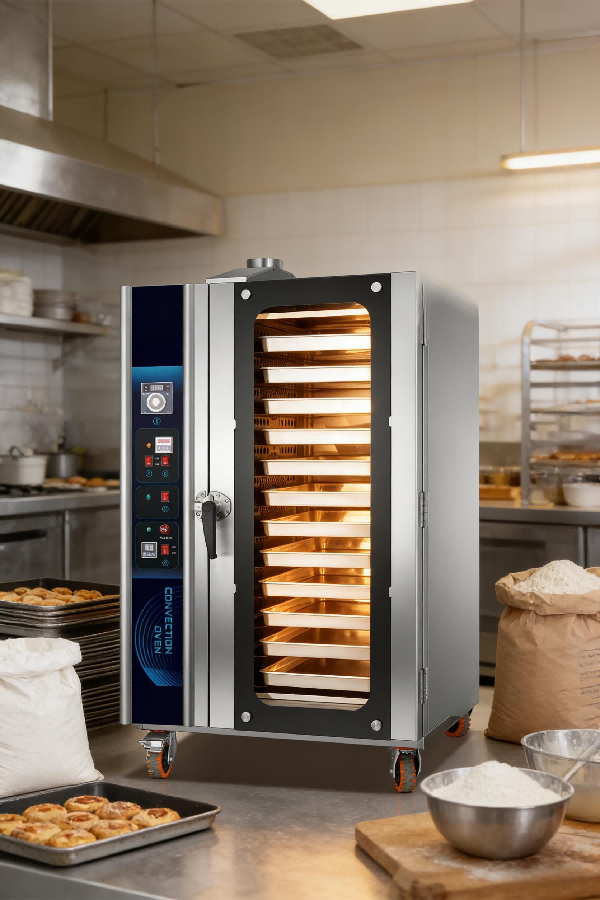
What is the temperature difference between convection and regular ovens?
**Convection ovens** operate with a fan that circulates hot air, creating an environment where food cooks faster and more evenly than in a standard **regular oven**. The temperature inside a convection oven can often be 25–30°C lower than in a conventional oven while achieving the same cooking results. This difference reduces energy consumption and prevents overbaking. For commercial kitchens and **bread oven commercial** operations, this precise temperature control ensures consistent product quality, making convection ovens preferable for both OEM and ODM purposes.
In contrast, **regular ovens** rely on static heat, which often causes uneven cooking. Heat tends to concentrate at the top or bottom, requiring manual rotation of trays and longer cooking times. While suitable for home baking, conventional ovens are less efficient for **table top ovens** or large-scale baking operations where consistency and speed are essential.
Conclusion
Choosing the right convection oven—side motor, rear motor, or rotary—can transform commercial baking results, improve efficiency, and ensure consistent quality. Assess kitchen needs carefully to maximize benefits.


 English
  Español
  Français
  Italiano
  日本語
日本語  Deutsch
  Русский
  한국어
한국어  简体中文
简体中文