
Are you tired of inconsistent frying results?
A poorly selected deep fryer can lead to overcooked food, wasted oil, and frustrating kitchen mishaps. This can affect your cooking routine and lead to a lack of control over frying temperatures. Choosing the right deep fryer ensures efficient cooking, consistency, and great-tasting fried foods every time.
When buying a deep fryer, it’s crucial to consider factors like fryer capacity, burner types, temperature control, and oil usage. These considerations will help you make the best choice for your needs.
Stick around as we delve deeper into what to look for when purchasing a deep fryer, and make sure you get the most out of your investment.
What are Commercial Fryer Burners?
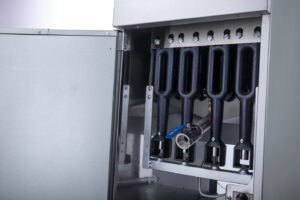
When it comes to commercial deep fryers, the type of burner used plays a major role in efficiency and cooking performance. Commercial fryers typically come with either electric fryers or gas fryers. Gas fryer burners generally offer faster heat-up times and can be more cost-effective in high-volume kitchens due to lower operational costs. On the other hand, electric fryers provide more precise temperature control and are ideal for environments that prioritize energy efficiency. Choosing the right burner depends on your kitchen’s energy source, the volume of food you prepare, and your budget.
How to Test the Deep Fryer Thermostat?
A deep fryer’s thermostat controls the cooking temperature, which is crucial for perfectly fried foods. Testing the thermostat involves using a temperature probe to ensure the fryer is heating to the desired temperature and maintaining that heat during cooking. Start by setting the fryer to the desired temperature and letting it stabilize. Insert a probe into the oil and check the reading. If there’s a discrepancy between the thermostat setting and the probe reading, the thermostat may need recalibration or replacement. A temperature control that accurately reflects your desired frying temperature ensures consistency and better food quality.
How Long Does It Take for a Commercial Fryer to Heat Up?
The time it takes for a commercial fryer to heat up can vary depending on whether you’re using an electric fryer or a gas fryer. Gas fryers tend to heat up faster because they directly apply heat to the oil. Typically, they take about 5 to 10 minutes to reach the optimal frying temperature. On the other hand, electric fryers may take a little longer—about 10 to 15 minutes—to heat up, as they rely on heating elements. However, electric fryers are often more precise in maintaining a consistent temperature once they’re hot, which can be advantageous for certain foods.
What Oil Do You Use in a Deep Fryer?
Choosing the right oil for your deep fryer is essential for both flavor and health considerations. Vegetable oil and canola oil are among the most popular oils used in deep fryers because they have high smoke points, which means they can withstand high temperatures without burning. Other good options include peanut oil and sunflower oil, both of which provide a neutral flavor that doesn’t overpower the taste of your food. Be mindful of your fryer’s fryer capacity, as larger fryers require more oil. Always ensure you’re using oil with a high smoke point for the best frying results and to avoid damaging the oil.
What’s the Best Temperature for Deep Fryer?
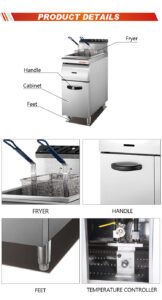
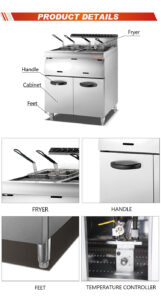
The ideal frying temperature typically falls between 350°F and 375°F (175°C to 190°C). This temperature range ensures that food cooks quickly and evenly while developing a crispy exterior without absorbing too much oil. Foods like French fries and chicken wings do well at 375°F, while more delicate items like tempura should be fried at around 350°F. Temperature control is key to avoid overcooking or undercooking your food. Gas fryers and electric fryers can both maintain these temperatures, but the key difference lies in how efficiently they do so. Electric fryers often offer more precise temperature control, reducing the risk of fluctuating temperatures during frying.
Conclusion
In summary, choosing the right deep fryer depends on factors like fryer burners, thermostat reliability, heat-up time, oil selection, and the desired temperature for cooking. Make sure to assess your needs to find the perfect fryer for your kitchen.

 English
  Español
  Français
  Italiano
  日本語
日本語  Deutsch
  Русский
  한국어
한국어  简体中文
简体中文