
Choosing the wrong bakery oven leads to wasted investment, inconsistent baking, and lost customers. These issues severely impact profitability. Understanding key factors helps businesses select the most suitable commercial oven solution.
Selecting the best industrial bakery oven requires evaluating oven types, capacity, energy usage, product compatibility, and supplier reliability. A well-chosen baking oven improves efficiency, ensures consistent product quality, reduces operational costs, and supports long-term business growth for bakeries, restaurants, and foodservice operations.
To make the right investment decision, it is essential to understand all critical aspects before purchasing a commercial bakery oven.
What Types of Oven Flamemax Company Have?
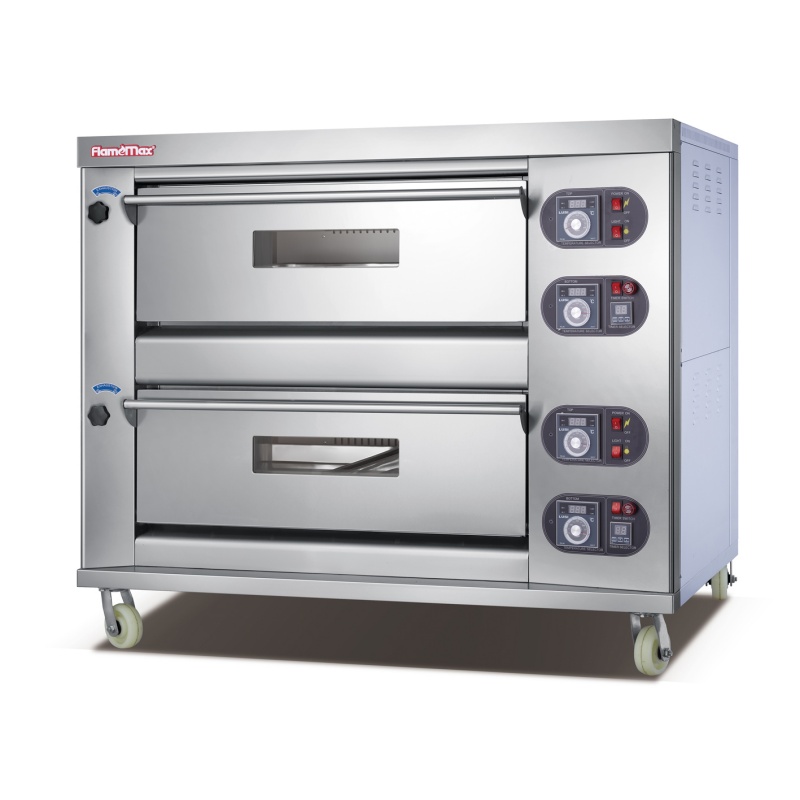
Foshan Nanhai Flamemax Catering Equipment Co., Ltd. offers a comprehensive range of bakery oven solutions designed for different commercial baking needs. Their product portfolio includes convection ovens, deck ovens, rotary ovens, and specialized pizza ovens. Each baking oven is engineered with precision manufacturing techniques such as laser cutting, bending, and advanced welding to ensure durability and performance.
The convection oven range is ideal for uniform heat distribution, making it suitable for pastries, cakes, and cookies. Deck ovens are commonly used as bread ovens due to their ability to provide consistent bottom heat, essential for artisan bread baking. Rotary ovens are designed for high-capacity production, making them perfect for industrial bakeries that require bulk output.
In addition, Flamemax also manufactures versatile cooking ovens that can handle multiple types of food products. All ovens are built with high-quality materials and undergo 100% inspection before shipment. Customization options such as logo branding, control panel design, and color adjustments are also available, making them highly suitable for OEM and ODM clients worldwide.
10 Basic Guidelines in Choosing Your Commercial Ovens for Baking?
When selecting a commercial oven, businesses should follow several essential guidelines to ensure optimal performance and long-term value. First, consider the type of products being baked. Different bakery ovens, such as convection ovens or bread ovens, serve different purposes.
Second, evaluate production capacity. A small bakery may only need a compact baking oven, while industrial operations require high-capacity rotary ovens. Third, assess energy efficiency, as electricity or gas consumption directly affects operating costs.
Fourth, examine temperature control precision, which is critical for consistent baking results. Fifth, consider the available space in the kitchen. Sixth, review the oven’s durability and build quality. Seventh, check for ease of maintenance and cleaning.
Eighth, ensure the availability of after-sales support and spare parts. Ninth, look for customization options for branding and functionality. Finally, compare pricing against value, ensuring a balance between cost and quality. Following these guidelines helps businesses make informed decisions when investing in a commercial oven.
What Things to Consider Before Buying the Best Industrial Bakery Ovens?
Before purchasing an industrial bakery oven, several critical factors must be carefully evaluated. One of the most important considerations is the type of baking required. For example, a pizza oven differs significantly from a bread oven in terms of temperature and structure.
Another key factor is production scale. Large-scale bakeries require high-capacity ovens, such as rotary ovens, while smaller operations may benefit from convection ovens. Energy source is also crucial—buyers must decide between electric, gas, or hybrid models depending on local utility costs.
Durability and material quality should not be overlooked. High-grade stainless steel construction ensures longevity and hygiene. Additionally, businesses should consider the level of automation and control systems, as modern ovens often include programmable settings for efficiency.
Supplier reliability is equally important. A manufacturer with strong technical support, quality assurance processes, and customization capabilities can significantly reduce operational risks. Investing in the right baking oven ensures consistent output and long-term profitability.
How Many Types of Oven for Bakery?
There are several types of bakery ovens available in the market, each designed for specific baking applications. The most common types include convection ovens, deck ovens, rotary ovens, rack ovens, and pizza ovens.
Convection ovens use fans to circulate hot air, ensuring even baking and faster cooking times. Deck ovens are traditional bread ovens that provide direct heat from the bottom, making them ideal for artisan bread and crusty products. Rotary ovens, also known as rack ovens, are widely used in industrial bakeries due to their large capacity and rotating racks that ensure uniform baking.
Pizza ovens are designed to reach extremely high temperatures, making them suitable for quick cooking and crisp textures. Additionally, there are multifunction cooking ovens that can handle a variety of baking and cooking tasks.
Understanding these different types helps businesses choose the most suitable baking oven based on their production needs and product range.
What Is Your Utilities When Buying the Commercial Bakery Oven?
Utilities play a crucial role when selecting a commercial bakery oven. Buyers must consider the availability and cost of electricity, gas, or other energy sources in their location. The choice between electric and gas ovens often depends on local infrastructure and operating costs.
Electric ovens are generally easier to install and provide precise temperature control, making them ideal for delicate baking tasks. Gas ovens, on the other hand, are often more cost-effective for large-scale operations due to lower fuel costs in certain regions.
Ventilation requirements should also be taken into account, as some cooking ovens require proper exhaust systems to maintain a safe working environment. Additionally, power capacity must be evaluated to ensure that the facility can support the oven’s energy demands.
Understanding utility requirements helps businesses avoid installation issues and ensures smooth operation of their bakery ovens.
How to Find the Right Sizes for Your Shops?
Choosing the correct oven size is essential for maximizing efficiency and optimizing workspace utilization. The size of the bakery oven should match both the production volume and the available kitchen space.
For small bakeries or cafes, compact convection ovens or small deck ovens may be sufficient. Medium-sized operations may require multi-deck ovens to increase output without occupying excessive space. Large industrial bakeries often rely on rotary ovens or rack ovens to handle high production demands.
It is also important to consider future business growth. Investing in a slightly larger baking oven can accommodate increased demand over time. Additionally, proper spacing around the oven is necessary for ventilation, maintenance, and safe operation.
Careful planning ensures that the chosen commercial oven fits seamlessly into the workspace while meeting production requirements.
Consider the Types of Food You Will Use For?
The type of food being produced significantly influences the choice of bakery oven. Different products require different baking conditions, which must be matched with the appropriate oven type.
For example, bread ovens are ideal for baking artisan bread, baguettes, and rolls due to their ability to provide consistent bottom heat. Convection ovens are suitable for pastries, cakes, and cookies because of their even heat distribution.
Pizza ovens are specifically designed for high-temperature baking, ensuring crispy crusts and fast cooking times. Multifunction cooking ovens can handle a variety of products, making them suitable for businesses with diverse menus.
Understanding product requirements helps businesses select the most appropriate baking oven, ensuring consistent quality and customer satisfaction.
What Are the Benefits of Using a FLAMEMAX Commercial Bakery Oven?
FLAMEMAX commercial bakery ovens offer numerous advantages that make them a preferred choice for global buyers. One of the key benefits is superior build quality, achieved through advanced manufacturing processes and high-grade materials.
These ovens provide excellent temperature control, ensuring consistent baking results across different products. Energy efficiency is another significant advantage, helping businesses reduce operating costs over time.
FLAMEMAX also offers flexible customization services, allowing clients to tailor ovens to their specific branding and operational needs. With a strong quality control system, every baking oven undergoes 100% inspection before shipment, ensuring reliability.
Additionally, the company provides comprehensive after-sales support, including technical assistance and spare parts availability. This ensures long-term performance and customer satisfaction, making FLAMEMAX a reliable partner for commercial baking equipment.
In conclusion, selecting the right bakery oven requires careful evaluation of needs, ensuring efficiency, quality, and long-term business success.


 English
  Español
  Français
  Italiano
  日本語
日本語  Deutsch
  Русский
  한국어
한국어  简体中文
简体中文