
Humidity, Salt Air and Complex Utility Systems in Coastal Commercial Kitchens
Commercial kitchens in coastal hotels, restaurants, hospitals, and cruise-terminal facilities face a difficult combination of high humidity, salt-laden air, condensation, grease, heat, and unstable utility conditions. These factors accelerate corrosion, insulation deterioration, electrical faults, gas-system risks, and hygiene problems. If imported equipment is checked only for appearance and basic operation, hidden failures can emerge after installation, causing downtime, food-safety concerns, warranty disputes, and costly replacement. A structured commercial kitchen equipment inspection checklist is therefore essential before shipment. For every Manufacturer, Supplier, importer, and distributor, the inspection must verify not only equipment quality but also compatibility with the customer’s actual electrical environment, gas supply, drainage system, ventilation topology, and operating climate.
For coastal commercial kitchens, we recommend stainless steel 304 or 316 according to exposure, IP-rated electrical enclosures, verified 50/60 Hz compatibility, correctly sized gas and drainage connections, controlled surface temperatures, and documented functional testing. As a professional commercial kitchen equipment Manufacturer and Supplier, we provide a rigorous, scenario-based quality control checklist for OEM, ODM, and Customizable projects.
Retailers, importers, wholesalers, and distributors should continue reading to see how real application conditions can be translated into measurable inspection requirements. The following engineering approach combines practical kitchen equipment inspection, installation compatibility, packaging verification, and shipment documentation to achieve reliable field performance.
Model, dimensions and finish
For a coastal commercial kitchen, model selection cannot be separated from the installation environment. A technically excellent fryer, range, oven, refrigeration unit, sink, or preparation table may still fail commercially if its dimensions, material grade, service clearance, or connection positions do not match the project. Before production approval, our quality control checklist begins with the approved technical drawing and compares it against the final production unit.
For example, a hotel kitchen may have a narrow cooking line with equipment positioned against a stainless-steel wall, while a central production kitchen may use an island configuration with service access from multiple sides. In both cases, the equipment footprint must be checked against the actual kitchen equipment topology, not simply against catalog dimensions.
- Verify overall length, width, and height against the approved drawing, with a typical dimensional tolerance of ±2 mm for fabricated panels unless the project specification requires tighter control.
- Confirm working height and ergonomic reach, generally maintaining a practical food-preparation work surface around 850–900 mm where applicable.
- Check door, drawer, hinge, handle, and control-panel clearances under the actual installation configuration.
- Maintain sufficient rear and side clearance for ventilation, cleaning, inspection, and maintenance according to the equipment design.
- For exposed coastal environments, verify stainless-steel grade and surface finish; 304 stainless steel is generally suitable for many commercial kitchens, while 316 stainless steel can be considered for more aggressive salt-air or chloride-exposure conditions.
- Inspect welds, corners, seams, polishing, brushing, and surface flatness for defects that could trap grease, water, or food residue.
For Customizable, OEM, and ODM projects, our inspection process also confirms whether modified dimensions have affected internal components, cable routing, insulation, airflow, drainage, or load distribution. This is particularly important when a distributor requests a private-label product based on an existing platform. A change that appears cosmetic can unintentionally compromise service access or safety performance.
Electrical/gas safety checks
The electrical and gas environment is often the most important hidden compatibility issue in international commercial kitchen equipment inspection. Export equipment may be manufactured for different voltage, frequency, plug, breaker, earthing, gas pressure, or certification requirements. A product that operates correctly in the factory can still become unsuitable when connected to the customer’s 220–240 V / 50 Hz electrical environment, 380–415 V three-phase supply, or local gas network.
Our inspection therefore compares the nameplate, wiring diagram, component ratings, actual measurements, and customer purchase specification. The objective is not simply to determine whether the equipment switches on; it is to establish whether the complete system is safe and stable under realistic operating conditions.
- Verify rated voltage, frequency, phase configuration, rated current, and power consumption against the purchase specification.
- Confirm protective earthing continuity and inspect the earth terminal, cable size, terminal tightness, and grounding path.
- Check circuit-breaker and overload-protection requirements against the actual electrical load.
- Inspect cable insulation, strain relief, connectors, junction boxes, and terminal blocks for heat, moisture, or mechanical damage.
- Where applicable, verify insulation resistance and electrical leakage according to the applicable product and project standard.
- For gas equipment, confirm the specified gas type, inlet pressure, nozzle configuration, regulator arrangement, and connection size.
- Inspect gas hoses, valves, joints, clamps, and connection points for mechanical security and compatibility.
- Verify flame stability, ignition performance, flame-failure protection, and burner response where gas burners are used.
- Check that electrical controls are appropriately protected against the kitchen’s high-humidity and condensation environment.
A common field problem is the mismatch between equipment load and the customer’s actual electrical distribution topology. For instance, several high-power ovens, induction cookers, dishwashers, and refrigeration units may share one distribution circuit. Even if each unit passes an individual factory test, the combined demand may exceed the planned capacity. Therefore, a professional Manufacturer or Supplier should provide accurate power information so that the importer can coordinate upstream electrical design.
The same principle applies to gas systems. A burner designed for one inlet pressure should not be assumed to perform correctly at another pressure. During kitchen equipment inspection, the gas configuration must be recorded and matched with the destination market requirements before shipment rather than corrected informally at installation.
Functional and leak tests
Appearance inspection identifies visible defects, but functional testing reveals whether the equipment can actually perform its intended commercial duty. Our commercial kitchen equipment inspection checklist therefore includes startup, continuous-operation, control-response, temperature, drainage, ventilation, and leak tests. Testing should simulate realistic working conditions wherever practical.
For thermal equipment, temperature should be measured independently rather than relying solely on the digital display. For refrigeration, the inspection should evaluate pull-down behavior, temperature stability, door sealing, condensate management, and alarm response. For dishwashers and sinks, water filling, drainage, pump operation, spray performance, and connection integrity should be evaluated.
- Operate each major function for an adequate continuous test period, typically 30–60 minutes for thermal or mechanical equipment when the design allows.
- Record actual operating temperature at representative points instead of checking only the setpoint.
- Check thermostat or controller response through repeated heating or cooling cycles.
- Inspect abnormal vibration, unusual noise, excessive motor temperature, or unstable electrical current.
- Fill water systems and inspect all joints, valves, pumps, hoses, and drain connections for leakage.
- For steam-generating or heated-water equipment, verify pressure and relief mechanisms according to the equipment specification.
- For refrigeration systems, inspect condensate drainage and door-gasket sealing before shipment.
- For gas-fired equipment, perform a controlled leak inspection and verify stable combustion throughout the specified operating range.
Leak testing deserves special attention because small failures often remain invisible during a short visual inspection. Water leakage can damage floors, electrical components, insulation, and neighboring equipment. Gas leakage presents a significantly greater safety risk. The inspection record should therefore identify the test method, test condition, result, and corrective action rather than simply stating “passed.” This creates traceability for the importer and strengthens the Supplier’s quality-control documentation.
Ventilation, heat load and system topology verification
Commercial cooking equipment does not operate as an isolated product. It becomes part of a larger commercial kitchen ventilation system consisting of cooking appliances, exhaust hoods, make-up air, HVAC systems, drainage, electrical distribution, gas supply, and fire-safety equipment. This system topology must be considered during inspection because poor integration can cause excessive heat, condensation, smoke accumulation, combustion problems, or uncomfortable working conditions.
In a high-volume restaurant, several fryers and gas ranges may operate simultaneously beneath a canopy hood. In contrast, a hotel breakfast kitchen may have lower peak cooking loads but longer daily operating hours. The inspection criteria should reflect these different duty cycles.
| Application scenario | Typical environmental challenge | Recommended inspection focus | Typical operating consideration |
|---|---|---|---|
| Coastal hotel kitchen | High humidity and salt exposure | Material grade, corrosion resistance, electrical protection | Long daily operating cycles |
| High-volume restaurant | Heavy heat, grease and peak loads | Ventilation compatibility, thermal stability, drainage | High simultaneous equipment demand |
| Hospital kitchen | Hygiene and reliability requirements | Cleanability, temperature control, documentation | Strict process continuity |
| Central production kitchen | Continuous production and equipment density | Service clearance, power distribution, workflow | Extended duty cycles |
| Outdoor or semi-open kitchen | Moisture, wind and chloride exposure | Ingress protection, corrosion resistance, enclosure sealing | Variable environmental conditions |
Where equipment produces substantial heat, the inspection should verify that control components, handles, seals, insulation, and adjacent surfaces remain within acceptable operating limits. For equipment connected to an exhaust system, the Supplier should also confirm the required hood position, exhaust direction, clearance, and service access. These details are particularly important for Customizable projects where the factory modifies exhaust outlets or rear connections to suit a specific kitchen layout.
Hygiene, ergonomics and cleanability assessment
A professional quality control checklist must evaluate how easily operators can clean and maintain the equipment, not merely how attractive it looks when new. In commercial kitchens, ergonomic design directly influences productivity and hygiene. Sharp inaccessible corners, excessive lifting height, difficult-to-remove filters, or poorly positioned drain outlets can increase cleaning time and encourage unsafe work practices.
- Check that food-contact surfaces are smooth, corrosion-resistant, and free from unnecessary gaps or exposed contamination points.
- Inspect internal corners and welded seams for continuous, cleanable construction.
- Verify that removable trays, filters, racks, and panels can be removed without excessive force.
- Confirm control locations can be reached without requiring operators to contact hot surfaces.
- Where equipment involves hot oil or liquids, assess whether handles and access points reduce spill exposure.
- Ensure drainage points are positioned to avoid standing water after normal cleaning.
- Check that routine service components can be accessed without dismantling unrelated equipment.
Ergonomics should also consider operator height and workflow. Frequently used controls should be located within a practical reach zone, while heavy components should not require repeated lifting above shoulder height. These details may appear minor during factory inspection but become significant over thousands of operating hours. For an importer selecting a long-term private-label product, this level of kitchen equipment inspection can differentiate a reliable product from a low-cost product that generates repeated service complaints.
Why Packaging and document verification is also important before shipment?
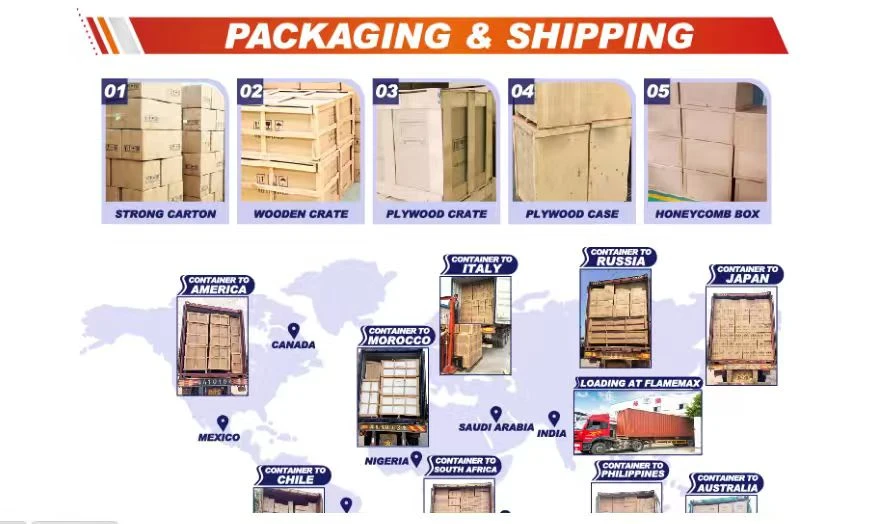
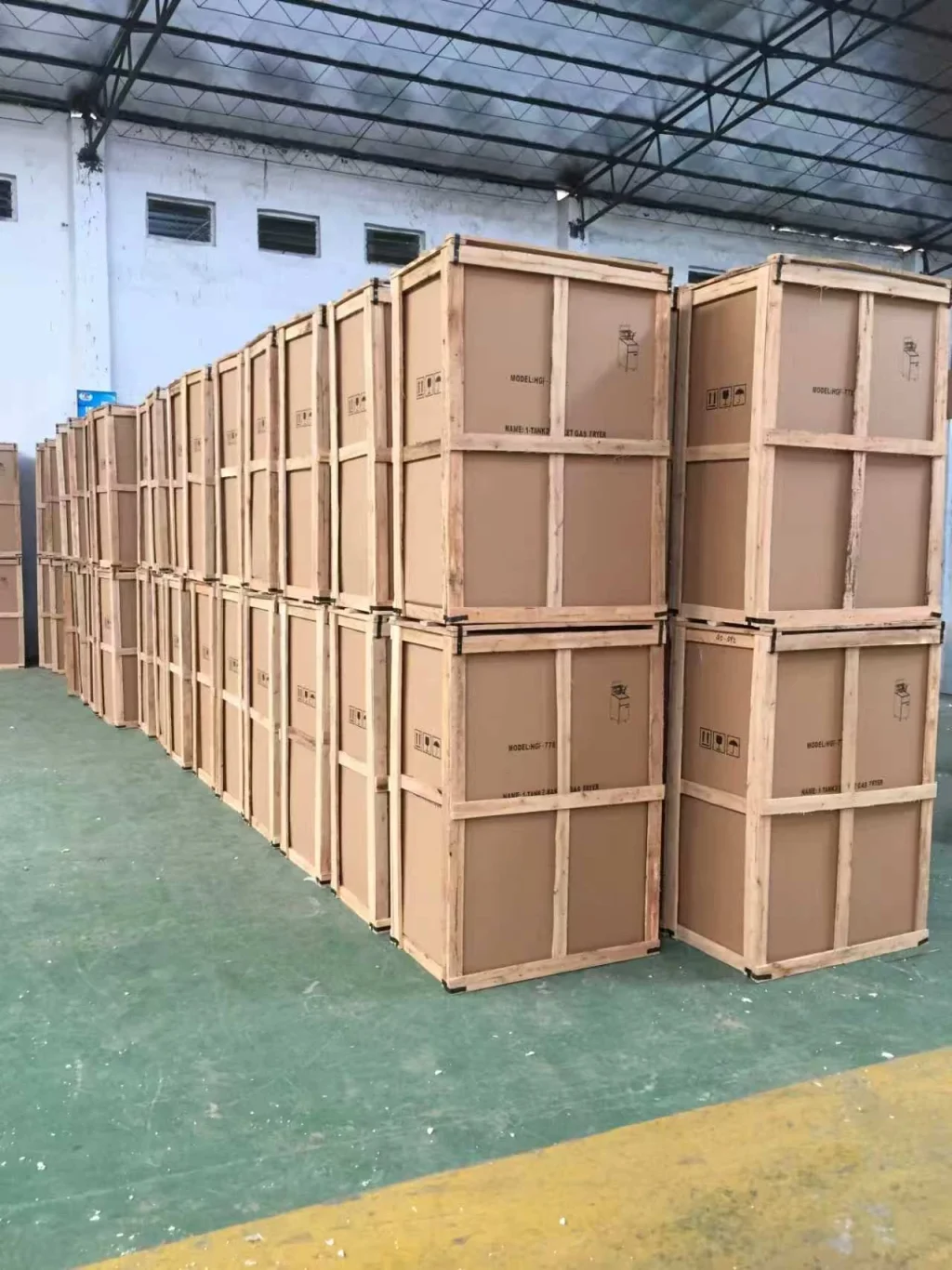
Packaging and documentation are integral parts of quality control because a product that passes factory testing can still arrive damaged, incomplete, or impossible to install. International shipping exposes commercial kitchen equipment to vibration, impact, humidity, condensation, stacking pressure, and repeated handling. For stainless-steel products, inadequate packaging can cause scratches or deformation; for electronic equipment, moisture ingress can damage sensitive components.
- Confirm equipment is protected against movement inside the carton, crate, or export frame.
- Protect control panels, glass, doors, handles, connectors, and polished surfaces with suitable cushioning.
- Use moisture-resistant protection where the shipping route may expose the cargo to high humidity or condensation.
- Verify gross weight, net weight, package dimensions, and carton or crate identification against shipping documents.
- Check that accessories, spare parts, manuals, power cables, racks, trays, and installation components are included.
- Confirm model number, serial number, voltage, gas type, and other identification data are consistent across the equipment and documents.
- Review inspection reports, test records, packing lists, commercial invoices, certificates, drawings, manuals, and other destination-market documents.
Document verification is especially important for OEM and ODM orders because private-label projects often involve customized model numbers, logos, manuals, labels, packaging, and spare-parts lists. One incorrect model code can create confusion during customs clearance, warehouse receiving, installation, or after-sales service. Our final inspection therefore treats the physical product and its documentation as one quality package.
Final release criteria for OEM, ODM and Customizable projects
Before shipment release, the inspection results should be reviewed against the customer’s approved specification rather than against a generic factory standard alone. This distinction is critical for international projects. A unit can be technically functional but still fail the order if the wrong voltage, finish, dimensions, accessories, logo, packaging, or documentation has been supplied.
- All critical dimensional requirements must match the approved drawing.
- Electrical and gas specifications must match the destination-market requirement.
- No critical safety defect, gas leakage, electrical abnormality, or structural defect should remain unresolved.
- Functional test results must be recorded and traceable to the equipment model or serial number.
- Surface finish and visible workmanship must meet the approved reference sample or specification.
- Accessories and spare parts must match the approved packing list.
- OEM or ODM branding must be checked against the approved artwork and placement requirements.
- Packaging must be suitable for the expected transportation route and handling conditions.
- All agreed inspection documents should be completed before final shipment authorization.
This final stage allows the Manufacturer and Supplier to convert inspection findings into a documented release decision. For distributors and importers, it provides objective evidence that the product has been evaluated against application-specific requirements. It also creates a useful reference for future repeat orders, enabling continuous improvement rather than treating every shipment as an isolated transaction.
Recommended inspection workflow for international commercial kitchen projects
Our preferred workflow starts before production, when the technical specification and installation environment are reviewed. The second stage verifies incoming materials and key components. The third stage checks fabrication quality and dimensions. The fourth stage performs electrical, gas, water, thermal, mechanical, and functional tests. The final stage verifies packaging, labeling, documentation, and shipment readiness.
This process is particularly valuable when the end user operates in a challenging humid coastal environment or within a complex three-phase electrical and centralized ventilation topology. Instead of applying the same generic inspection standard to every project, the checklist is adjusted according to equipment type, duty cycle, environmental exposure, utility conditions, and installation configuration.
For example, a refrigeration unit intended for a dry inland warehouse should not automatically receive the same corrosion-control requirements as equipment installed in a seaside resort. Likewise, a compact electric countertop appliance should not receive the same load and ventilation assessment as a high-output gas cooking line. Scenario-based inspection makes the process more technically meaningful and commercially useful.
Conclusion and inquiry recommendation
A reliable commercial kitchen equipment inspection checklist must connect product quality with the real installation environment, utility system, workflow, packaging, and documentation. As an experienced Manufacturer and Supplier supporting OEM, ODM and Customizable projects, we welcome your equipment specifications, drawings, and target-market requirements for a professional inspection and application proposal.

 English
  Español
  Français
  Italiano
  日本語
日本語  Deutsch
  Русский
  한국어
한국어  简体中文
简体中文