
As a bakery owner, choosing the right oven can make or break your business. The wrong oven can lead to uneven baking, wasted energy, and poor product quality. This can directly affect your bottom line. Luckily, with the right information, selecting the perfect **commercial convection oven** for your bakery is easier than ever. Keep reading to discover how you can choose the ideal oven and improve your business.
Choosing the best convection oven is critical for bakery owners looking to improve efficiency, product quality, and reduce energy costs. This guide will help you understand the differences between ovens, key benefits, and what to look for when selecting a **professional bakery equipment** supplier.
If you are struggling to decide between a convection oven and a traditional commercial oven, we are here to guide you through the process. Let’s dive deeper into the features, benefits, and considerations of each type of oven to help you make an informed decision for your bakery.
What is the Difference Between a Convection Oven and a Traditional Commercial Oven?
A **convection oven** differs significantly from a traditional commercial oven in both design and functionality. Traditional ovens rely on natural heat distribution through radiation, meaning the heat source is typically at the bottom or top of the unit. This results in slower and less even cooking, requiring more attention to ensure perfect results.
On the other hand, **convection ovens** use a fan and exhaust system to circulate hot air around the food, creating a more even and consistent cooking environment. This fan-driven heat distribution ensures that the heat is uniformly spread, leading to faster cooking times, reduced energy consumption, and higher-quality baked goods. In addition, convection ovens often come with adjustable temperature settings, allowing for more control over the baking process.
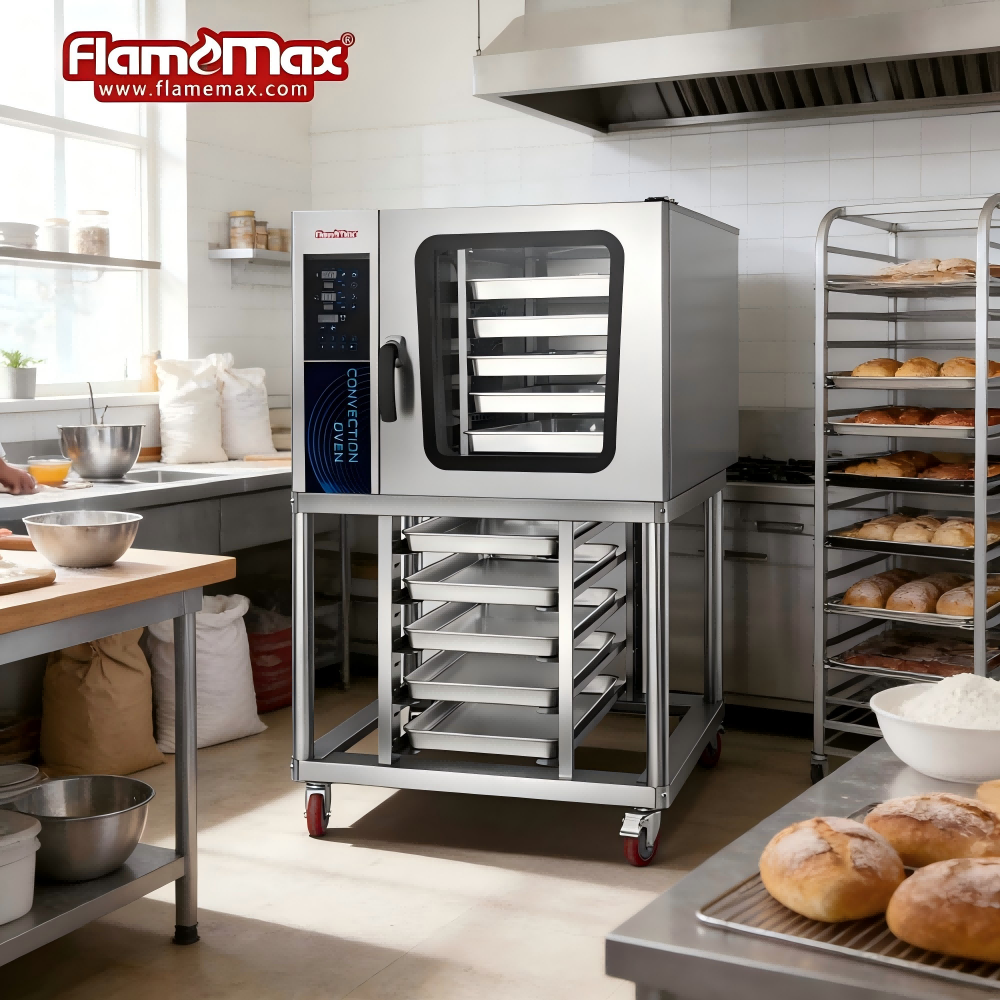
Key Differences Between Ovens:
- Heat Distribution: Convection ovens distribute heat evenly, while traditional ovens rely on passive heat from one direction.
- Cooking Time: Convection ovens cook food faster due to the efficient circulation of heat.
- Energy Efficiency: Convection ovens tend to be more energy-efficient because they cook faster and at lower temperatures.
What Are the Advantages of a Convection Oven?
There are several advantages to using a **convection oven** in a commercial bakery, which can dramatically enhance the quality and consistency of your baked goods. Here are some of the top benefits:
- Faster Cooking Times: The fan helps circulate hot air, which results in faster cooking times compared to traditional ovens.
- Even Baking: The continuous circulation of hot air ensures that your baked goods are cooked evenly, reducing the risk of undercooking or overcooking.
- Improved Product Quality: The consistent heat distribution helps maintain texture, color, and flavor in your products.
- Energy Efficiency: Convection ovens are typically more energy-efficient, as they cook food at lower temperatures, reducing your energy costs.
- Versatility: Convection ovens can bake, roast, and even dehydrate, making them highly versatile for a wide range of bakery needs.
Power Source – Gas or Electric?
When choosing a convection oven, one of the key decisions you’ll need to make is whether to opt for a gas or electric model. Both options have their pros and cons, so it’s important to weigh your needs carefully:
Gas Ovens:
- Faster Heating: Gas ovens typically heat up more quickly than electric ovens, allowing for quicker baking times.
- Lower Operating Costs: Natural gas is generally less expensive than electricity, which can help lower long-term operating costs.
- Higher Initial Costs: Gas ovens can have higher upfront costs and may require specialized installation, which could be an added expense.

Electric Ovens:
- Precise Temperature Control: Electric ovens offer more precise temperature regulation, which is crucial for certain types of baking.
- Lower Installation Costs: Electric ovens are often easier and cheaper to install compared to gas models.
- More Common in Commercial Settings: Many bakeries prefer electric convection ovens due to their ease of use and wide availability.
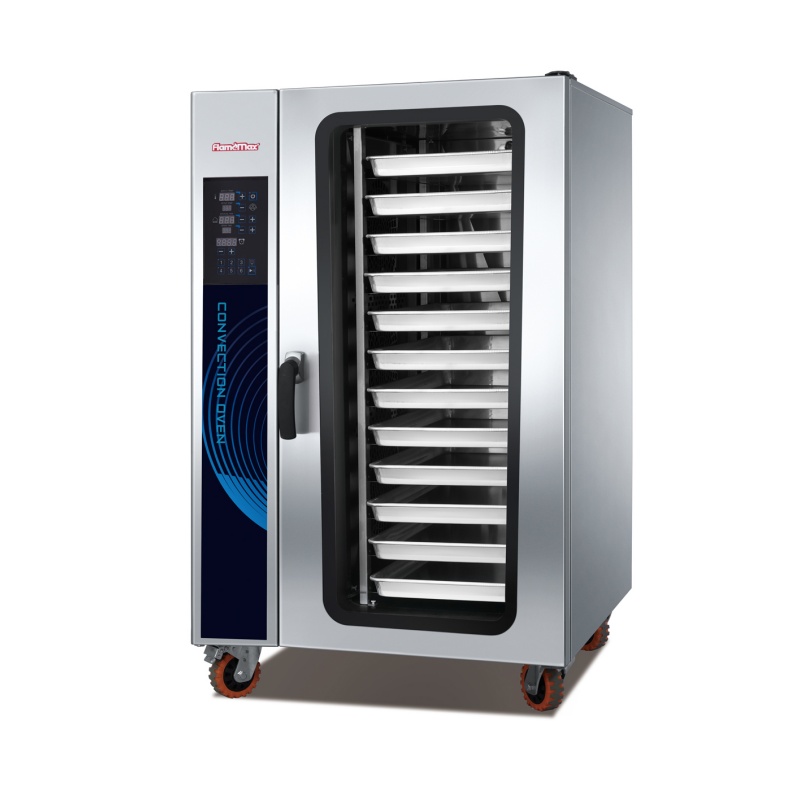
What Types of Commercial Ovens Does FlameMax Offer?
FlameMax has been a leading manufacturer and supplier of **professional bakery equipment** for over 10 years. We offer a variety of **commercial convection ovens** designed to meet the diverse needs of bakery owners. Our ovens are known for their durability, energy efficiency, and exceptional baking results. Some of the key types we offer include:
- Countertop Convection Ovens: Perfect for small bakeries or businesses with limited space, these compact ovens still deliver excellent baking performance.
- Full-Size Convection Ovens: Designed for larger operations, these ovens provide more baking space and are ideal for high-volume bakeries.
- Gas Convection Ovens: For bakery owners who prefer gas-powered options, FlameMax offers gas convection ovens that provide quick heating and lower operating costs.
- Electric Convection Ovens: For precise temperature control and easy installation, our electric convection ovens are perfect for businesses looking for reliability and efficiency.
What Should You Not Bake in a Convection Oven?
While convection ovens are incredibly versatile, there are certain baked goods that are best avoided in these units. Here are some of the key items you should not bake in a **convection oven**:
- Delicate Baked Goods: Items like soufflés, meringues, or delicate cakes may not perform well in a convection oven due to the intense air circulation that can disrupt their structure.
- Uncovered Foods: Foods that require a crisp exterior and soft interior, like bread or pastries, may dry out too quickly in a convection oven.
- Large Roasts or Whole Poultry: The fan may cause uneven cooking in large cuts of meat or poultry, resulting in overcooked exteriors and undercooked interiors.
Conclusion
Choosing the right **commercial convection oven** for your bakery can significantly improve your productivity, product quality, and energy efficiency. By understanding the differences, benefits, and factors such as power source and oven types, you can make an informed decision that suits your business needs.


 English
  Español
  Français
  Italiano
  日本語
日本語  Deutsch
  Русский
  한국어
한국어  简体中文
简体中文