
Why Does Your Commercial Kitchen Equipment Showroom Fail to Convert Visitors into B2B Orders?
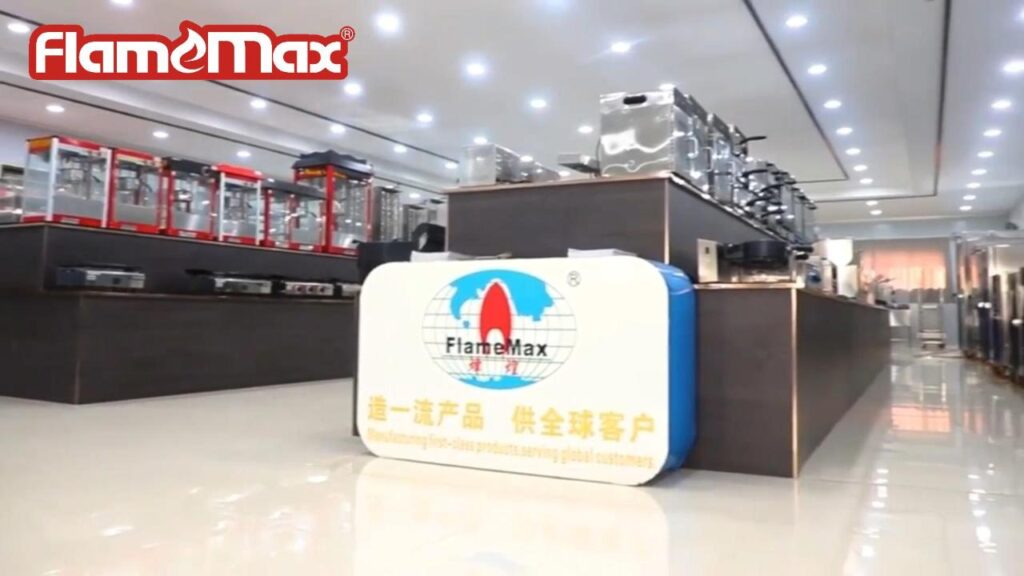
Many commercial kitchen equipment showrooms attract visitors but fail to generate consistent B2B orders. The problem is often not the product range or pricing. Instead, equipment demonstrations lack technical depth, product selection does not match customer applications, and sales teams cannot clearly communicate performance advantages. For importers, hotel supplies distributors, and restaurant equipment dealers, these weaknesses create costly missed opportunities. Customers need more than attractive displays. They require reliable performance data, practical demonstrations, and clear evidence that equipment can meet their operational demands. Without a structured showroom strategy, even high-quality commercial kitchen equipment may struggle to gain buyer confidence. A well-planned commercial kitchen equipment showroom must therefore combine technical demonstration, application-based product selection, operational safety, and measurable sales performance.
What Is the Best Standard for Building a High-Performance Commercial Kitchen Equipment Showroom?
A high-performance commercial kitchen equipment showroom should integrate application-based demonstration SKUs, properly engineered utilities and ventilation, standardized live-demo procedures, and measurable lead conversion indicators. Foshan Nanhai Flamemax Catering Equipment Co., Ltd. supports B2B buyers with commercial cooking, bakery, grill, and display equipment, alongside flexible OEM/ODM customization and technical service. These factors help equipment dealers evaluate products efficiently and improve purchasing decisions.
How Can a Technical Showroom Strategy Improve B2B Equipment Sales?
A successful showroom is more than a product exhibition space. It is a controlled environment where buyers can evaluate equipment functionality, operating conditions, product quality, and commercial suitability. For a restaurant equipment dealer showroom, technical planning directly affects customer confidence and sales efficiency.
The following sections examine four essential elements: demonstration SKU selection, utility and ventilation planning, standardized demonstration scripts, and performance measurement. Each element contributes to a more efficient B2B equipment demonstration process, helping distributors and importers reduce purchasing uncertainty while improving their ability to serve commercial kitchen projects.
1. Choose Demonstration SKUs by Use Case
Product selection is the foundation of showroom performance. A showroom with too many similar products may confuse buyers, while an insufficient product range limits the ability to demonstrate complete kitchen solutions. The most effective approach is to select demonstration SKUs according to specific commercial applications.
Build a Representative Equipment Portfolio
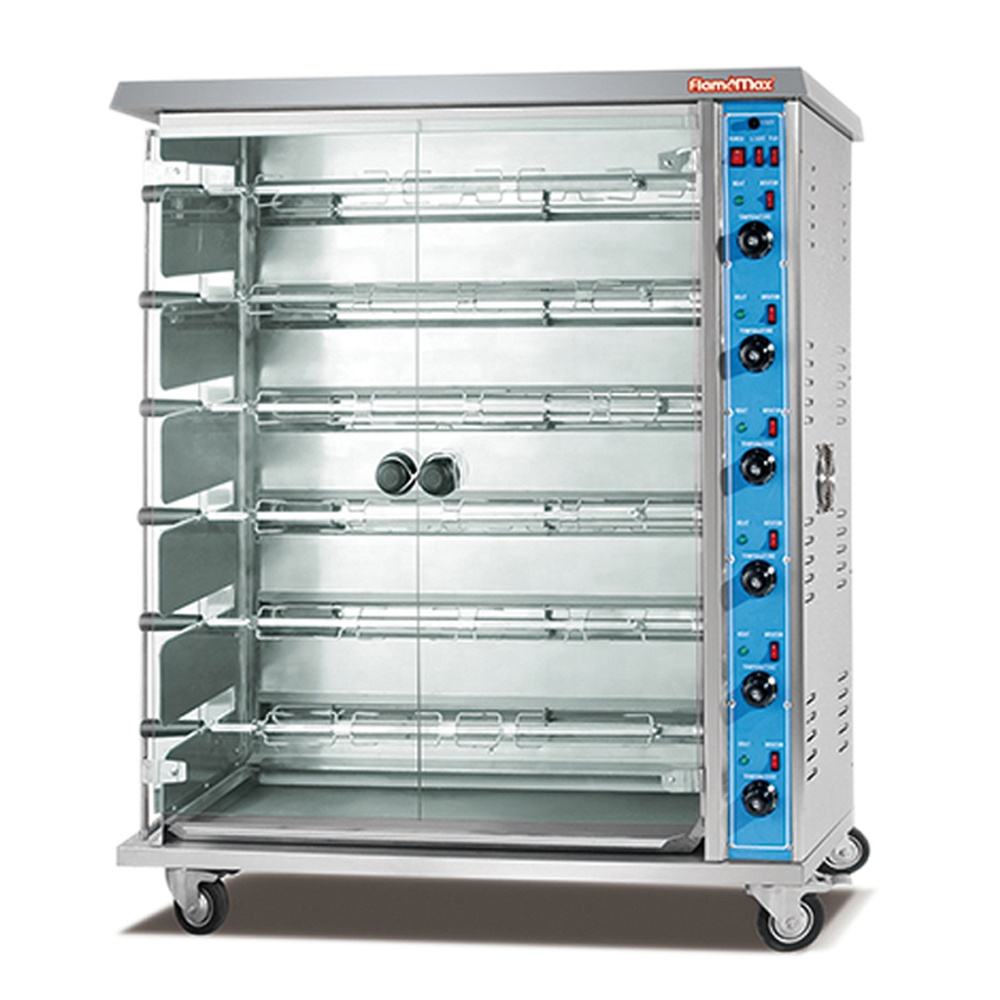
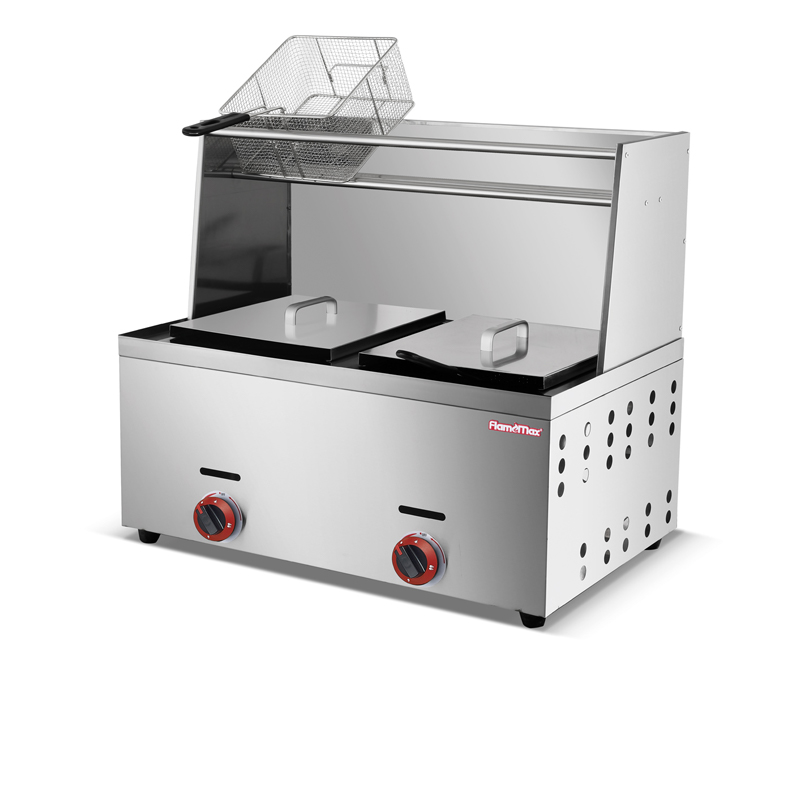
Rather than displaying every available model, dealers should select products that represent different customer requirements, operating capacities, and price levels. For example, a bakery equipment section may include a convection oven, a deck oven, and a dough preparation machine. A cooking equipment section may feature a commercial fryer, griddle, and gas range.
Each demonstration SKU should represent a clear application:
- Bakery equipment: Demonstrate baking consistency, temperature recovery, and production capacity.
- Grill equipment: Evaluate heating uniformity, cooking surface utilization, and grease management.
- Frying equipment: Compare oil capacity, temperature recovery, and batch productivity.
- Display showcases: Examine visibility, temperature stability, and product presentation.
- Snack equipment: Demonstrate operating simplicity, output capacity, and commercial suitability.
Compare Equipment Using Measurable Parameters
Buyers should evaluate equipment based on measurable specifications instead of appearance alone. Parameters such as rated power, working temperature, chamber capacity, recovery time, and production output provide a more reliable comparison framework.
The following table illustrates how dealers can structure a technical comparison between two commercial convection oven configurations. The figures are illustrative, not manufacturer-certified specifications, and must be replaced with actual model data before publication or demonstration.
| Technical Parameter | Model A: Compact Oven | Model B: High-Capacity Oven |
|---|---|---|
| Rated Power | 6 kW | 12 kW |
| Chamber Capacity | 4 trays | 10 trays |
| Working Temperature | 50–250°C | 50–300°C |
| Primary Application | Small bakery or café | Commercial bakery or hotel |
| Installation Requirement | Lower electrical load | Higher electrical load |
This comparison helps buyers understand how equipment specifications influence installation costs, production capacity, and business suitability. A well-designed showroom should also include clear product labels, technical specification sheets, and application-based recommendations.
Prioritize High-Value Demonstration Products
Dealers should prioritize SKUs that attract repeat inquiries, represent significant purchasing value, or support OEM/ODM opportunities. Equipment with multiple configuration options is particularly useful for demonstrating customization capabilities.
Foshan Nanhai Flamemax Catering Equipment Co., Ltd. offers multiple catering equipment categories, enabling B2B buyers to evaluate product combinations for different commercial applications. Its flexible customization services support options such as logo customization, carton design, control panel design, and product color design, subject to model feasibility.
2. Plan Utilities, Ventilation, and Safe Operation
Technical infrastructure is one of the most important considerations when establishing a commercial kitchen equipment showroom. Equipment demonstrations require sufficient electrical capacity, appropriate gas connections where applicable, effective ventilation, and reliable drainage. Poor utility planning can lead to equipment malfunction, unsafe operating conditions, and costly showroom modifications.
Calculate Electrical and Gas Requirements
Before installation, dealers should review the rated voltage, frequency, power consumption, phase configuration, and connection requirements of every demonstration unit. Electrical systems must be designed according to the actual equipment load and applicable local regulations.
For example, a 12 kW electric oven operating at 400 V three-phase has an approximate line current of:
I = P / (√3 × V × PF)
Assuming a power factor of 0.95:
I ≈ 12,000 / (1.732 × 400 × 0.95) ≈ 18.2 A
This calculation is an estimate. Actual current depends on the equipment’s electrical characteristics. Circuit protection, conductor sizing, grounding, and installation must be determined by qualified professionals in accordance with applicable electrical codes.
Design Effective Ventilation and Exhaust Systems
Equipment that generates heat, steam, smoke, or grease requires appropriate ventilation. Commercial fryers, griddles, grills, and gas cooking equipment may require dedicated exhaust hoods and grease management systems, depending on their design and local regulations.
Ventilation planning should consider:
- Heat load: The combined thermal output of operating equipment.
- Exhaust capacity: Airflow required to capture cooking emissions.
- Make-up air: Replacement air needed to maintain proper room pressure.
- Grease filtration: Appropriate filters and cleaning access.
- Fire protection: Required suppression systems and clearances.
- Air balance: Prevention of excessive negative pressure or airflow interference.
Ventilation design should follow relevant local mechanical, fire, and food-service installation requirements. Standards such as NFPA 96, where adopted and applicable, provide guidance for commercial cooking ventilation and fire protection. Requirements differ by country and installation type.
Establish Safe Demonstration Procedures
Safety must be integrated into every showroom demonstration. Operators should receive training before handling high-temperature or gas-powered equipment. Demonstration areas should provide sufficient working clearance, stable equipment positioning, and accessible emergency shutoff devices.
Essential safety measures include:
- Verify electrical grounding and gas connections before operation.
- Check equipment condition and protective components.
- Keep combustible materials away from hot surfaces.
- Use heat-resistant gloves and suitable protective equipment.
- Maintain clear access to emergency shutoff controls.
- Follow manufacturer instructions for cleaning and maintenance.
Equipment demonstrations should only be conducted under appropriate supervision and within the operating limits specified by the manufacturer.
3. Create Live-Demo Scripts for Dealer Sales Teams
A standardized demonstration script helps sales teams deliver consistent technical information. Without a structured process, different sales representatives may explain the same product differently, creating confusion about performance, specifications, and operating procedures.
For a restaurant equipment dealer showroom, demonstration scripts should combine product features with practical customer applications. The objective is to show how equipment performs under representative operating conditions, not simply to describe its appearance.
Develop a Five-Step Demonstration Workflow
- Identify the customer’s application. Determine whether the buyer operates a bakery, hotel kitchen, restaurant chain, fast-food outlet, or catering business.
- Explain key specifications. Introduce rated power, capacity, working temperature, dimensions, and relevant installation requirements.
- Demonstrate the operating process. Show preheating, control panel operation, loading procedures, cooking, and shutdown.
- Evaluate performance. Observe temperature behavior, cooking consistency, production output, and ease of operation.
- Discuss commercial suitability. Explain maintenance requirements, customization possibilities, and purchasing considerations.
Use Repeatable Test Conditions
Technical demonstrations become more credible when operating conditions are controlled. For cooking equipment, sales teams should record the initial equipment temperature, test load, operating settings, test duration, and measured results.
For example, an oven demonstration may use a predefined baking test with consistent tray loading and temperature settings. The sales team can document preheating time, temperature recovery, product color uniformity, and batch consistency.
Results should be presented objectively. If a test uses a specific food product or operating condition, the demonstration report should identify it. Performance results from one test should not be treated as guaranteed results for every application.
Prepare Technical Materials for B2B Buyers
Each demonstration SKU should have a standardized technical package containing:
- Product specification sheet.
- Installation and utility requirements.
- Operating instructions.
- Cleaning and maintenance guidelines.
- Available customization options.
- Warranty and after-sales service information.
These materials are particularly valuable for international importers and hotel supplies distributors. They support internal purchasing evaluations, technical discussions with end customers, and product training for local sales teams.
FLAMEMAX operates as a commercial catering equipment manufacturer with production facilities, professional testing capabilities, and international service support. Its technical materials and customization discussions can help distributors evaluate equipment for different market requirements.

4. Measure Leads, Conversions, and SKU Interest
A showroom should be evaluated according to measurable business performance. Visitor numbers alone cannot determine whether a showroom generates valuable B2B opportunities. Dealers need to track customer engagement, product interest, quotation activity, and actual orders.
Establish Core Showroom KPIs
The following indicators provide a practical framework for evaluating showroom performance:
- Qualified Lead Rate: Percentage of visitors who meet the target B2B customer profile.
- Demonstration-to-Quotation Rate: Percentage of completed demonstrations that generate quotations.
- Quotation-to-Order Conversion Rate: Percentage of quotations converted into confirmed orders.
- SKU Interest Rate: Percentage of qualified visitors who express interest in a specific product.
- Average Order Value: Average commercial value of confirmed showroom-related orders.
- Lead Response Time: Time required to follow up after a showroom visit.
Use a Structured Data Collection System
Each showroom visit should be recorded in a CRM system or structured sales database. The record should include the customer’s company, country, business type, purchasing requirements, demonstration SKUs, estimated order volume, and follow-up status.
For international B2B buyers, additional information may include:
- Target export market and applicable certification requirements.
- OEM/ODM requirements and private-label preferences.
- Expected annual purchasing volume.
- Preferred shipping method and packaging requirements.
- Local after-sales service expectations.
This information helps sales teams identify high-value opportunities and improve product recommendations.
Analyze Conversion Performance with Data
The following table illustrates a hypothetical monthly showroom performance report. The figures are examples for KPI calculation and should not be interpreted as industry benchmarks.
| Performance Indicator | Monthly Result | Calculation |
|---|---|---|
| Qualified B2B Visitors | 120 | Recorded qualified visitors |
| Completed Demonstrations | 72 | 72 ÷ 120 = 60% |
| Issued Quotations | 36 | 36 ÷ 72 = 50% |
| Confirmed Orders | 9 | 9 ÷ 36 = 25% |
| Visitor-to-Order Conversion | 7.5% | 9 ÷ 120 = 7.5% |
These metrics help identify where sales opportunities are being lost. A low demonstration-to-quotation rate may indicate poor product matching or insufficient technical communication. A low quotation-to-order rate may reflect pricing, lead time, customization, or after-sales concerns.
Optimize the Showroom Based on SKU Interest
Monthly SKU interest analysis can reveal which products deserve more demonstration space. If commercial convection ovens, fryers, or pizza ovens consistently generate qualified inquiries, dealers can prioritize those products for live testing and sales training.
Conversely, products with low engagement should be reviewed. Their specifications may not match the target market, their demonstrations may lack clarity, or their positioning may require adjustment.
By combining CRM data with structured demonstrations, dealers can improve showroom efficiency, allocate resources more effectively, and build a stronger B2B sales process.
Conclusion: Build a Technical Showroom That Converts
A successful commercial kitchen equipment showroom combines application-based SKU selection, engineered utilities, safe operation, standardized demonstrations, and measurable sales KPIs. Foshan Nanhai Flamemax Catering Equipment Co., Ltd. supports global B2B buyers with commercial kitchen equipment and flexible customization services. Contact [email protected] or visit www.flamemax.com to discuss equipment sourcing and OEM/ODM requirements.


 English
 Español
 Français
 Italiano
 日本語
 Deutsch
 Русский
 한국어
 简体中文