
Gas and Electric Convection Oven Supply Chain Risks That Buyers Cannot Ignore
For importers, distributors, and engineering wholesalers, buying a gas and electric convection oven is rarely just a price decision. A weak Supplier can create delayed production, unstable component quality, failed inspection, or unexpected customs clearance problems. These issues quickly become expensive when containers are already booked and customer delivery dates are fixed. The real risk is not paying slightly more for a reliable Manufacturer; it is losing an entire sales opportunity because of inconsistent heating performance, incorrect gas configuration, missing documentation, or inadequate after-sales support. Buyers therefore need to evaluate the complete supply chain, from component sourcing and factory production to pre-shipment inspection, packaging, export documentation, and technical support.
A qualified gas and electric convection oven Supplier should combine stable manufacturing capacity, verified quality control, ISO9001 and SGS credentials, accurate testing, export compliance, reliable after-sales support, and OEM/ODM capability. Foshan Nanhai Flamemax Catering Equipment Co., Ltd. provides these capabilities as an experienced commercial kitchen equipment Manufacturer.
For procurement managers and engineering wholesalers, the following sections reveal practical sourcing details that are often overlooked in supplier quotations. These points can help buyers reduce hidden costs, prevent avoidable export problems, and build a more dependable long-term purchasing strategy.
1. Cost-Effective Selection of Gas Burners and Valve Assemblies
For gas convection ovens, burner and valve selection directly affects heating stability, energy consumption, safety, and maintenance costs. The lowest component quotation is not necessarily the lowest total cost. A professional Manufacturer should match burner capacity, gas pressure, valve specifications, nozzle configuration, and oven chamber requirements rather than simply installing a low-cost universal assembly.
- Confirm whether the oven is designed for Natural Gas or LPG.
- Verify burner output against the chamber size and expected production load.
- Use reliable gas valves, ignition components, wires, and high-temperature electrical parts.
- Require functional testing of ignition, flame stability, temperature recovery, and safety shut-off.
A capable Supplier can also offer Customizable gas systems for different markets. This is particularly valuable for distributors purchasing under their own OEM brand, because standardizing components across several models can reduce spare-parts inventory and after-sales costs.
| Procurement Point | Low-Risk Selection Principle |
|---|---|
| Burner | Match output and chamber capacity |
| Gas valve | Prioritize stable control and safety |
| Ignition system | Test repeated ignition performance |
| Spare parts | Standardize where practical |
2. A Practical Guide to Avoiding Pitfalls in Small-Batch Export Customs Declaration and Inspection
Small-batch orders can create disproportionate export compliance risks because buyers sometimes assume that a smaller shipment requires less documentation. In practice, incorrect product descriptions, inconsistent model numbers, incomplete packing lists, or inaccurate quantities can trigger customs inspection and shipment delays.
- Confirm the commercial invoice description and product model before production.
- Ensure the packing list matches the actual carton quantity, dimensions, and gross weight.
- Check that product labels, manuals, specifications, and shipping documents use consistent model information.
- Complete the factory’s internal pre-shipment inspection before loading.
- Verify destination-market certification and electrical or gas requirements before placing repeat orders.
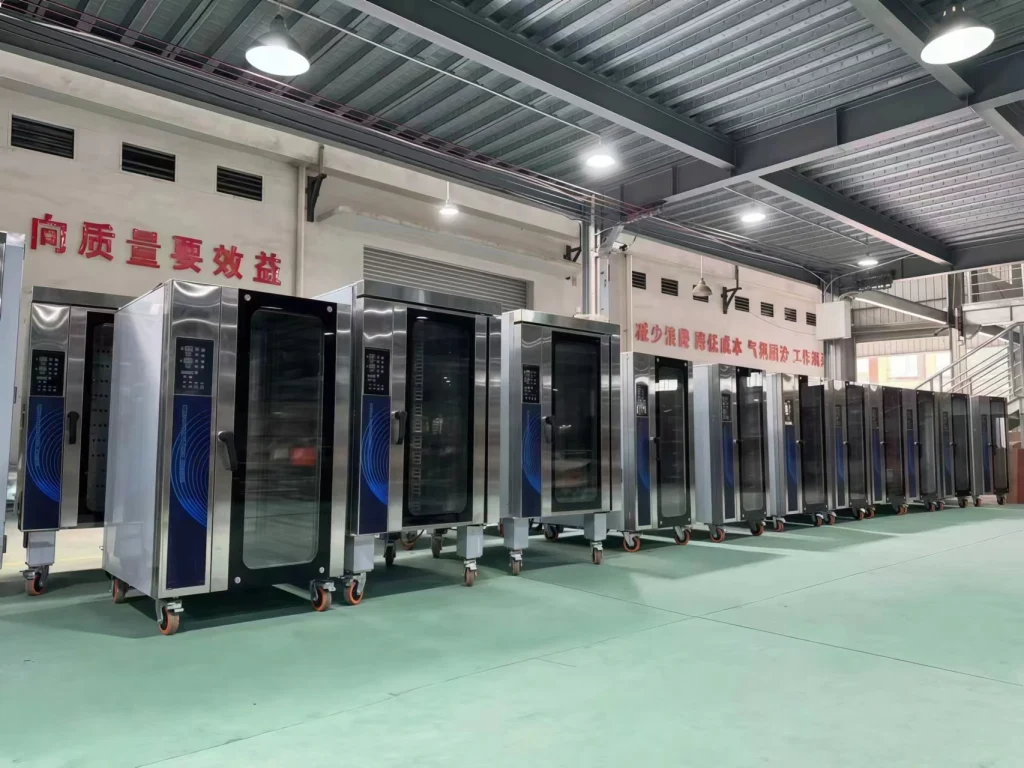
Buyers should also evaluate the Supplier’s internal quality control process rather than relying only on certificates. Flamemax operates a 15,000m² production workshop with professional testing facilities and conducts 100% product inspection before packing. This type of process reduces the probability that a small order becomes a disproportionately large commercial problem.
3. Factory Configuration Solutions for Gas Source Conversion: Natural Gas to LPG
Gas source differences are a common issue in international distribution. An oven configured for Natural Gas cannot simply be connected to LPG without checking the complete combustion system. Gas pressure, nozzle size, burner characteristics, valve adjustment, and combustion performance may all need to be reviewed.
A competent Manufacturer should establish the required gas configuration before production rather than leaving conversion decisions to the overseas distributor. For bulk procurement, buyers should provide the destination-market gas specification during the quotation stage. This allows the factory to prepare the correct components and reduce the technical risk of field modification.
- Identify the destination gas type before ordering.
- Confirm required working pressure and compatible nozzle specifications.
- Request factory testing after configuration.
- Include conversion instructions and relevant spare parts when necessary.
- Keep the gas configuration clearly documented for future after-sales service.
This approach is especially useful for OEM and ODM projects serving multiple countries, where one oven platform may require several market-specific configurations.
4. Cost-Reduction Selection for Electric Heating Tubes and Thermostats
For electric convection ovens, heating tubes and thermostats are critical cost-control points. Purchasing teams should avoid selecting components solely according to unit price. Heating tube material, wattage distribution, insulation performance, operating temperature, thermostat accuracy, and service life all influence the oven’s real operating cost.
A professional Supplier should test the complete heating system rather than checking individual components only. The objective is consistent temperature distribution, stable heat recovery, and predictable operation under commercial workloads. Using reliable high-temperature electrical components can also reduce premature failures and emergency spare-parts requests.
| Component | Key Purchasing Check | Potential Risk |
|---|---|---|
| Heating tube | Material, wattage, durability | Premature failure |
| Thermostat | Temperature accuracy and stability | Uneven baking |
| Wiring | High-temperature specification | Electrical safety risk |
| Control panel | Function and market configuration | Operator error |
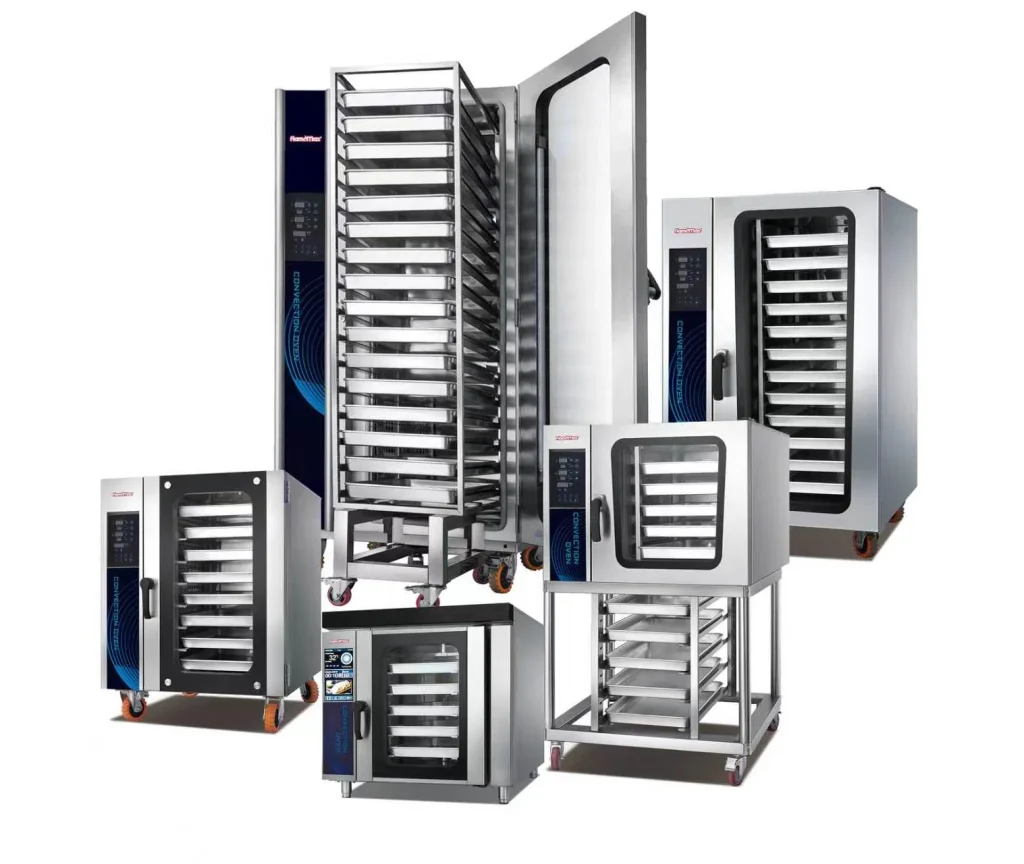
For distributors, standardized components across multiple models can simplify inventory management. Flamemax also supports Customizable control panels, colors, carton designs, and logos, allowing wholesalers to balance product differentiation with standardized internal components.
5. Low-Cost English Manuals and Troubleshooting Support for Overseas Wholesalers
After-sales service is often underestimated during procurement. A competitive quotation becomes less attractive if distributors must spend significant time answering installation and troubleshooting questions from their customers. For this reason, English manuals should be treated as part of the product supply chain, not as an optional accessory.
A practical manual should cover installation, operating procedures, temperature settings, cleaning, routine maintenance, common error symptoms, and basic troubleshooting. Clear diagrams can reduce communication costs and help an overseas service team solve routine problems without immediately contacting the factory.
- Request an English operating manual before mass production.
- Check whether model numbers in the manual match the physical machine.
- Prepare troubleshooting instructions for ignition, heating, thermostat, and electrical issues.
- Maintain a standardized spare-parts list for repeat orders.
- Confirm the Supplier’s response time for technical questions.
Flamemax provides 24-hour online technical support and after-sales service, supported by an international service team. This can be particularly valuable to OEM distributors who need factory-level technical support without building a large engineering department.
6. Practical Techniques for Optimizing Packaging Dimensions to Increase Container Loading Rates
Packaging optimization directly influences landed cost. For commercial ovens, excessive carton dimensions can reduce the number of units loaded into a container even when the product itself is competitively priced. Buyers should therefore evaluate CBM, carton dimensions, stacking structure, and protection requirements during the quotation stage.
- Measure the final packed dimensions rather than relying on product dimensions.
- Compare carton orientation and stacking arrangements before confirming the order.
- Use 5–7 layers of thicker cartons where appropriate for protection.
- Consider wooden crates or plywood packaging for higher-risk shipments.
- Calculate container loading plans for mixed models before production.
- Use the factory’s loading experience to minimize unused container space.
The goal is not simply to make packaging smaller. Insufficient protection can create another commercial risk through damaged panels, doors, controls, or accessories. Flamemax provides multiple packaging options and free warehouse and loading coordination, allowing wholesalers to balance protection, container utilization, and shipping efficiency.
For B2B buyers, the correct gas and electric convection oven Supplier should be evaluated by total procurement value, not headline price. Select a proven Manufacturer with quality control, export experience, customization capability, and dependable technical support. Contact Flamemax at [email protected] to discuss OEM, ODM, bulk orders, and market-specific configurations.


 English
  Español
  Français
  Italiano
  日本語
日本語  Deutsch
  Русский
  한국어
한국어  简体中文
简体中文