
Supply Chain Crisis Risks When Importing FLAMEMAX Rotisserie Ovens
Importers of commercial rotisserie ovens face a painful problem when the wrong Manufacturer or Supplier creates delays, inconsistent quality, or unexpected compliance costs. The pressure becomes serious when restaurant projects, wholesale promotions, or seasonal orders depend on fixed delivery dates. If specifications are changed without approval, spare parts are unavailable, or quality control is weak, buyers can suffer margin erosion, customer complaints, and reputational risk. The solution is to build a controlled sourcing process around verified production capability, documented specifications, factory audit, pre-shipment inspection, export documentation, and after-sales support. FLAMEMAX Rotisserie Ovens should therefore be evaluated not simply by purchase price, but by the supplier’s total ability to control product quality, lead time, customization, compliance, logistics, and long-term service.
A qualified FLAMEMAX Rotisserie Ovens supplier should combine proven manufacturing capacity, stable quality control, applicable safety and electrical compliance documentation, transparent export procedures, OEM/ODM capability, reliable spare-parts support, and responsive communication. Our company, FLAMEMAX, builds procurement value through controlled production and long-term B2B cooperation.
For wholesalers, importers, engineering contractors, and foodservice distributors, the real purchasing advantage is rarely visible on a quotation sheet. The following sections reveal the commercial and supply-chain checkpoints experienced buyers use before placing repeat orders.
A Distributor-Focused Wholesale & Import Supply Chain Guide
Build the Supply Chain Backward from the End Customer
A professional distributor should begin with the target market rather than the factory quotation. Define the application, expected cooking volume, electrical requirements, installation environment, preferred capacity, packaging standards, and expected annual demand before selecting a FLAMEMAX Rotisserie Ovens SKU. This prevents distributors from importing technically unsuitable equipment simply because the unit price appears attractive.
Control the Major Procurement Nodes
A reliable import program should establish clear procurement milestones: technical confirmation, commercial quotation, purchase order, production scheduling, incoming material inspection, assembly inspection, functional testing, final quality inspection, packaging verification, shipment release, and documentation review. For larger programs, a formal factory audit should assess production capacity, testing equipment, workforce stability, traceability, warehouse controls, and corrective-action procedures.
- Specification control: freeze approved drawings, dimensions, electrical data, accessories, and labeling.
- Quality gate: define inspection standards before production begins.
- Logistics control: align production lead time with booking and destination delivery requirements.
- Documentation control: verify invoices, packing lists, certificates, manuals, and shipping documents.
- Risk control: identify alternative components and critical spare parts before mass purchasing.
Use Total Landed Cost, Not Factory Price
The correct sourcing calculation includes equipment price, packaging, inland freight, ocean or air freight, insurance, import duties, customs costs, warehousing, installation support, warranty exposure, and replacement-part costs. A Supplier offering a lower ex-factory price can become more expensive after hidden costs and quality-related claims are included. FLAMEMAX distributors should therefore compare suppliers using Total Cost of Ownership and expected resale profitability rather than headline pricing alone.
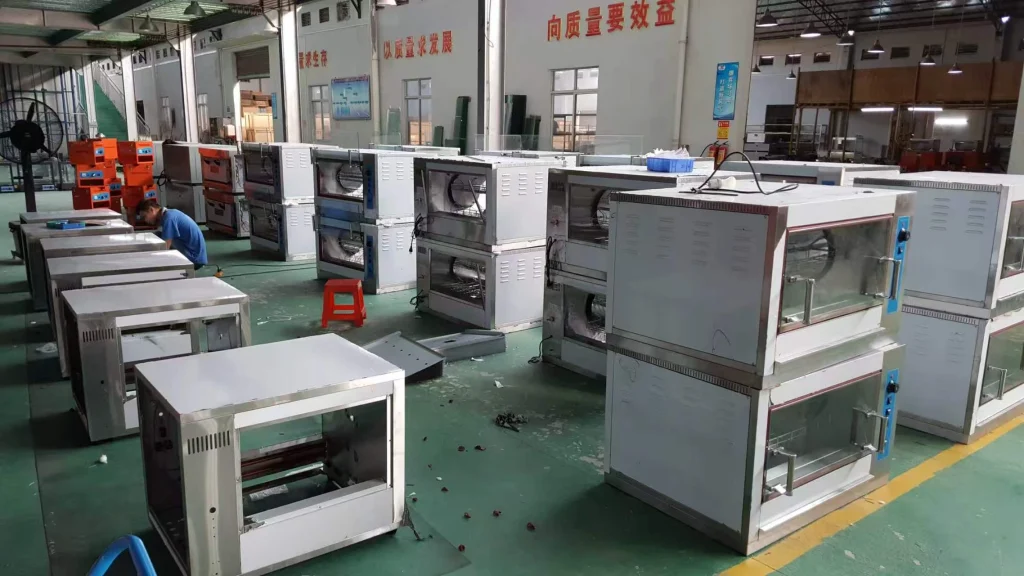
How Wholesalers & Importers Can Maximize Profit Margins with FLAMEMAX Rotisserie Ovens
Profit Starts with Product Positioning
Wholesalers can improve margins by matching FLAMEMAX Rotisserie Ovens to clearly defined customer segments instead of selling one model to every buyer. Restaurants, supermarkets, hotels, catering companies, food courts, and engineering contractors can have different capacity and configuration requirements. A properly selected SKU can reduce discounting because the product specification directly supports the customer’s operating needs.
Use Volume Planning to Improve Commercial Terms
Importers should prepare annual demand forecasts and divide purchases into practical order cycles. Forecast visibility can help a Manufacturer plan components, production slots, packaging materials, and shipping schedules more efficiently. Depending on volume, buyers may negotiate better MOQ, packaging arrangements, payment conditions, spare-parts packages, or promotional support rather than requesting an unrealistic unit-price reduction.
| Commercial Factor | Low-Control Approach | Margin-Focused Approach |
|---|---|---|
| SKU selection | Buy the cheapest model | Match capacity to market demand |
| Order planning | Purchase reactively | Use demand forecasting |
| Customization | Change specifications informally | Document OEM/ODM requirements |
| Warranty | React after complaints | Define service responsibilities in advance |
| Inventory | Overstock slow models | Prioritize high-turnover SKUs |
Protect Margin Through Quality and Service
Profit is not only the difference between purchase and selling prices. Warranty claims, replacement shipments, installation failures, delayed spare parts, and customer returns can quickly consume gross margin. Therefore, wholesalers should evaluate the Supplier’s service responsiveness, spare-parts availability, troubleshooting documentation, and technical communication before committing to a large order.
- Calculate expected margin using landed cost, not FOB price alone.
- Separate fast-moving and project-specific SKUs.
- Negotiate accessories and spare parts as part of the commercial package.
- Monitor defect rates and customer complaints by batch.
- Review profitability after every major shipment cycle.
What Every Wholesaler Must Know
Compliance Is a Commercial Requirement
Commercial cooking equipment may be subject to different electrical, safety, labeling, environmental, and documentation requirements depending on the destination country. Buyers should never assume that a generic certificate automatically satisfies local regulations. Before purchase, the importer should confirm the applicable requirements and request relevant documentation such as CE, CB, RoHS, electrical safety test reports, declarations, or other market-specific documentation where applicable.
Audit the Supplier, Not Just the Product
A polished sample cannot prove stable mass production. A professional Supplier audit should examine production lines, component sourcing, testing procedures, calibration records, quality personnel, warehouse management, traceability, non-conforming product handling, and corrective action procedures. For repeat buyers, the audit should be refreshed periodically because production capability, subcontractors, management systems, and component sources can change.
Understand the Four Most Important Audit Checkpoints
- Pre-production audit: confirm specifications, components, drawings, packaging, and production readiness.
- During-production inspection: identify assembly or component deviations before the entire batch is completed.
- Pre-shipment inspection: verify appearance, dimensions, functions, electrical performance, accessories, labeling, and packaging.
- Post-delivery review: analyze field feedback, warranty cases, spare-parts consumption, and corrective actions.
| Audit Area | Buyer Should Verify |
|---|---|
| Factory capability | Production capacity, equipment, workforce, process control |
| Quality system | Inspection records, traceability, calibration, corrective actions |
| Compliance | Applicable certificates, reports, labels and declarations |
| Components | Critical electrical and mechanical component consistency |
| Service | Warranty process, manuals, spare parts and response time |
Beware of Commercial Red Flags
Wholesalers should investigate inconsistent specifications, unexplained price changes, unclear certificate ownership, excessive dependence on subcontracting, unusually short lead-time promises, poor documentation, and reluctance to support inspections. These are potential indicators of compliance risk, quality risk, delivery risk, or after-sales risk. Strong buyers do not eliminate all risk; they make risks visible before money and inventory are committed.
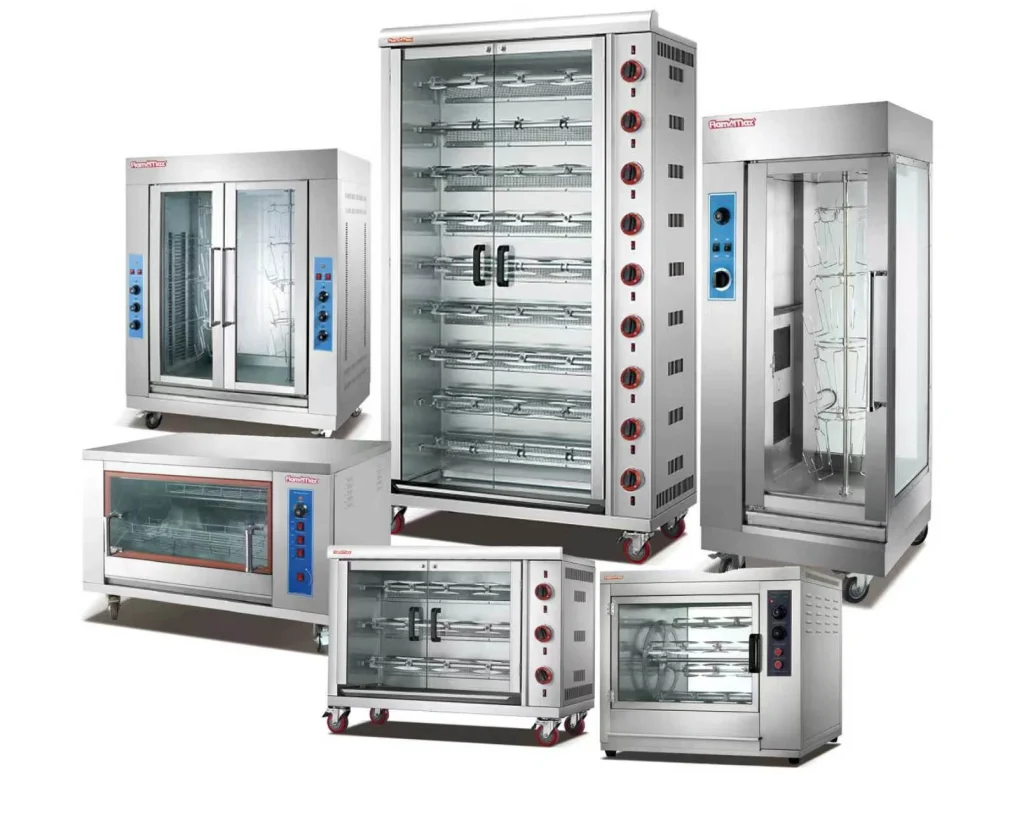
Selecting the Right SKU Mix for Your Local Wholesale Market
Start with Market Segmentation
The best SKU portfolio depends on local customer behavior. A distributor serving independent restaurants may prioritize compact, cost-efficient rotisserie ovens, while a hotel-equipment distributor may require higher-capacity configurations, premium finishing, specific electrical systems, or project-based customization. FLAMEMAX can support Customizable solutions where the commercial requirement justifies an OEM or ODM development process.
Use a Three-Tier Portfolio
A practical wholesale strategy is to divide the portfolio into entry, mainstream, and project-oriented products. The entry tier attracts price-sensitive buyers; the mainstream tier should generate the highest turnover; and the project tier provides opportunities for larger contracts and differentiated specifications. This structure prevents excessive inventory concentration in slow-moving models while giving sales teams a clear product ladder.
- Core SKU: maintain consistent stock and prioritize fast replenishment.
- Value SKU: target competitive tenders and price-sensitive distributors.
- Premium/project SKU: support hotels, chains, contractors, and customized applications.
- OEM/ODM SKU: develop only when projected volume can justify engineering and tooling investment.
Control Inventory with Data
Before importing, estimate monthly sales velocity, seasonal demand, average lead time, safety stock, and reorder point. A simple inventory model can prevent both stockout risk and excess inventory risk. For example, if a core SKU has reliable monthly demand but a long production cycle, the importer should establish a replenishment trigger before inventory reaches the level at which a new order can no longer arrive in time.
Do Not Over-Customize the Standard Range
Customization can differentiate a distributor, but too many variants increase purchasing complexity, spare-parts requirements, training needs, and service costs. The best approach is to keep a stable standard platform while using carefully controlled Customizable options for dimensions, electrical specifications, branding, packaging, accessories, and market-specific requirements.
Wholesale Terms, Customization and After-Sales Support for FLAMEMAX Rotisserie Oven Importers
Make Commercial Terms Explicit
Every wholesale project should document the agreed Incoterms, MOQ, production lead time, payment terms, packaging specification, inspection procedure, warranty scope, spare-parts policy, and documentation requirements. Ambiguous commercial terms create avoidable dispute risk. Buyers should also define who is responsible for destination-country compliance, installation, commissioning, freight damage claims, and local service.
Understand OEM and ODM Correctly
OEM is appropriate when the buyer needs defined branding or approved specifications based on an established product platform. ODM is more suitable when the buyer requires deeper product development, design modification, or differentiated engineering. A professional Manufacturer should establish a written technical specification, approval process, prototype procedure, tooling responsibility, ownership terms, and change-control mechanism before development begins.
Build After-Sales Capability Before the First Shipment
After-sales support should never be treated as an emergency activity. Importers should receive operation manuals, installation guidance, troubleshooting information, exploded diagrams where applicable, recommended spare-parts lists, and clear warranty procedures. A Supplier capable of providing structured technical support helps distributors protect their local reputation and reduce unnecessary site visits.
Recommended Procurement Documentation
- Approved product specification and quotation.
- Signed purchase order with agreed commercial terms.
- OEM/ODM specification approval, when applicable.
- Applicable compliance certificates and test documentation.
- Production inspection and pre-shipment inspection records.
- Final packing list, invoice, shipping documents, manuals, and spare-parts information.
- Warranty and after-sales contact procedure.
Turn Supplier Relationship into a Long-Term Asset
The strongest wholesale relationship is based on predictable communication rather than one-time price negotiation. Quarterly reviews can evaluate delivery performance, defect rates, customer feedback, new market requirements, forecast accuracy, and upcoming OEM/ODM projects. This creates a continuous improvement cycle in which the Manufacturer and distributor jointly reduce supply-chain risk, improve product-market fit, and protect long-term margins.
Make the Right Choice for Your Next FLAMEMAX Rotisserie Oven Order
Choose a FLAMEMAX Rotisserie Ovens partner based on manufacturing capability, compliance, quality control, commercial transparency, customization, and after-sales strength—not price alone. Contact our team to review your market, SKU requirements, OEM/ODM needs, and wholesale plan, and build a safer, more profitable supply program.



 English
  Español
  Français
  Italiano
  日本語
日本語  Deutsch
  Русский
  한국어
한국어  简体中文
简体中文