
Supply Chain Risks in Sourcing FLAMEMAX Rapid Cook Oven 23L: How Procurement Delays and Quality Issues Threaten Commercial Returns
For commercial kitchen equipment importers, hotel supply distributors, and catering equipment wholesalers, sourcing a 23L rapid cook oven involves more than comparing factory quotations. Unreliable suppliers, inconsistent product quality, and unexpected shipment delays can disrupt distribution plans and damage customer relationships. When a Manufacturer fails to maintain production consistency, procurement risks quickly translate into financial losses, particularly for buyers handling bulk orders or OEM projects. Rising logistics costs, uncertain lead times, and inadequate after-sales support further complicate international purchasing decisions. These challenges can reduce profit margins and weaken market competitiveness. Therefore, selecting a reliable Supplier with proven manufacturing capabilities, strict quality control, flexible customization, and dependable supply chain management is essential for protecting procurement investments and ensuring sustainable business growth.
Foshan Nanhai Flamemax Catering Equipment Co., Ltd. is a professional catering equipment Manufacturer offering the FLAMEMAX Rapid Cook Oven, Capacity 23L. A qualified Supplier should demonstrate consistent production quality, documented compliance, reliable lead-time management, export-ready packaging, and responsive after-sales support. With 16 years of manufacturing experience, a 15,000m² production workshop, ISO9001 and SGS certified factory credentials, FLAMEMAX supports B2B buyers seeking dependable wholesale, OEM, ODM, and Small-batch wholesale sourcing solutions.
Importers, procurement managers, and engineering wholesalers need to understand the commercial factors behind a successful rapid cook oven purchasing strategy. The following guide explores manufacturing efficiency, operational cost control, international logistics, menu standardization, and after-sales resilience. These industry insights help buyers evaluate suppliers beyond the initial quotation and develop a more sustainable sourcing strategy.
1. Space vs. Output: How the 23L Cavity Maximizes Revenue per Square Meter in High-Rent Stores
For urban cafés, convenience stores, foodservice chains, and compact commercial kitchens, floor space is a significant operating expense. A 23L rapid cook oven offers an opportunity to balance cooking capacity with a relatively compact equipment footprint. The commercial objective is to improve **revenue per square meter** without unnecessarily expanding kitchen infrastructure.
A compact rapid cook oven may support several menu applications, including sandwiches, baked snacks, and selected ready-to-serve meals, depending on the approved operating specifications. This versatility can help retailers increase menu variety while reducing the need for multiple dedicated appliances.
Procurement Considerations for Space-Efficient Equipment
When evaluating a Manufacturer, purchasing teams should examine:
- Equipment footprint: Confirm dimensions, installation clearances, ventilation requirements, and countertop suitability.
- Production capacity: Evaluate cooking performance against anticipated customer traffic and peak-hour demand.
- Menu versatility: Assess whether the oven can support the buyer’s intended product categories.
- Workflow integration: Determine whether the equipment simplifies preparation and reduces unnecessary movement.
- Commercial scalability: Consider whether the same equipment configuration can be deployed across multiple outlets.
Revenue Optimization Through Equipment Standardization
For hotel supplies distributors and catering equipment wholesalers, standardized equipment simplifies procurement and inventory planning. A 23L cavity may be particularly attractive for businesses serving small-format foodservice operations.
However, capacity alone does not determine profitability. Buyers should request validated cooking performance data, actual dimensions, and application-specific demonstrations before making purchasing decisions.
| Evaluation Factor | Procurement Objective | Business Benefit |
|---|---|---|
| 23L cavity capacity | Match equipment to menu demand | Efficient space utilization |
| Compact footprint | Reduce installation space | Improved layout flexibility |
| Multi-menu capability | Consolidate cooking applications | Potential equipment cost savings |
| Standardized configuration | Deploy across multiple outlets | Simplified purchasing and maintenance |
2. The TCO Breakdown: How Ventless Design and Energy Efficiency Slash Operating Costs for the FLAMEMAX Rapid Cook Oven
The initial purchase price is only one component of the **Total Cost of Ownership (TCO)**. Professional importers and distributors should consider electricity consumption, installation expenses, maintenance requirements, labor efficiency, and equipment lifecycle costs when comparing rapid cook ovens.
A ventless design, where supported by the specific product configuration and installation conditions, may reduce the need for additional exhaust infrastructure. This can be valuable for compact retail stores, cafés, and commercial kitchens where installation space is limited. Nevertheless, buyers must verify local ventilation regulations, installation requirements, and the manufacturer’s approved operating conditions before finalizing an order.
Understanding the Total Cost of Ownership
A practical TCO assessment should include the following cost categories:
- Purchase Cost: Factory quotation, customization charges, and procurement expenses.
- Installation Cost: Electrical connections, ventilation arrangements, and commissioning.
- Energy Cost: Electricity consumption under actual operating conditions.
- Labor Cost: Preparation time, cooking supervision, and staff training.
- Maintenance Cost: Replacement parts, technical support, and preventive servicing.
- Downtime Cost: Potential revenue losses caused by equipment failure.
- Lifecycle Cost: Expected service life, repair frequency, and replacement requirements.
Energy Efficiency and Procurement Verification
Energy efficiency should be evaluated through measurable operating data rather than marketing claims. Buyers can request rated power, standby consumption, cooking-cycle energy measurements, and application-specific performance results.
| TCO Component | Required Supplier Information | Procurement Risk |
|---|---|---|
| Electricity consumption | Rated power and test data | Unanticipated operating costs |
| Installation | Electrical and ventilation specifications | Unexpected installation expenses |
| Maintenance | Spare parts list and service procedures | Extended equipment downtime |
| Product lifecycle | Warranty terms and maintenance guidance | Premature replacement costs |
FLAMEMAX supports B2B buyers through manufacturing experience, quality inspection processes, and technical assistance. For distributors, a transparent TCO evaluation provides a stronger foundation for wholesale pricing and long-term customer profitability.
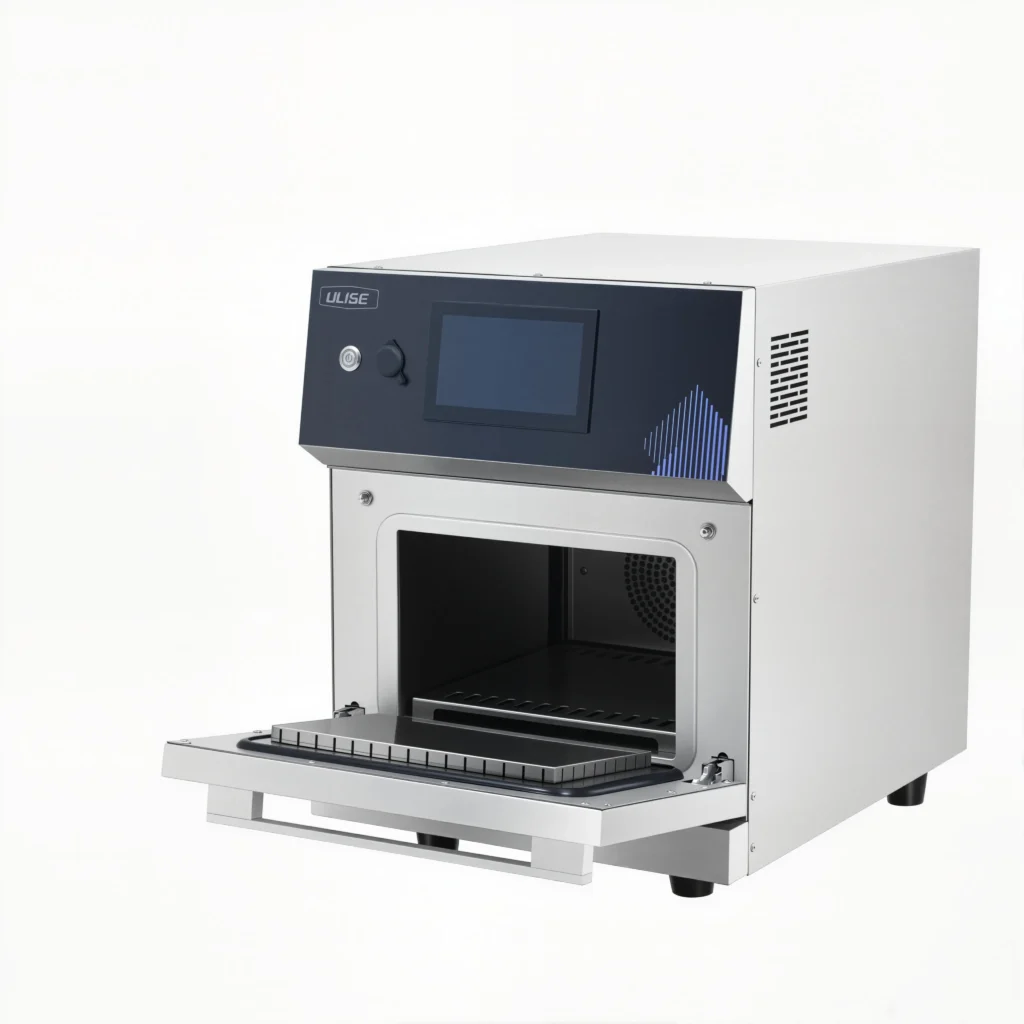
3. Global Logistics & Delivery Reliability: Voltage Adaptability, Anti-Vibration Packaging, and Lead-Time Assurance
International procurement of commercial kitchen equipment requires coordinated management of product specifications, manufacturing schedules, packaging standards, and shipping documentation. For importers in South Africa, Peru, the Philippines, Europe, and other international markets, logistics reliability directly affects inventory availability and customer delivery commitments.
Voltage adaptability is particularly important when sourcing electrical cooking equipment from China. Buyers should confirm the available voltage, frequency, plug configuration, rated power, and electrical safety requirements for their destination market before placing a purchase order.
Electrical Specification Verification
A professional Supplier should provide a detailed specification sheet covering:
- Rated voltage and frequency.
- Rated power and electrical connection requirements.
- Compatible plug or connection configuration.
- Applicable electrical safety requirements.
- Control system configuration and available customization.
Voltage mismatch can create serious commercial risks, including installation failure, equipment damage, and customer complaints. Electrical adaptability must be confirmed in writing rather than assumed.
Anti-Vibration Packaging and Export Protection
Long-distance transportation exposes equipment to vibration, impact, moisture, and repeated handling. FLAMEMAX offers packaging options including thicker multi-layer cartons, wooden crates, and plywood packaging, subject to order requirements.
Effective export packaging should protect critical components and minimize movement during transit. Buyers should specify packaging requirements according to shipping method, destination handling conditions, and product fragility.
Lead-Time Assurance and Shipment Coordination
Reliable delivery planning involves several critical checkpoints:
- Purchase Order Confirmation: Finalize specifications, quantity, customization, and payment terms.
- Production Scheduling: Confirm material availability and manufacturing capacity.
- Pre-Shipment Inspection: Verify product performance, appearance, and packaging.
- Shipping Documentation: Prepare commercial invoices, packing lists, and other required export documents.
- Loading Coordination: Arrange shipment planning and container loading procedures.
FLAMEMAX provides warehouse and loading coordination support for international customers. Buyers should establish a mutually agreed delivery schedule and identify potential **lead-time risks**, including component shortages, customization delays, and shipping disruptions.
4. “Kitchen Without Chefs”: Standardizing Menus via One-Touch USB Programming on the FLAMEMAX Rapid Cook Oven
For foodservice chains, convenience stores, and hotel supply distributors, operational consistency is a key purchasing consideration. Equipment that simplifies cooking procedures can help reduce training complexity and improve repeatability across multiple locations.
One-touch programming and USB recipe management can be valuable features when included in the specific FLAMEMAX Rapid Cook Oven configuration. These functions may allow operators to transfer predefined cooking programs, helping standardize preparation procedures across outlets.
Menu Standardization and Operational Efficiency
A standardized cooking program can help establish repeatable operating procedures. For example, a chain operating several retail food outlets may need consistent preparation settings for selected sandwiches or baked snacks.
The procurement team should verify the following technical details with the Manufacturer:
- USB Programming: Confirm whether recipe transfer is supported and identify compatible file formats.
- One-Touch Operation: Evaluate the available control interface and programming workflow.
- Recipe Storage: Determine the number of supported programs and storage limitations.
- Program Compatibility: Confirm whether recipes can be transferred between units of the same configuration.
- Staff Training: Assess the time and resources required for operator onboarding.
Commercial Benefits for Multi-Outlet Buyers
Menu standardization can reduce reliance on individual operator experience. It may also support more predictable product quality, simplified training, and centralized menu management.
However, the phrase “Kitchen Without Chefs” should be interpreted as reduced dependence on specialized cooking skills rather than complete elimination of skilled personnel. Food safety, ingredient preparation, cleaning, and quality monitoring remain essential.
For OEM and ODM projects, buyers may discuss customized control panels, branding, and operational interfaces with FLAMEMAX. Before confirming customization, distributors should evaluate software compatibility, technical feasibility, and the implications for after-sales service.
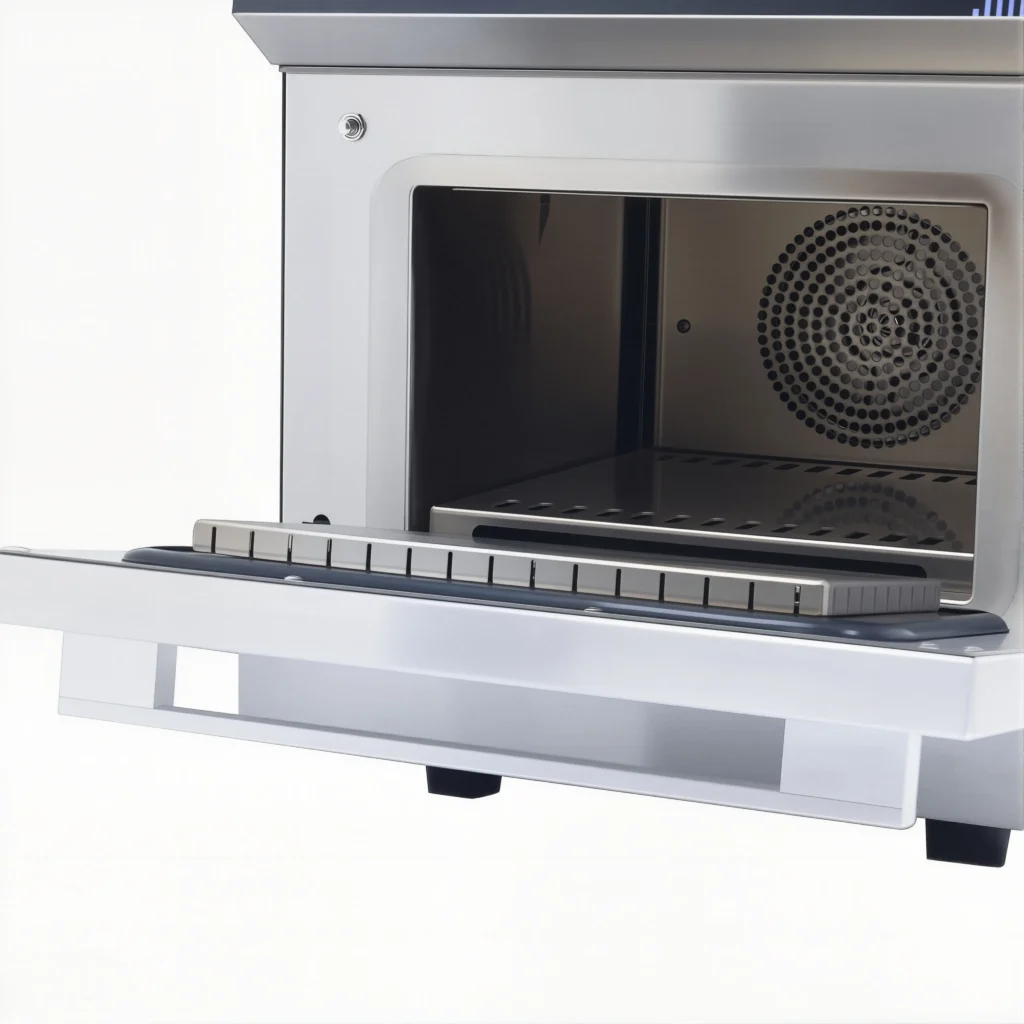
5. After-Sales & Supply Chain Resilience: Modular Spare Parts and Remote Troubleshooting for Distributors
After-sales service is a major factor in commercial kitchen equipment procurement. Importers and hotel supplies distributors often operate their own service networks, making spare parts availability and technical documentation essential for maintaining customer satisfaction.
A reliable Manufacturer should support distributors with clear maintenance procedures, accessible technical information, and responsive communication. FLAMEMAX provides 24-hour online technical support and after-sales service, helping international customers coordinate technical inquiries and troubleshooting.
Modular Spare Parts and Maintenance Planning
A modular maintenance approach can simplify the identification and replacement of components when the product architecture supports it. Buyers should request a detailed spare parts list and establish an inventory strategy based on sales volume, installed equipment base, and service frequency.
Important procurement considerations include:
- Spare Parts Availability: Confirm the availability and replenishment lead times of critical components.
- Parts Identification: Obtain exploded diagrams, part numbers, and maintenance documentation.
- Warranty Conditions: Clarify coverage periods, exclusions, and claim procedures.
- Technical Training: Determine whether distributor technicians can receive product training.
- Remote Troubleshooting: Confirm available communication channels and diagnostic support.
Building a Resilient Distribution Supply Chain
Distributors should maintain a structured after-sales process to minimize equipment downtime and reduce service costs.
- Record the equipment model, serial number, installation date, and customer information.
- Identify the reported fault and collect relevant photographs, videos, or operating details.
- Consult the Manufacturer’s technical team for troubleshooting guidance.
- Determine whether the issue requires adjustment, component replacement, or professional servicing.
- Document the resolution and update the maintenance record.
Quality Assurance and Audit Nodes
Supply chain resilience also depends on preventive quality management. FLAMEMAX operates a 15,000m² production workshop, utilizes advanced manufacturing facilities, and conducts 100% product inspection before packing.
Professional procurement teams should establish a quality verification framework covering:
- Supplier Qualification Audit: Assess factory capabilities, production capacity, and business reliability.
- Incoming Material Inspection: Verify critical components against approved specifications.
- In-Process Quality Control (IPQC): Monitor assembly and manufacturing consistency.
- Final Quality Inspection (FQC): Check product appearance, electrical performance, and functional operation.
- Pre-Shipment Inspection (PSI): Confirm order conformity before shipment.
- Compliance Documentation Audit: Verify applicable ISO9001, SGS documentation, and destination-market certifications or declarations.
It is important to distinguish factory certifications from product-specific approvals. Buyers should request current, relevant documentation and verify whether the specific 23L rapid cook oven complies with applicable regulations in the importing country.
Conclusion: Secure a Reliable Rapid Cook Oven Supply Chain with FLAMEMAX
Choosing the right 23L rapid cook oven Supplier requires more than competitive pricing. Manufacturing consistency, TCO transparency, logistics reliability, customization capabilities, and after-sales resilience are essential procurement factors. FLAMEMAX welcomes international importers, wholesalers, and OEM/ODM partners to discuss their sourcing requirements. Contact [email protected] or visit www.flamemax.com to request product specifications, wholesale quotations, and customized procurement solutions.



 English
 Español
 Français
 Italiano
 日本語
 Deutsch
 Русский
 한국어
 简体中文