
Supply Chain Crisis Risks in Commercial Bakery & Convection Oven Procurement
When a high-volume kitchen depends on commercial bakery and convection ovens, one delayed shipment can quickly become a production problem. The Problem is rarely just equipment availability; it can involve inconsistent specifications, missing compliance certificates, unstable component supply, or weak after-sales support. The Agitation begins when installation dates are missed, utility planning has to be repeated, or an entire project faces costly downtime. The Solution is to work with a proven Manufacturer and Supplier that controls specifications, production, testing, documentation, packaging, and export logistics from one coordinated Supply Chain. For buyers of FLAMEMAX Bakery & Convection Ovens, supplier qualification must therefore go beyond price and catalog appearance.
A qualified supplier should combine proven manufacturing capability, stable component sourcing, documented quality control, export compliance, reliable testing, responsive engineering support, and flexible OEM/ODM production. Our company applies these criteria to help commercial buyers select a dependable Manufacturer and long-term Supplier for FLAMEMAX Bakery & Convection Ovens.
For procurement managers, kitchen-equipment distributors, engineering contractors, and foodservice wholesalers, the following sections reveal the practical considerations experienced buyers examine before signing a purchase order. These are the details that often separate a profitable project from an expensive equipment problem.
1. Commercial Convection Oven: Gas vs Electric for High-Volume Kitchens
The choice between gas and electric commercial convection ovens should begin with the operating environment rather than the equipment price. For a high-volume bakery or central kitchen, the buyer must evaluate production capacity, available utilities, local energy costs, ventilation requirements, temperature control, and expected operating hours. Gas models can be attractive where natural gas or LPG infrastructure is already established, particularly when continuous high-output cooking is required. Electric ovens, however, can provide precise temperature management and may simplify installation where adequate electrical capacity is available.
| Evaluation Factor | Gas Oven | Electric Oven |
|---|---|---|
| Utility requirement | Gas supply + electrical controls | Higher electrical capacity |
| Temperature control | Strong, depending on burner system | Typically highly precise |
| Ventilation | Usually more demanding | Generally simpler |
| Project suitability | High-output facilities with gas infrastructure | Urban kitchens and controlled indoor environments |
A professional Supplier should not recommend one configuration universally. Instead, the Manufacturer should review the buyer’s kitchen layout, electrical or gas infrastructure, target recipes, batch frequency, and local regulations. A Customizable configuration may be more commercially appropriate than a standard model. For distributors, offering OEM or ODM options can also create differentiated product lines without developing an oven platform entirely from scratch.
2. Energy and Utility Requirements
Utility planning is one of the most frequently underestimated stages of commercial oven procurement. An oven may have an attractive purchase price but become unsuitable if the site lacks sufficient electrical capacity, gas pressure, ventilation capability, or connection infrastructure. Buyers should therefore request a complete Utility Requirement Sheet before finalizing the Purchase Order. This document should identify rated power, voltage, frequency, phase configuration, gas type where applicable, gas consumption, connection specifications, and recommended protective devices.
For international projects, voltage and frequency differences are especially important. A professional Manufacturer should confirm whether the requested equipment is suitable for the destination market rather than simply modifying the nameplate after production. The procurement team should verify:
- Rated electrical power and site load requirements.
- Voltage, frequency, and phase compatibility.
- Gas pressure, gas type, and connection requirements for gas models.
- Breaker, cable, and protection requirements.
- Water, drainage, or steam-related requirements where applicable.
- Ventilation and exhaust capacity.
These details should be frozen during the Technical Approval stage. Changing utilities after production can create additional engineering costs, shipment delays, or Commercial Risk. A capable OEM/ODM Supplier should maintain a documented revision process so engineering changes are approved before manufacturing begins.
3. Heat Recovery and Production Consistency
For commercial bakeries and high-volume kitchens, energy efficiency is only one part of oven performance. The more important business question is whether the oven can repeatedly deliver the same cooking result across hundreds or thousands of production cycles. Heat recovery after door opening, chamber temperature stability, airflow distribution, insulation quality, and control-system response all influence production consistency.
Procurement teams should therefore evaluate the oven as a production asset rather than a simple heating appliance. A qualified Manufacturer should be able to explain how the heating system and airflow design support recovery between batches. Buyers should also ask whether factory testing includes temperature verification and functional checks under defined operating conditions.
Key Production-Control Questions
- How quickly does the chamber recover after frequent door opening?
- How consistent is temperature distribution throughout the chamber?
- How are heating elements, burners, fans, and controls tested?
- Is each unit subjected to a documented Factory Acceptance Test?
- Are serial numbers connected to inspection and production records?
For an international Supply Chain, traceability matters because a distributor may receive customer complaints months after delivery. A professional Supplier should be able to connect the finished unit to production records, inspection results, spare parts information, and shipment documentation. This reduces Warranty Risk and strengthens long-term distributor confidence.
4. Installation and Ventilation
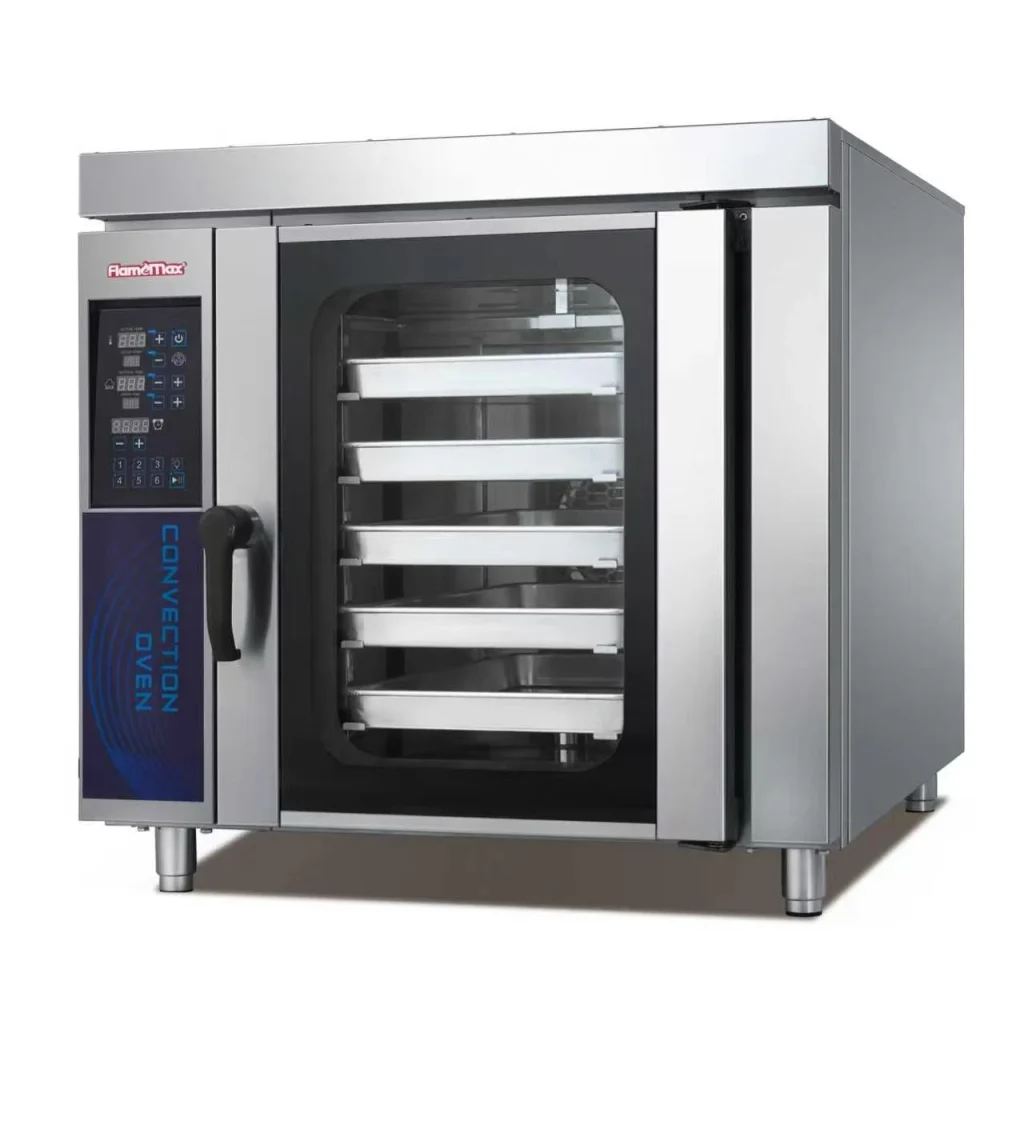
Installation should be treated as a project-management issue, not something left until the oven arrives at the customer’s facility. Before shipment, the buyer, contractor, and Supplier should confirm access dimensions, floor conditions, utility connections, ventilation, clearance requirements, service access, and commissioning procedures. A technically suitable oven can still create serious Project Risk if it cannot pass through the building entrance or if the planned exhaust system is inadequate.
Gas-powered equipment normally requires particularly careful coordination between the oven Manufacturer and local installation professionals. Electrical models also require verification of power capacity and protection. Local building, fire, electrical, gas, and foodservice regulations should be reviewed by the responsible project team before installation.
Recommended Installation Sequence
- Confirm the approved oven model and final technical specification.
- Verify site dimensions, access routes, and service clearances.
- Confirm electrical, gas, and ventilation requirements.
- Review applicable Local Compliance Requirements.
- Complete delivery inspection and record any transport damage.
- Perform professional installation and utility connection.
- Conduct commissioning and functional testing.
- Record commissioning results for future service and warranty reference.
For export projects, the Manufacturer should also provide appropriate technical manuals, wiring information, installation guidance, and required Compliance Documentation. Depending on the destination market and equipment configuration, buyers may need documentation related to standards such as CE, UKCA, or other applicable electrical, gas, EMC, safety, or food-contact requirements. Certification requirements should always be confirmed for the specific destination and model rather than assumed from a generic certificate.
5. TCO Questions for Buyers
The most professional purchasing decision is based on Total Cost of Ownership (TCO), not simply the initial quotation. The purchase price is only one component. Buyers should also evaluate freight, installation, utilities, maintenance, spare parts, labor, downtime, warranty exposure, and expected service life. A low-cost oven can become expensive if replacement parts are difficult to source or if inconsistent performance reduces production efficiency.
| TCO Category | Questions Buyers Should Ask |
|---|---|
| Purchase cost | Does the quotation include the exact approved configuration? |
| Logistics | What are the packaging, container, and delivery requirements? |
| Energy | What utilities are required during normal production? |
| Maintenance | Which components require routine inspection or replacement? |
| Spare parts | Are critical parts available with predictable lead times? |
| Downtime | How quickly can technical support respond? |
| Warranty | What is covered, and what exclusions apply? |
Supplier Audit Points That Protect the Purchase
Before placing a large order, procurement teams should conduct a structured Supplier Audit. The audit should cover factory ownership or production control, manufacturing capacity, quality-management procedures, incoming-material inspection, assembly processes, finished-product testing, packaging, documentation, and after-sales service.
- Factory Audit: verify actual production capability rather than relying only on showroom images.
- Quality Audit: review inspection checkpoints and non-conformance procedures.
- Compliance Audit: confirm certificates and test reports match the actual product model.
- Production Audit: confirm agreed specifications are implemented on the production line.
- Pre-Shipment Inspection: verify quantity, appearance, configuration, accessories, labeling, and documentation.
- Container Loading Inspection: confirm packaging integrity and loading records before dispatch.
OEM and ODM Considerations for Distributors
For importers and equipment wholesalers, OEM and ODM capability can provide significant commercial advantages. A strong OEM Manufacturer can produce equipment according to an approved specification, branding system, labeling requirement, packaging design, and accessory configuration. An experienced ODM Supplier can go further by supporting product adaptation, control-panel changes, appearance modifications, and market-specific configurations.
However, customization must be controlled. Every Customizable feature introduces another point requiring technical approval, documentation, testing, and quality verification. Buyers should establish a clear Specification Approval document covering model number, dimensions, electrical data, gas configuration, materials, controls, accessories, branding, packaging, and required certifications.
For long-term procurement programs, the commercial contract should also define Lead Time, Minimum Order Quantity, payment milestones, inspection rights, warranty terms, spare-parts availability, intellectual-property ownership where relevant, and procedures for handling specification changes. These contractual controls reduce Supply Risk and prevent disputes caused by different interpretations of the original quotation.
Building a Reliable Procurement Process for FLAMEMAX Bakery & Convection Ovens
A disciplined procurement process normally follows a sequence rather than a single quotation comparison. The buyer should first define the application and capacity, then evaluate utilities and site conditions, shortlist qualified suppliers, verify technical compliance, approve the final specification, conduct production monitoring, inspect the finished goods, and manage shipment documentation.
- Application Definition: identify recipes, batch sizes, production hours, and expected throughput.
- Technical Specification: define capacity, heating method, controls, dimensions, utilities, and accessories.
- Supplier Qualification: evaluate Manufacturer experience, factory capability, quality systems, and export history.
- Compliance Verification: confirm destination-market certification and technical documentation.
- Commercial Review: compare price, lead time, payment terms, warranty, and TCO.
- Pre-Production Approval: freeze drawings, specifications, labels, packaging, and OEM/ODM requirements.
- Production Control: monitor manufacturing and resolve deviations before shipment.
- Final Inspection: verify equipment, accessories, documents, and packaging.
- Shipment and Installation: coordinate logistics, site preparation, commissioning, and training.
- After-Sales Management: maintain spare-parts planning, technical support, and warranty records.
This approach creates a stronger connection between the commercial department, engineering team, quality department, logistics provider, and end customer. In B2B equipment procurement, that coordination is often more valuable than negotiating another small percentage from the unit price. A dependable Supplier should therefore function as a supply-chain partner capable of supporting the project from technical inquiry through after-sales service.
What Professional Buyers Should Verify Before Issuing a Purchase Order
Before committing to a large FLAMEMAX Bakery & Convection Ovens project, purchasing managers should make sure there are no unresolved gaps between the quotation and the actual product. The following checklist provides a practical final review:
- Model and specification: Is every requested configuration clearly documented?
- Capacity: Does the oven meet the intended production volume?
- Utility compatibility: Are voltage, frequency, phase, gas, and ventilation requirements confirmed?
- Compliance: Are applicable CE, UKCA, EMC, safety, gas, or other destination-market requirements identified and documented where applicable?
- Quality control: Are factory inspection and pre-shipment inspection procedures agreed?
- Packaging: Is export packaging appropriate for the shipping route and handling conditions?
- Lead time: Is the production schedule realistic and contractually defined?
- Spare parts: Is there a practical plan for critical replacement components?
- Warranty: Are coverage, exclusions, response procedures, and responsibilities clearly defined?
- OEM/ODM: Are branding, labeling, packaging, and customized specifications formally approved?
The strongest purchasing strategy is not to search for the cheapest oven or the supplier with the longest product list. It is to identify a Manufacturer that can repeatedly deliver the approved specification, maintain transparent quality controls, provide credible compliance documentation, communicate clearly across the Supply Chain, and support the product after shipment.
Conclusion: Choose the Right Supplier Before You Choose the Oven
The right FLAMEMAX oven is a business decision, not simply an equipment purchase. Choose a qualified Manufacturer, verify compliance, control every Audit Point, and calculate TCO before ordering. Contact our company today to discuss your OEM, ODM, or Customizable FLAMEMAX Bakery & Convection Ovens requirements.


 English
  Español
  Français
  Italiano
  日本語
日本語  Deutsch
  Русский
  한국어
한국어  简体中文
简体中文