
Supply Chain Risks in Electric Convection Oven with Touch Screen Procurement
For restaurant chains, bakery distributors, and commercial kitchen importers, an electric convection oven with touch screen can become a supply-chain problem when specifications are unclear, production capacity is overstated, or after-sales support disappears after shipment. The result may be production delays, inconsistent cooking performance, unexpected replacement-part costs, and difficult warranty claims. These risks become more serious when buyers depend on one unverified Supplier or purchase purely on price. A professional sourcing strategy must therefore evaluate the Manufacturer, factory capability, quality control, compliance documentation, spare-parts availability, customization capability, packaging standards, and delivery reliability before placing a bulk order.
A qualified electric convection oven Supplier should combine proven manufacturing capacity, documented quality control, relevant compliance certificates, reliable testing procedures, stable spare-parts support, and OEM/ODM capability. Foshan Nanhai Flamemax Catering Equipment Co., Ltd. provides these capabilities through a 15,000m² production workshop, ISO9001 and SGS certification, professional testing facilities, full inspection, and flexible customization.
For importers, engineering wholesalers, hotel-supply distributors, and restaurant groups, the real purchasing decision goes beyond oven specifications. The following sections reveal the supply-chain, technology, compliance, cost, and commercial considerations experienced buyers examine before approving a factory.
The Commercial Kitchen Upgrade: Why Top Restaurant Chains Are Switching to Touch Screen Electric Convection Ovens
Commercial kitchens increasingly require equipment that can deliver consistent results across multiple locations. An electric convection oven with touch screen technology can support standardized cooking programs, temperature management, timer control, and repeatable operating procedures. For restaurant chains, this is particularly relevant because different employees and branches need to follow the same production standards.
From a procurement perspective, the value is not simply the touch screen. Buyers should evaluate the complete equipment platform, including heating performance, fan circulation, insulation, electrical components, control accuracy, chamber capacity, cleaning requirements, and availability of replacement components. A reliable Manufacturer should also demonstrate how the control system is tested before shipment.
- Standardized recipes: programmable settings can help operators reproduce established cooking parameters.
- Operational consistency: digital controls can reduce dependence on individual operator memory.
- Multi-site management: standardized equipment specifications simplify procurement across branches.
- Maintenance planning: common components can make spare-parts management easier.
For OEM buyers, a Customizable touch-screen interface can also support private-label positioning through customized control panels, logos, colors, and carton designs. This allows a Supplier to support both OEM and ODM programs rather than offering only standard catalogue equipment.
B2B Buyer’s Guide: How to Source High-Performance Commercial Electric Convection Ovens from China
China remains an important sourcing base for commercial kitchen equipment, but professional procurement should distinguish between a trading company, an assembly operation, and a genuine Manufacturer. A factory audit should verify production space, machinery, engineering resources, testing facilities, worker capability, warehouse organization, and inspection procedures.
Buyers should request a technical specification sheet before comparing quotations. The specification should cover power configuration, voltage and frequency, chamber dimensions, capacity, temperature range, control method, material construction, heating system, fan configuration, insulation, safety components, packaging, and warranty conditions.
| Procurement Checkpoint | What B2B Buyers Should Verify |
|---|---|
| Factory Capability | Production area, machinery, assembly lines, engineering and testing resources |
| Quality Control | Incoming inspection, process inspection, final testing, and shipment inspection |
| Compliance | ISO9001, SGS, applicable market-specific certification and technical documentation |
| Customization | OEM logo, carton, control panel, color, specifications and ODM development support |
| Shipment Protection | Multi-layer cartons, wooden crates or plywood packaging according to destination requirements |
Flamemax operates a 15,000m² production workshop with more than 50 sets of advanced production facilities, multiple semi-automatic assembly lines, professional testing facilities, and a dedicated international service team. Its production process includes 100% product inspection before packing. These details are relevant when buyers conduct supplier qualification and factory audits before approving a long-term purchasing relationship.
Maximizing ROI in Commercial Baking: The Energy Efficiency and Longevity of Advanced Convection Ovens
The purchase price of an electric convection oven is only one component of its commercial ROI. A professional buyer should calculate the broader total cost of ownership, including electricity consumption, maintenance, downtime, spare parts, labor requirements, expected service life, and warranty exposure.
Energy performance depends on several factors rather than a single marketing claim. Proper insulation helps retain heat, accurate temperature control can reduce unnecessary heating cycles, and an appropriately designed airflow system supports even cooking. High-temperature electrical components and suitable wiring are also important because commercial equipment operates for extended periods under demanding conditions.
For procurement teams, the following calculation framework can help compare different offers:
- Confirm rated power and expected operating hours.
- Estimate annual energy consumption under realistic kitchen conditions.
- Compare maintenance intervals and commonly replaced components.
- Evaluate warranty coverage and after-sales response time.
- Estimate potential financial impact from equipment downtime.
A low initial quotation may become expensive if hidden costs, frequent component replacement, weak technical support, or shipment damage are not considered. Conversely, a higher-quality oven may provide stronger commercial value when its construction, testing, service support, and operating stability reduce long-term procurement risk.
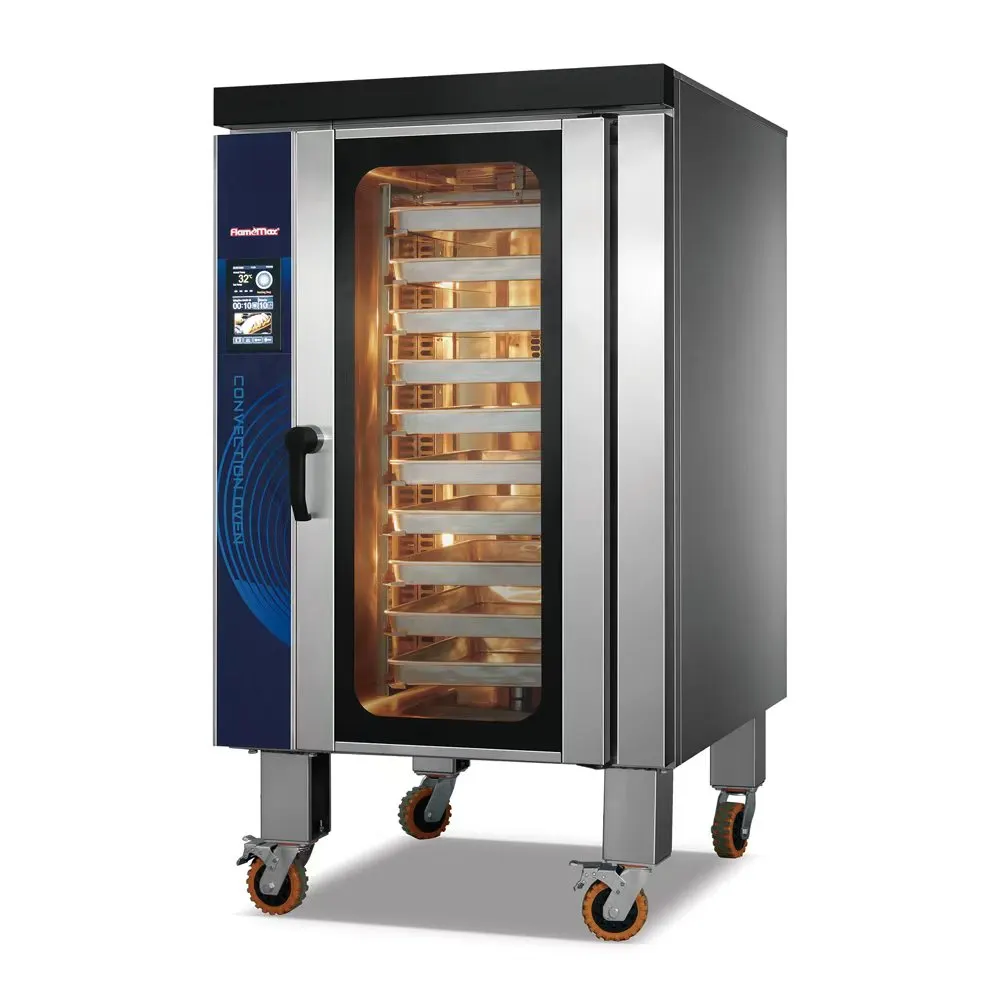
Smart Kitchen Technology: How Programmable Touch Screens Minimize Human Error in Commercial Bakeries
Commercial bakery operations often depend on repeatability. Temperature, cooking time, operating sequence, and production volume can vary significantly when employees rely entirely on manual adjustments. A programmable touch screen can provide a more structured operating interface by allowing frequently used parameters to be organized into repeatable programs.
For B2B buyers, the important question is whether the interface improves actual workflow rather than simply adding digital features. The control panel should be intuitive, responsive, durable, and suitable for the working environment. Procurement teams should also ask how the electronic components are protected from heat and how replacement control components will be supplied during the equipment lifecycle.
- Programmable cooking parameters can support standardized production.
- Digital temperature and timer settings can reduce manual adjustment.
- Clear interfaces can shorten operator training requirements.
- Standardized programs can support consistent production between branches.
- Custom control-panel design can strengthen private-label OEM positioning.
For distributors, Customizable touch-screen equipment can create additional commercial opportunities. A Supplier capable of providing OEM and ODM services may customize branding, control-panel appearance, carton design, and selected product specifications. However, every customization should be documented through approved drawings and specifications to prevent communication errors, production discrepancies, and commercial disputes.
Electric vs. Gas Convection Ovens: Which is More Profitable for Modern Restaurant Chains?
Electric and gas convection ovens can both serve commercial cooking applications, but their suitability depends on the restaurant’s infrastructure, local energy costs, installation conditions, operating requirements, and regulatory environment. A professional procurement decision should therefore compare the complete operating environment rather than relying on the equipment purchase price alone.
| Evaluation Factor | Electric Convection Oven | Gas Convection Oven |
|---|---|---|
| Installation | Requires suitable electrical capacity and compliant wiring | Requires appropriate gas infrastructure and ventilation provisions |
| Control | Digital temperature management is commonly integrated | Gas control and burner systems require appropriate management |
| Site Flexibility | Useful where electrical infrastructure is readily available | Useful where commercial gas infrastructure is established |
| Procurement Factors | Electrical specification, components, controls and certification | Gas safety, burner system, ventilation and local compliance |
| Supply Chain | Electrical spare parts and control components should be planned | Gas-related components and qualified service capability should be planned |
For international buyers, regulatory compliance is especially important because electrical and gas requirements can differ between destination markets. Buyers should confirm applicable voltage, frequency, plug, wiring, labeling, safety, and certification requirements before mass production. The correct purchasing decision is therefore determined by the restaurant’s site conditions and operating model, not by a universal preference for one energy source.
Factory Qualification: The Supply-Chain Audit Points B2B Buyers Should Not Skip
Before signing a large purchase contract, professional importers should establish a clear supplier qualification process. Product samples demonstrate what the equipment can look like, but a factory audit helps determine whether the Supplier can repeatedly manufacture the same quality at commercial volume.
- Corporate verification: confirm legal company information, export experience, manufacturing scope, and product categories.
- Production audit: inspect workshops, machinery, assembly capacity, warehouse systems, and production organization.
- Quality audit: review incoming-material inspection, process controls, final testing, and inspection records.
- Engineering audit: verify technical personnel, drawings, product development capability, and customization processes.
- Compliance audit: check relevant certificates, reports, labels, electrical requirements, and destination-market documentation.
- Service audit: clarify warranty procedures, spare-parts availability, technical support, and response mechanisms.
Flamemax has more than 16 years of experience as a commercial kitchen equipment Manufacturer and maintains a professional international service team. The company also provides 24-hour online technical support and after-sales service, free warehouse and loading coordination, and flexible customization. For international purchasers, these operational capabilities can be reviewed as part of a structured vendor assessment.
OEM and ODM Procurement: Turning a Standard Oven into a Commercial Product Program
For machinery importers and hotel-supply distributors, purchasing a standard oven is often only the beginning. A long-term business program may require OEM branding, customized packaging, private-label control panels, specific colors, product configurations, or new product development. This is where the difference between a basic Supplier and an experienced OEM/ODM Manufacturer becomes commercially important.
An effective OEM process should define every customization parameter in writing. Buyers should approve technical drawings, logos, carton artwork, control-panel layouts, electrical specifications, packaging methods, and product labels before mass production.
- OEM documentation: define branding and private-label requirements clearly.
- ODM development: establish engineering responsibilities and approval procedures.
- Sample approval: confirm the final product before bulk manufacturing.
- Change control: document any specification changes after approval.
- Pre-shipment inspection: verify the finished goods against the approved specification.
Flamemax supports Customizable logo, carton, control-panel, and color designs, providing flexibility for distributors developing their own commercial equipment brands. This approach can help importers maintain product consistency across different purchasing cycles while establishing clearer brand ownership and product positioning.
Quality Control, Inspection and Shipment: Protecting the Purchase After Production
Even after a qualified Manufacturer has been selected, procurement risk continues until the goods arrive safely at the destination. A professional supply chain therefore requires documented quality gates throughout production. Buyers can establish inspection points for raw materials, semi-finished assemblies, electrical components, welding, surface finishing, control systems, temperature performance, packaging, and final appearance.
Final inspection should verify both functional and commercial requirements. Product quantity, model numbers, accessories, labels, manuals, spare parts, carton markings, and packaging should match the approved purchase order. This is especially important for container-scale orders, where correcting mistakes after shipment can create significant logistics costs and commercial risk.
Flamemax applies 100% product inspection before packing and offers several packaging options, including 5–7 layers of thicker cartons, wooden crates, and plywood packaging. For international shipments, buyers can coordinate packaging according to product characteristics, transportation conditions, and destination requirements.
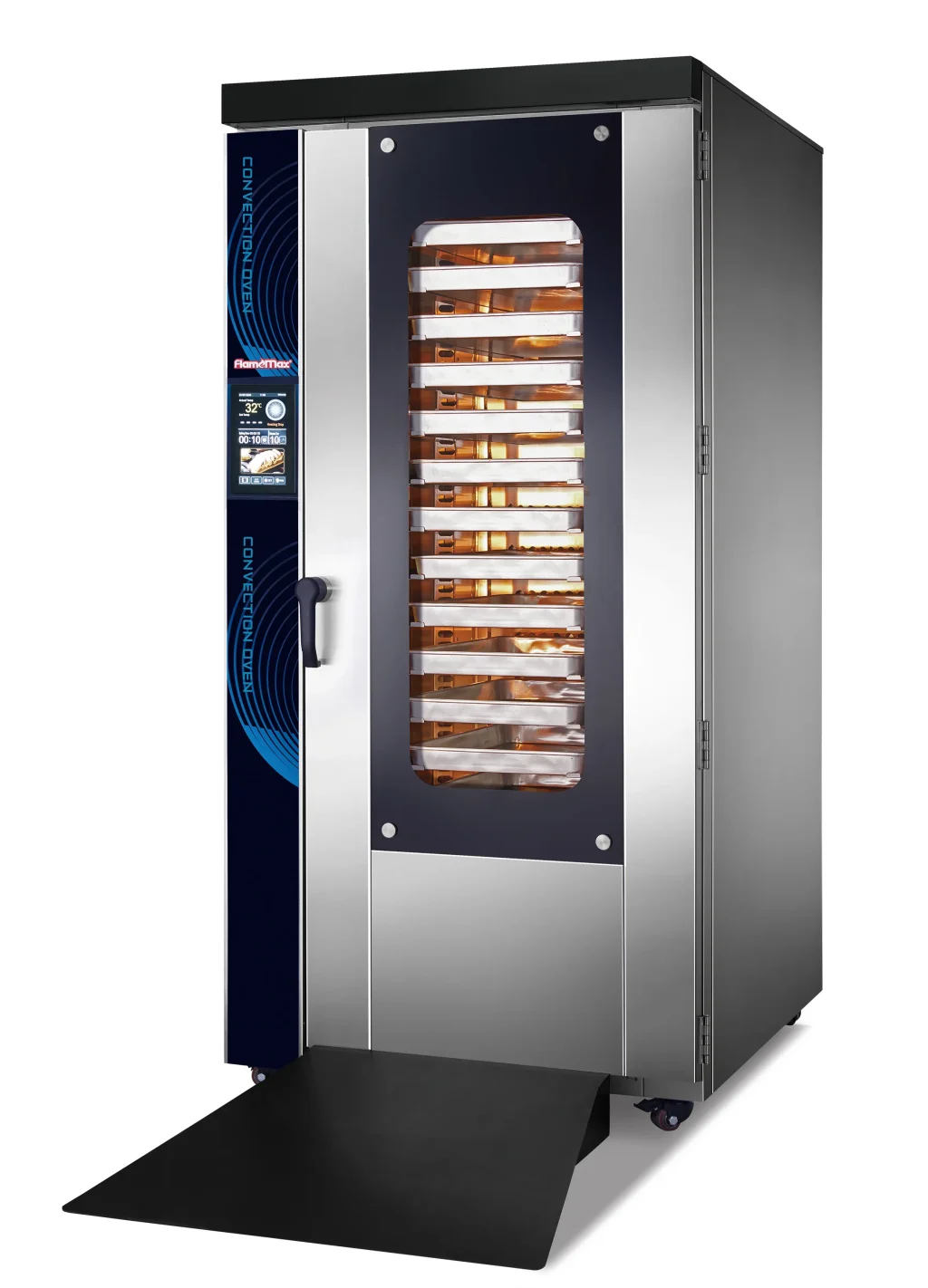
Commercial Risk Management for Long-Term Electric Convection Oven Sourcing
A successful B2B purchasing relationship should not depend on one quotation or one shipment. Importers should establish measurable commercial terms covering lead time, payment terms, inspection standards, warranty conditions, spare-parts support, documentation, packaging requirements, and procedures for handling non-conforming products.
It is also useful to maintain a supplier scorecard covering:
- Product quality and consistency
- On-time delivery performance
- Response speed for technical questions
- Warranty and spare-parts handling
- OEM/ODM execution capability
- Documentation and compliance accuracy
- Packaging and shipment performance
- Cost stability and quotation transparency
Such a system allows purchasing teams to identify supplier dependency risk, delivery risk, quality risk, and after-sales risk before they become expensive operational problems. For growing restaurant chains and distributors, the objective is not simply to purchase an oven; it is to establish a repeatable supply system that can support future orders, product expansion, and market growth.
Final Procurement Checklist for Commercial Buyers
Before approving an electric convection oven with touch screen, buyers should confirm the following:
- Is the company a genuine Manufacturer or a trading intermediary?
- Can the factory demonstrate stable production capacity?
- Are relevant ISO9001, SGS, and market-specific compliance documents available where applicable?
- Are product specifications and electrical requirements clearly documented?
- Does the Supplier provide OEM and ODM capabilities?
- Are customization drawings and samples formally approved?
- Is 100% final inspection available before shipment?
- Are spare parts and technical support available after delivery?
- Are packaging and loading procedures suitable for international transportation?
- Are warranty, lead time, payment, and quality responsibilities clearly defined in the commercial agreement?
These checkpoints help buyers move from price-based purchasing toward structured international procurement. The result is a clearer comparison between Suppliers and a more controlled approach to long-term commercial kitchen equipment sourcing.
For importers, distributors, restaurant chains, and OEM buyers, the right choice is the Supplier that can align product performance with quality control, compliance, customization, logistics, and after-sales support. Contact FLAMEMAX at [email protected] to discuss electric convection oven specifications, OEM/ODM projects, bulk orders, and international supply requirements.



 English
  Español
  Français
  Italiano
  日本語
日本語  Deutsch
  Русский
  한국어
한국어  简体中文
简体中文