
Digital Control Panel Electric Convection Oven: Preventing Supply Chain Disruption Before It Reaches the Buyer
For importers and commercial kitchen distributors, buying a Digital Control Panel Electric Convection Oven from an unreliable factory can create a chain of problems: inconsistent heating performance, delayed production, unstable spare-parts availability, and difficult after-sales communication. The pressure becomes greater when an OEM or ODM order must meet a fixed launch schedule. A weak Supplier can turn a competitive quotation into commercial risk through hidden costs, quality deviations, shipment delays, or incomplete documentation. For professional B2B buyers, the real challenge is therefore not simply finding a low-priced oven, but securing a stable Manufacturer with controlled production, transparent supply chain processes, flexible customization, documented inspection, and reliable long-term service.
A qualified Digital Control Panel Electric Convection Oven Supplier should combine controlled manufacturing, documented quality inspection, factory compliance, stable component sourcing, customizable OEM/ODM capability, and responsive after-sales support. FLAMEMAX combines these capabilities with a 15,000m² production workshop, ISO9001 and SGS-certified factory operations, full product inspection, and international B2B service experience.
Beyond product specifications, experienced purchasers evaluate what happens before, during, and after production. The following analysis examines the less visible factors that influence procurement security, operating performance, landed cost, customization, and long-term commercial value.
1. Manufacturing Standards & Flexible Custom Compliance
For a commercial Digital Control Panel Electric Convection Oven, manufacturing consistency directly affects the buyer’s downstream reputation. A professional Manufacturer should control the process from sheet-metal fabrication and electrical assembly through testing and final packing. FLAMEMAX operates a 15,000m² production workshop supported by more than 50 advanced production facilities, over 10 semi-automated assembly production lines, and dedicated testing facilities. These resources help establish repeatable production rather than relying entirely on manual adjustment.
For international B2B procurement, factory qualification should also examine compliance documentation, quality procedures, inspection records, and traceability. The factory’s ISO9001 and SGS certifications can provide supporting evidence of its quality-management and inspection framework, while buyers should verify the specific regulatory requirements applicable to their destination market and product configuration.
- Review factory audit information before placing a bulk order.
- Confirm the applicable certification requirements for the destination market.
- Request pre-production confirmation for customized electrical and control-panel specifications.
- Define quality acceptance criteria before mass production.
- Confirm that every unit receives 100% product inspection before packing and shipment.
Flexible customization is equally important for distributors developing their own product portfolios. A capable OEM/ODM Supplier can support customized logos, carton designs, control-panel designs, and color specifications without treating every project as a completely new product development cycle. This reduces communication friction while giving importers greater control over their market positioning.
2. Technical Advantages & Commercial Performance
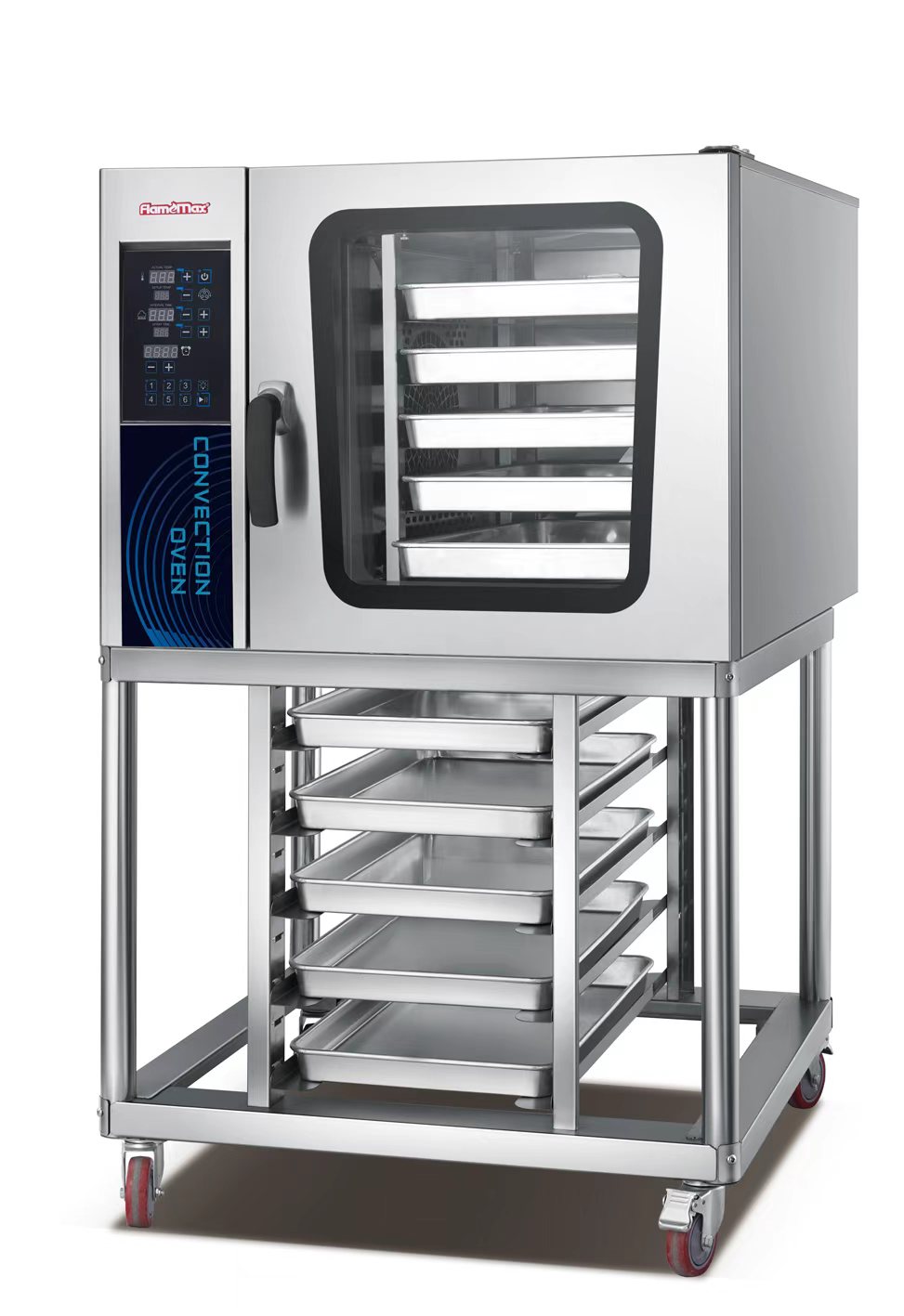
The technical value of a Digital Control Panel Electric Convection Oven should be evaluated according to commercial application rather than specification lists alone. Convection cooking depends on coordinated temperature control, airflow, electrical components, insulation, chamber construction, and operator settings. A professional commercial oven must therefore deliver predictable performance across repeated production cycles.
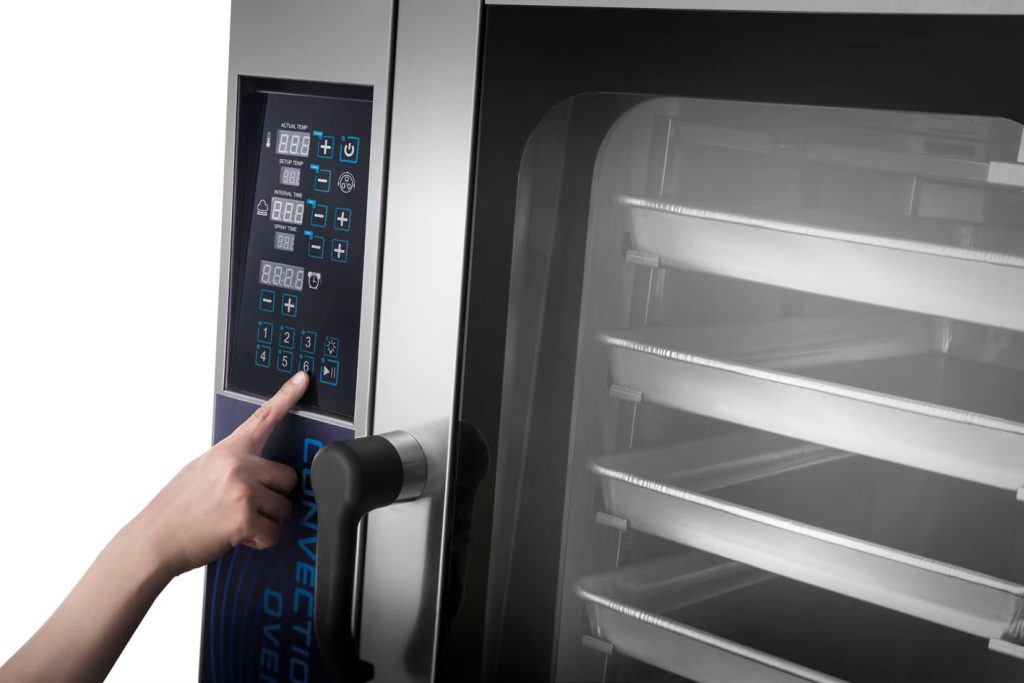
Digital control is particularly relevant for bakeries, hotels, restaurants, central kitchens, and food-service distributors because operators need repeatable settings. A clear interface can simplify temperature and cooking-time management, while suitable electrical components and wiring designed for high-temperature operating environments can contribute to operational stability. However, professional buyers should distinguish between advertised features and verified performance. Performance risk is best controlled through sample testing, production inspection, and agreed technical specifications.
| Procurement Factor | Buyer Verification Point | Commercial Relevance |
|---|---|---|
| Temperature control | Confirm operating range and control accuracy requirements | Supports repeatable cooking results |
| Digital interface | Review control logic and user operation | Reduces training complexity |
| Electrical components | Verify component specifications and market requirements | Helps manage operational risk |
| Cabinet construction | Inspect materials, welding and finishing | Influences durability and appearance |
| Final inspection | Require documented pre-shipment inspection | Reduces quality risk |
For distributors, the commercial performance of the oven also includes appearance and consistency. Advanced laser cutting, bending, welding, and polishing equipment can help create clean external finishes and repeatable component dimensions. This is particularly valuable when an importer sells the oven under its own brand and needs consistency across multiple purchase batches.
3. B2B Sourcing, MOQ & Cost Optimization
Professional sourcing should evaluate total procurement economics rather than focusing exclusively on unit price. A lower quotation can become expensive when it creates higher inspection costs, replacement claims, delayed shipments, inconsistent packaging, or difficult spare-parts procurement. For importers, hotel-supply distributors, and catering-equipment wholesalers, the objective is to establish a predictable landed cost and dependable replenishment cycle.
MOQ should be discussed together with product configuration, packaging, customization, and production scheduling. An experienced Supplier can help buyers separate standard-product procurement from OEM or ODM projects, allowing the purchasing team to identify which customization items genuinely add market value.
- Define the target market, application, voltage, capacity, and configuration.
- Separate standard specifications from customizable requirements.
- Confirm MOQ, production lead time, packaging method, and payment terms.
- Calculate product price together with freight, insurance, duties, inspection, and service costs.
- Establish an approved sample or specification before mass production.
- Review repeat-order conditions so future procurement remains commercially predictable.
| Cost Element | What Procurement Should Check | Potential Risk |
|---|---|---|
| Unit price | Compare identical specifications | False price comparison |
| Customization | Logo, panel, carton and color costs | Hidden customization cost |
| Packaging | Carton, wooden crate or plywood requirements | Transit damage |
| Freight | Shipping volume and loading arrangement | Unexpected landed cost |
| After-sales | Spare parts and technical support | Long-term service risk |
FLAMEMAX supports B2B buyers with flexible customization, free warehouse coordination and loading assistance for shipping arrangements. For larger wholesale programs, this can help purchasing teams coordinate production, storage, loading, and international logistics through a more structured supply chain process.
4. After-Sales Support & Spare Parts Supply Chain
For commercial kitchen equipment, the transaction does not end when the container leaves the factory. A distributor’s reputation depends on how quickly technical problems can be identified and resolved after installation. Consequently, after-sales capability should be treated as part of the original supplier evaluation rather than an optional service.
A reliable Digital Control Panel Electric Convection Oven program should include clear technical documentation, component identification, troubleshooting support, and an organized spare-parts process. Buyers should ask the Manufacturer which components are commonly replaced, how spare parts are identified, and how technical questions are handled across different time zones.
- Confirm availability of commonly required electrical and control components.
- Request clear product specifications and technical documentation.
- Establish a process for identifying replacement parts.
- Clarify technical-support response procedures before mass purchasing.
- Discuss warranty handling and responsibility allocation in advance.
- Keep records of production batches to improve traceability.
FLAMEMAX provides 24-hour online technical support and after-sales service through an international service team. More than 10 years of professional technical-worker experience also supports production quality and technical consistency. For wholesalers operating their own after-sales departments, this supplier-side support can complement rather than replace their local service capability.
This distinction is important for large importers. A distributor may maintain local technicians and inventory, while the factory supplies technical information and replacement components. Such a structure creates a more resilient after-sales supply chain and reduces dependence on a single service location.
5. Human-Centric Digital Interfaces & Commercial Durability
A digital control panel should not be evaluated only because it looks modern. For commercial users, the interface must support fast, understandable operation during busy production periods. Hotel kitchens, bakeries, restaurants, and food-service facilities often have operators with different levels of technical experience, so intuitive controls can contribute to smoother daily workflows.
For OEM and ODM buyers, the control panel also represents part of the brand experience. A customizable interface, panel appearance, logo arrangement, or color specification can help distributors align the oven with their existing product portfolio. Nevertheless, customization should remain connected to practical service considerations. Excessive variation in components may increase inventory risk and make future spare-parts management more complicated.
Commercial durability should therefore be considered across the entire product lifecycle:
- Design stage: confirm the intended operating environment and user requirements.
- Component stage: select appropriate electrical and high-temperature components.
- Production stage: maintain controlled fabrication and assembly processes.
- Testing stage: perform functional and appearance inspection before shipment.
- Installation stage: provide appropriate technical information for local teams.
- Service stage: maintain spare-parts and technical-support channels.
This lifecycle perspective is particularly relevant for buyers purchasing containers of equipment rather than individual machines. The value of a Digital Control Panel Electric Convection Oven is determined not only by its initial quotation but also by production consistency, usability, serviceability, brand compatibility, and the supplier’s ability to support repeat orders.
How Professional Buyers Should Qualify a Digital Convection Oven Supplier
Before signing a long-term purchasing agreement, procurement teams can use a structured qualification process. This helps prevent purchasing decisions based on catalog images or quotations alone.
- Factory capability: verify workshop scale, equipment, assembly capacity, testing facilities, and workforce experience.
- Quality management: review ISO9001-related quality procedures and available SGS documentation where relevant.
- Product verification: confirm specifications, electrical requirements, materials, controls, and inspection procedures.
- OEM/ODM capability: determine whether the factory can implement practical branding and design modifications.
- Supply capacity: evaluate MOQ, production planning, warehouse coordination, and loading capability.
- Packaging protection: confirm whether thicker cartons, wooden crates, or plywood packaging are available according to shipping requirements.
- After-sales capability: clarify technical support, spare-parts availability, warranty procedures, and communication channels.
- Commercial transparency: identify all costs and responsibilities before confirming the purchase order.
For an importer building a private-label catering-equipment portfolio, these factors are interconnected. A capable Manufacturer is not simply a production location; it becomes part of the buyer’s broader strategic supply chain. Consistent production, flexible OEM/ODM services, documented inspection, reliable logistics coordination, and after-sales support can reduce uncertainty across repeated purchasing cycles.
Conclusion: Build a More Reliable Commercial Oven Supply Chain
Choosing the right Digital Control Panel Electric Convection Oven means evaluating the complete supply chain, not only the purchase price. Importers and distributors can contact FLAMEMAX at [email protected] to discuss OEM, ODM, customizable configurations, factory capacity, quality requirements, and B2B purchasing solutions.


 English
  Español
  Français
  Italiano
  日本語
日本語  Deutsch
  Русский
  한국어
한국어  简体中文
简体中文