
Why Supply Chain Risks Can Undermine Your Touch Screen Convection Oven Procurement Strategy
Purchasing convection ovens with touch screen technology is no longer just about comparing prices. Buyers frequently encounter inconsistent product quality, unstable firmware, delayed component deliveries, and inadequate technical support after shipment. These challenges become even more serious when commercial kitchens, bakery chains, or foodservice distributors rely on uninterrupted operations. A single defective touchscreen controller or heating module may trigger warranty claims, customer dissatisfaction, and lost contracts. The solution is building partnerships with a qualified Manufacturer and reliable Supplier that demonstrate transparent production management, verified Quality Control, comprehensive Factory Audit, and internationally recognized CE, ETL, RoHS, and ISO 9001 certifications. Strategic sourcing minimizes commercial uncertainty while protecting long-term profitability and brand reputation.
A qualified convection oven Manufacturer should combine certified manufacturing systems, complete OEM and ODM capabilities, stable component sourcing, strict Incoming Quality Control (IQC), comprehensive Factory Audit records, and responsive after-sales support. Our company delivers all these requirements while offering highly Customizable commercial solutions for global distributors.
Professional importers, engineering contractors, and wholesale distributors rarely judge suppliers by catalogs alone. The following guide reveals practical sourcing intelligence, commercial negotiation strategies, audit priorities, and supply chain insights that experienced buyers use to reduce risk and maximize long-term returns.
Mitigating High-Tech Field Failures: How to Audit Touch Screen Convection Oven Manufacturers
Touch screen convection ovens integrate heating systems, digital interfaces, electronic controllers, sensors, and software into one commercial appliance. This complexity means buyers should evaluate far more than production capacity. A dependable Manufacturer must prove process consistency throughout the manufacturing lifecycle rather than relying solely on product demonstrations.
Professional sourcing teams should verify critical Audit checkpoints including:
- Supplier Qualification for electronic components and heating elements.
- IQC, IPQC, and FQC implementation.
- Traceability for touch panels, PCBs, thermostats, and heating modules.
- Reliability Testing under continuous commercial operation.
- Burn-in Testing before shipment.
- Verification of CE, ETL, RoHS, and ISO 9001 compliance.
- Engineering capability for OEM, ODM, and Customizable projects.
Instead of selecting the lowest-cost Supplier, experienced importers evaluate production consistency, engineering responsiveness, software upgrade capability, and documented quality records. These factors significantly reduce warranty exposure and strengthen customer confidence after installation.
| Audit Item | Business Value |
|---|---|
| Factory Audit | Confirms manufacturing capability and operational stability. |
| Quality Control | Reduces warranty claims and product defects. |
| Reliability Testing | Improves commercial kitchen uptime. |
| Compliance Certification | Simplifies market entry and customer acceptance. |
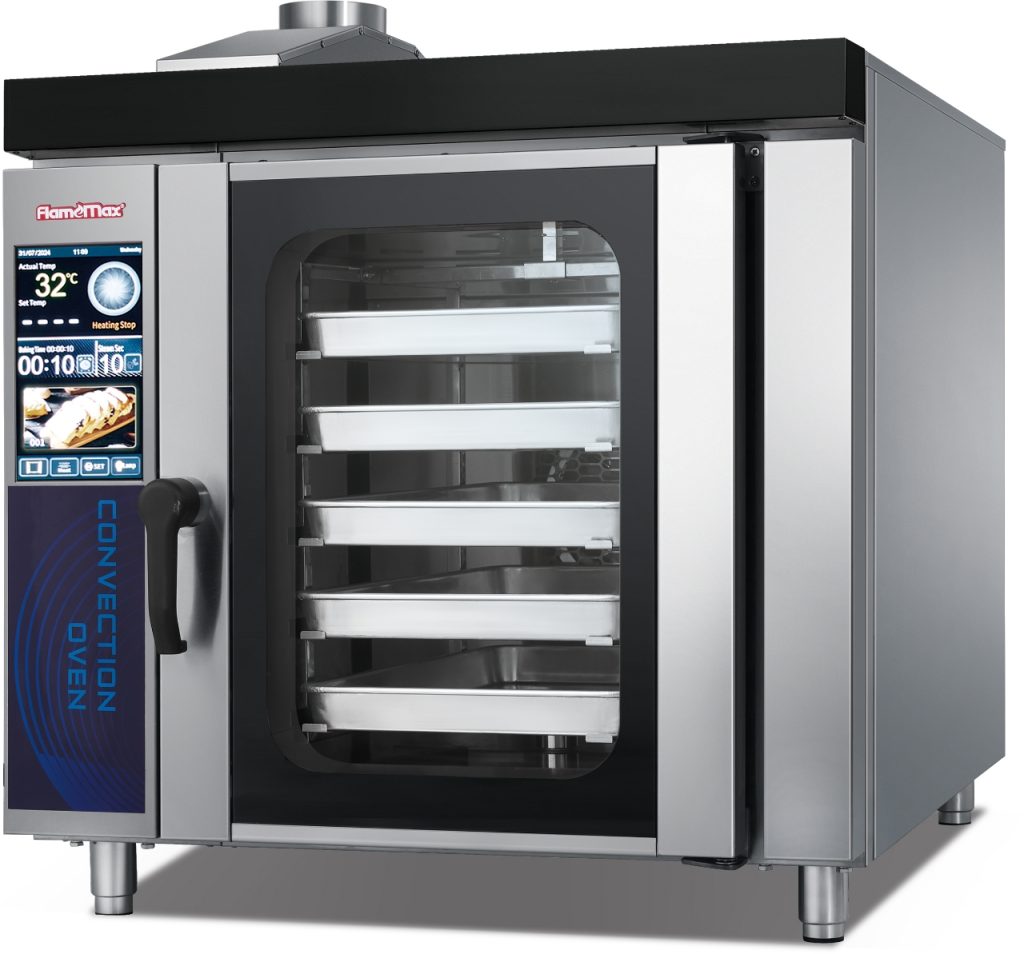
Margin vs. Reliability: The Commercial Value of Smart Touch Screen Ovens for Equipment Distributors
Commercial distributors increasingly recognize that purchasing decisions should balance acquisition cost with lifecycle profitability. While low-cost products may generate attractive initial margins, inconsistent quality often leads to expensive warranty service, customer complaints, and damaged business relationships.
Working with an experienced Manufacturer offering stable OEM, ODM, and Customizable production allows distributors to build differentiated product portfolios rather than competing solely on price.
Commercial advantages include:
- Higher average selling prices through premium smart features.
- Reduced service costs because of better component reliability.
- Lower inventory risk through standardized modular components.
- Long-term customer retention supported by dependable performance.
- Flexible branding opportunities for private-label programs.
Reliable touchscreen interfaces, programmable cooking cycles, and remote diagnostics create additional value for restaurant groups and bakery operators. Distributors partnering with an experienced Supplier gain stronger competitive positioning while protecting long-term profitability across multiple international markets.
Beyond the Specs: How Distributors Can Sell Smart Touch Screen Ovens to Commercial Chains and Bakeries
Technical specifications rarely close commercial deals. Restaurant chains, supermarkets, hotels, and industrial bakeries purchase business outcomes rather than equipment specifications. Successful distributors translate product capabilities into measurable operational improvements.
Sales teams should emphasize benefits such as:
- Consistent baking quality across multiple locations.
- Reduced operator training through intuitive touch screen interfaces.
- Programmable recipes that improve production consistency.
- Energy efficiency that lowers operating expenses.
- Remote software updates and simplified maintenance.
A capable Manufacturer also provides marketing materials, product training, installation guidance, multilingual manuals, and technical documentation supporting OEM and ODM distribution strategies. Highly Customizable configurations enable distributors to address regional voltage standards, language preferences, and customer-specific cooking programs without extensive redesign.
Ultimately, buyers seek commercial reliability, operational efficiency, and predictable return on investment rather than isolated hardware features.
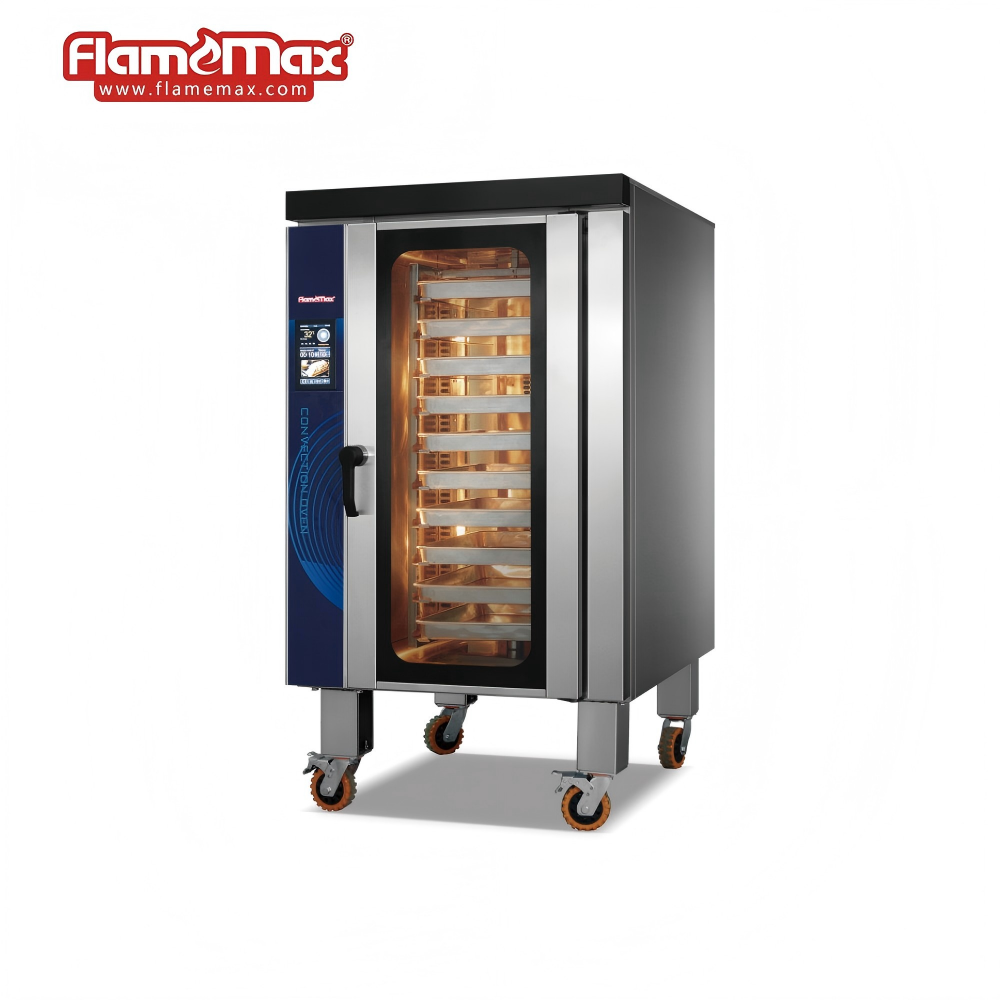
Building an Efficient After-Sales Ecosystem: Spare Parts and Modular Diagnostics for B2B Buyers
The true capability of a professional Supplier becomes evident after equipment reaches the customer. Fast-growing distributors require structured after-sales systems that minimize downtime and simplify technical support across multiple countries.
An effective support ecosystem should include:
- Dedicated spare parts inventory.
- Modular replacement for touch panels and control boards.
- Remote troubleshooting documentation.
- Video-based maintenance training.
- Firmware update management.
- Comprehensive warranty procedures.
- Technical response within predefined service-level agreements.
Modular architecture significantly reduces repair costs because technicians replace individual assemblies instead of entire systems. This lowers service expenses while increasing equipment availability for commercial kitchens. Experienced Manufacturer partners continuously improve component compatibility across product generations, making OEM, ODM, and Customizable product lines easier to support globally.
Total Cost of Ownership (TCO) & Shipping Optimization for High-Density Kitchen Equipment Cargo
Experienced procurement professionals evaluate the complete Total Cost of Ownership (TCO) rather than focusing only on FOB pricing. Transportation efficiency, packaging optimization, maintenance expenses, warranty rates, and energy consumption all influence actual profitability throughout the equipment lifecycle.
Supply chain optimization strategies include:
- Optimized carton dimensions for higher container utilization.
- Knock-down accessories to maximize loading efficiency.
- Moisture-resistant export packaging.
- Standardized spare parts across multiple models.
- Predictive demand planning for replacement inventory.
- Long-term sourcing agreements with qualified component suppliers.
An experienced Manufacturer works closely with logistics partners to improve container loading efficiency while maintaining product protection. Reliable Supplier relationships also reduce procurement volatility through stable lead times and diversified sourcing strategies for electronic components.
| TCO Factor | Impact on Buyers |
|---|---|
| Purchase Price | Initial capital investment. |
| Energy Consumption | Long-term operating savings. |
| Quality Control | Lower warranty and service costs. |
| Shipping Optimization | Reduced freight cost per unit. |
| Spare Parts Availability | Higher equipment uptime. |
| Compliance | Faster customs clearance and market access. |
Choose a Strategic Manufacturing Partner for Sustainable Business Growth
Selecting the right Manufacturer and trusted Supplier is an investment in long-term profitability. Partner with our company for certified OEM, ODM, and highly Customizable touch screen convection oven solutions that reduce sourcing risks, strengthen your supply chain, and accelerate global business growth.



 English
  Español
  Français
  Italiano
  日本語
日本語  Deutsch
  Русский
  한국어
한국어  简体中文
简体中文