
Why Are Bakers and Restaurant Owners Struggling With Uneven Baking and High Electricity Costs?
Many bakery owners, restaurant operators, and catering equipment distributors face the same challenge: inconsistent baking results, slow cooking speed, and rising electricity bills. Traditional ovens often create uneven heat distribution, causing burnt edges, undercooked centers, and wasted ingredients. These problems reduce kitchen efficiency and customer satisfaction while increasing operating costs. A modern convection oven solves these issues by circulating hot air evenly, improving baking consistency, shortening cooking time, and reducing energy consumption for commercial kitchens.
A convection oven uses an internal fan to circulate hot air evenly around food, allowing faster cooking, better browning, and improved baking consistency. Compared with traditional ovens, convection ovens are more energy-efficient because they reduce cooking time and operate at lower temperatures. They are widely used in bakeries, restaurants, hotels, and catering businesses for reliable commercial cooking performance.
For importers, distributors, and foodservice business owners, understanding how a commercial electric oven improves productivity can help reduce operational costs and increase customer satisfaction. The following sections explain how convection technology supports professional baking and efficient kitchen operations.
Which Oven Mode Is Best for Baking Cookies?
Why Convection Mode Works Well for Cookies
When baking cookies in a commercial kitchen, consistency is extremely important. The convection setting is often considered the best oven mode because the internal fan distributes heat evenly throughout the cooking chamber. This even airflow helps cookies bake uniformly across multiple trays without requiring frequent tray rotation.
For bakeries and dessert shops, this feature improves productivity and reduces waste caused by uneven baking. Cookies baked in a convection oven for baking usually develop crisp edges while maintaining soft centers. In addition, convection mode can shorten baking times by approximately 20%, helping businesses serve customers faster during busy operating hours.
Temperature Adjustments for Better Results
Professional bakers often reduce the baking temperature slightly when using convection mode. Since hot air circulates more efficiently, lower temperatures can still achieve excellent browning and texture. This reduces unnecessary power consumption while protecting delicate baked goods from overcooking.
Commercial bakeries, cafés, and hotel kitchens often choose convection systems because they improve workflow and provide stable production quality. For distributors and importers seeking reliable kitchen equipment, convection ovens are a practical investment that supports long-term customer satisfaction.
What Does Convection Mode Do?
How Convection Technology Improves Cooking
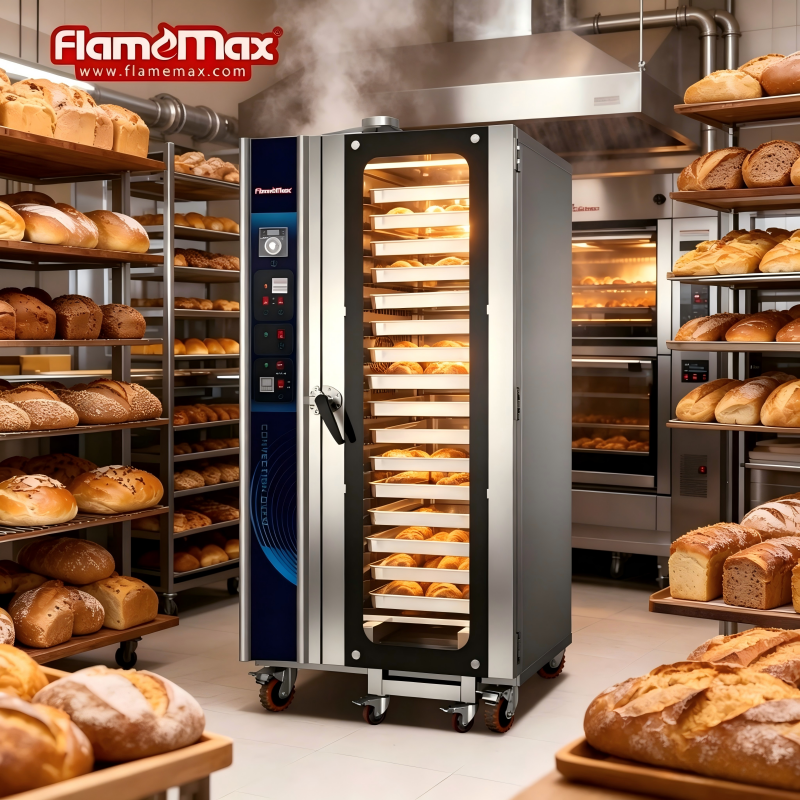
Convection mode activates a built-in fan and exhaust system that circulates heated air throughout the oven chamber. Unlike conventional ovens that rely mainly on radiant heat, convection systems create a constant airflow that surrounds food evenly.
This technology helps eliminate cold spots and uneven cooking surfaces. Whether preparing pastries, roasted meat, pizza, or baked desserts, a commercial electric oven with convection functionality delivers more stable cooking results. This is particularly valuable for high-volume foodservice businesses that require reliable daily performance.
Advantages for Commercial Kitchens
Restaurants and bakeries often work under time pressure, especially during peak business hours. A convection oven improves kitchen efficiency by reducing cooking times and increasing overall production capacity. Faster cooking allows operators to prepare more food in less time without sacrificing quality.
In addition, convection mode supports multi-tray cooking. Since heat is distributed evenly, operators can bake several trays simultaneously while maintaining consistent results. This feature is highly beneficial for bakeries, hotels, fast-food chains, and catering businesses handling large customer demand.
Suitable for Various Food Applications
Modern convection ovens are widely used for baking bread, cookies, cakes, pizzas, and roasted products. Many OEM/ODM buyers also prefer convection models because they meet different market demands while supporting customizable designs and branding options.
For international distributors and catering equipment suppliers, selecting a reliable Manufacturer with advanced production technology ensures better product performance and long-term business cooperation.
Is a Convection Oven More Energy-Efficient?
How Convection Ovens Reduce Energy Consumption
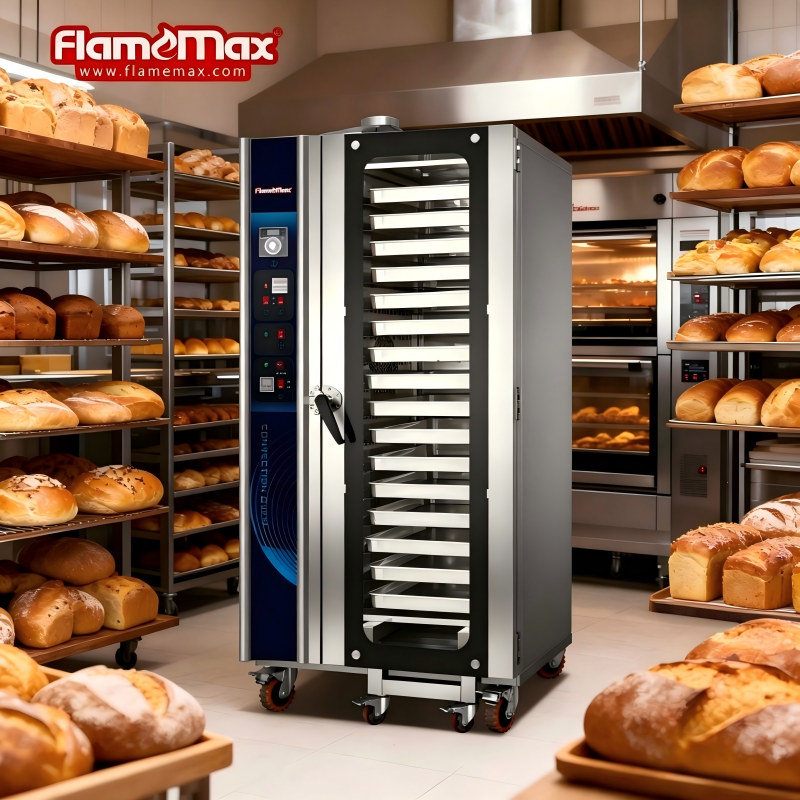
One of the biggest advantages of a convection oven is improved energy efficiency. Because heated air moves continuously around the food, cooking temperatures can often be reduced by 15°C to 20°C compared with traditional ovens. At the same time, cooking speed increases significantly.
This combination of lower temperatures and shorter cooking durations contributes to excellent convection oven energy efficiency. Commercial kitchens operating for long hours can benefit from reduced electricity costs over time.
Lower Operating Costs for Businesses
Electricity expenses are a major concern for bakeries, restaurants, and hotel kitchens. Energy-efficient equipment helps businesses maintain profitability while managing operational expenses more effectively.
For example, a bakery using multiple ovens daily may save substantial electricity costs by upgrading to energy-efficient convection systems. Faster preheating and reduced cooking cycles also improve kitchen workflow and labor efficiency.
Importers and distributors increasingly prioritize energy-saving kitchen equipment because end users are paying closer attention to long-term operating costs. As environmental awareness grows globally, many foodservice operators now prefer equipment that combines performance with sustainable energy usage.
Importance of High-Quality Manufacturing
The efficiency of a convection oven also depends on manufacturing quality. Well-designed insulation systems, durable heating components, and accurate temperature controls all contribute to better energy performance.
An experienced Supplier with professional testing facilities and strict quality inspection processes can provide reliable products for global markets. OEM/ODM customization options further help distributors create differentiated product lines for local business needs.
What Is the Cheapest Way to Cook with Electricity?
Using Energy-Efficient Equipment
The cheapest way to cook with electricity is to use efficient appliances that minimize heat loss and reduce cooking time. Among many commercial cooking appliances, convection ovens are considered one of the most cost-effective solutions because they maximize heat circulation and reduce unnecessary energy waste.
A convection oven can cook food faster than many traditional ovens while using lower temperatures. This helps businesses lower utility expenses without sacrificing food quality.
Best Practices for Saving Electricity
Commercial kitchens can further reduce electricity costs by following efficient cooking practices. Avoiding unnecessary preheating, cooking multiple trays simultaneously, and maintaining proper oven cleaning all contribute to improved energy performance.
Using ovens with accurate digital temperature controls also helps prevent overheating and wasted electricity. High-quality commercial ovens often include advanced insulation systems that retain heat effectively and improve overall cooking efficiency.
Long-Term Value for Foodservice Businesses
Although some businesses focus only on initial purchase prices, long-term operating costs are equally important. Energy-efficient commercial ovens provide better return on investment through lower utility bills, reduced maintenance, and improved cooking consistency.
For importers, wholesalers, and distributors, choosing a professional Manufacturer with OEM/ODM capabilities allows greater flexibility in supplying reliable catering equipment to local markets. Durable construction, stable performance, and strong after-sales support are essential factors for long-term business success.
Conclusion
A high-quality convection oven helps bakeries, restaurants, and foodservice businesses improve baking consistency, reduce electricity costs, and increase kitchen productivity. Choosing a reliable OEM/ODM supplier with strong manufacturing capabilities ensures long-term commercial value and dependable performance for global catering equipment markets.


 English
  Español
  Français
  Italiano
  日本語
日本語  Deutsch
  Русский
  한국어
한국어  简体中文
简体中文