
High-Temperature Kitchen Environments and Unstable Utility Conditions Challenge Equipment Selection
Choosing between a commercial shawarma machine powered by gas or electricity is no longer a simple purchasing decision. Restaurants, central kitchens, food courts, hotels, and catering operators often work in high-temperature commercial kitchens, limited ventilation spaces, and mixed gas-electric utility infrastructures. These operating conditions can directly affect cooking consistency, energy consumption, installation compliance, and long-term maintenance costs. When the wrong equipment is selected, operators may face uneven roasting, excessive utility bills, frequent downtime, or complicated inspections. The solution is understanding how different heating systems perform under real operating scenarios. With over 30 years of engineering experience as a professional Manufacturer and global Supplier, we help customers evaluate every technical variable before selecting the ideal shawarma machine gas vs electric solution.
Recommended Configuration for Commercial Applications
For most professional kitchens, gas models deliver faster heat recovery and lower operating costs, while electric models provide superior temperature precision and simplified installation. As the industry’s most experienced Manufacturer and Supplier, we recommend selecting the solution according to utility availability, ventilation conditions, production volume, and local compliance requirements.
Whether you are a retailer, importer, wholesaler, or distributor, the following engineering guide explains how real application scenarios determine the optimal equipment choice. Through practical examples and technical recommendations, you’ll understand how a Customizable, OEM, and ODM solution can maximize performance and long-term value.
Heat Response and Control
One of the most important considerations in shawarma machine gas vs electric selection is heat response. Commercial kitchens require equipment capable of maintaining stable roasting temperatures despite continuous production cycles. Gas burners naturally generate higher thermal output and recover temperature quickly after large quantities of cold meat are loaded. Electric heating elements, meanwhile, provide exceptionally stable heat distribution and precise electronic control.
Our engineering team recommends matching the heating method with the production workflow instead of selecting equipment based only on purchase price. As a professional Manufacturer, we frequently develop Customizable, OEM, and ODM solutions for distributors serving different regional markets.
- Gas burner output: 8-18 kW depending on model capacity.
- Electric heating power: 3-9 kW with multi-zone independent control.
- Recommended roasting temperature: 180-300°C.
- Heat recovery after meat loading: approximately 2-5 minutes for gas models.
- Electronic thermostat accuracy: ±3°C on premium electric units.
- Multiple burner zoning improves cooking uniformity.
- Variable-speed motor enhances even meat roasting.
- High-efficiency infrared burners improve energy utilization.
Under unstable electrical supply environments, gas systems often maintain production more reliably. In locations with strict electrical load limitations, gas models reduce demand on facility power infrastructure. Conversely, facilities operating inside fully electric commercial kitchens benefit from electric machines because digital controls simplify temperature management and product consistency.
Installation and Ventilation
Installation requirements vary significantly between gas and electric equipment. Every commercial kitchen should first evaluate local utility availability, ventilation regulations, and fire safety standards before selecting equipment. Proper engineering design reduces operating risks while improving cooking efficiency.
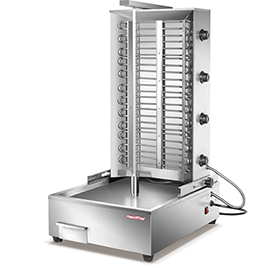
Gas-powered commercial shawarma machine installations require attention to gas pipeline systems, combustion air supply, commercial exhaust hood systems, and fire safety ventilation networks. Electric units eliminate gas piping but may require upgraded circuit protection depending on total equipment load.
- Dedicated gas shut-off valve for each gas machine.
- Commercial-grade exhaust hood with sufficient airflow.
- Independent electrical circuit protection for electric models.
- Recommended voltage: 220V or 380V depending on regional standards.
- Stainless steel installation clearance: minimum 150 mm from side walls.
- Easy-access maintenance panels reduce service downtime.
- Heavy-duty casters available for mobile food operations.
Our engineering department routinely supports overseas customers by providing system topology documentation, utility connection layouts, and installation engineering drawings. As a reliable Supplier, we also provide OEM documentation packages for distributors requiring local certification support.
Operating Cost Inputs
Total ownership cost extends far beyond equipment pricing. Utility expenses, maintenance frequency, labor efficiency, replacement parts, and equipment lifespan all contribute to long-term profitability. This is where professional engineering consultation becomes especially valuable.
Gas typically offers lower energy costs in regions with affordable natural gas supplies, making it attractive for high-volume restaurants. Electric equipment may have slightly higher operating costs in some markets but requires fewer combustion-related maintenance procedures and simplifies cleaning operations.
| Comparison Item | Gas Commercial Shawarma Machine | Electric Commercial Shawarma Machine |
|---|---|---|
| Heat-up Speed | Very Fast | Fast |
| Temperature Precision | Good | Excellent |
| Utility Cost | Generally Lower | Depends on Electricity Rate |
| Maintenance | Burner Inspection Required | Heating Element Inspection |
| Ventilation Requirement | Higher | Lower |
| Installation Complexity | Medium | Low |
| Ideal Daily Production | 100-500 kg Meat | 50-250 kg Meat |
As an experienced Manufacturer, we analyze local energy pricing before recommending equipment. Our Customizable product platforms enable distributors to configure burner quantity, heating zones, motor rotation, cabinet dimensions, and stainless-steel thickness according to regional market demand. Our ODM and OEM manufacturing capabilities also allow private branding without compromising engineering quality.
Best Fit by Venue
Different foodservice environments require different engineering priorities. There is no universal answer to the shawarma machine gas vs electric debate because every application presents unique operational challenges. The optimal solution depends on production volume, available utilities, food safety requirements, customer flow, and installation conditions.
Restaurants and High-Volume Shawarma Shops
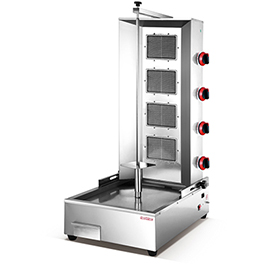
Large restaurants generally benefit from gas-powered shawarma grill systems because of rapid heat recovery, continuous operation, and lower operating costs. These kitchens typically feature commercial gas distribution systems, high-capacity ventilation networks, and professional exhaust systems, allowing gas equipment to perform efficiently throughout peak service periods.
Shopping Malls and Food Courts
Many shopping centers restrict open-flame equipment. Electric commercial shawarma machine models are therefore preferred because they integrate easily into centralized electrical distribution systems, require simplified installation, and produce consistent roasting performance while complying with building management regulations.
Hotels and Premium Catering
Luxury hotels often prioritize appearance, precision, and food consistency. Electric units with programmable digital controllers deliver highly repeatable roasting results while minimizing operator intervention. For premium hospitality projects, our Customizable, OEM, and ODM engineering services allow complete integration with branded kitchen equipment portfolios.
Mobile Catering and Event Operations
Portable operations require careful consideration of available utilities. Some operators prefer compact gas units because of flexible deployment, while others select electric equipment when reliable power infrastructure is available. Our engineers evaluate temporary power distribution systems, portable gas supply configurations, and mobile kitchen layouts before recommending the optimal solution.
Conclusion
Selecting the right commercial shawarma machine depends on your operating environment, production goals, and utility infrastructure. As a trusted Manufacturer and global Supplier, we provide Customizable, OEM, and ODM solutions engineered for long-term reliability. Contact us today to discuss your project and receive professional equipment recommendations.

 English
  Español
  Français
  Italiano
  日本語
日本語  Deutsch
  Русский
  한국어
한국어  简体中文
简体中文