
Why Incorrect Commercial Pizza Oven Temperature Settings Create Expensive Supply Chain Risks
Buying a commercial pizza oven based only on price or advertised performance often leads to unexpected operational losses. Different oven technologies require completely different pizza oven temperature settings and production rhythms. When procurement teams overlook this fact, product consistency declines, energy consumption increases, and customer complaints become more frequent. Even worse, inconsistent baking performance may trigger costly warranty claims, production delays, and damaged distributor relationships. Professional buyers should evaluate not only equipment specifications but also the Manufacturer‘s engineering capability, production stability, Supplier quality management system, ISO 9001 compliance, CE certification, factory audit performance, and long-term technical support before making purchasing decisions.
Commercial Pizza Oven Selection Starts with Process Validation
A qualified Manufacturer should provide verified pizza oven temperature and time data, documented baking tests, consistent production quality, CE and ISO 9001 compliance, transparent audit records, and responsive technical support. Our company delivers complete validation reports, helping global distributors reduce sourcing risks while improving operational efficiency.
Continue reading to discover the engineering principles, sourcing criteria, production verification methods, and commercial evaluation standards that experienced importers and foodservice equipment wholesalers use before selecting a reliable commercial pizza oven Supplier.
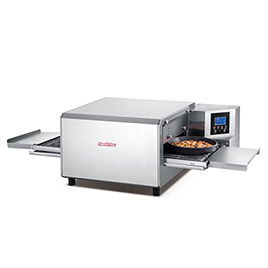
Deck vs Conveyor Profiles
Understanding oven type is the foundation of selecting the correct pizza oven temperature. Although both deck and conveyor ovens produce pizza, their heat transfer mechanisms differ significantly, directly affecting pizza oven temperature and time, labor requirements, throughput, and operating costs.
Deck ovens rely on radiant and conductive heat. Operators manually rotate pizzas and adjust baking positions, making them suitable for artisan restaurants seeking customized crust textures. Conveyor ovens automate the baking process through continuous belt movement, improving production consistency for chain restaurants and central kitchens.
From a sourcing perspective, international buyers should evaluate much more than advertised capacity.
- Engineering consistency from the Manufacturer
- Heating element durability
- Temperature controller precision
- Uniform airflow distribution
- Supplier spare parts availability
- OEM and ODM capability
- Factory Audit transparency
- FAT (Factory Acceptance Test) documentation
Professional procurement teams frequently compare lifecycle costs instead of initial purchase prices. Lower-priced equipment without verified thermal stability often increases maintenance expenses, creates inconsistent product quality, and shortens service life.
| Comparison Item | Deck Oven | Conveyor Oven |
|---|---|---|
| Typical pizza oven temperature | 320-420°C | 260-340°C |
| Typical pizza oven temperature and time | 2-5 minutes | 4-8 minutes |
| Production Consistency | Operator Dependent | Highly Repeatable |
| Labor Requirement | High | Low |
| Suitable Buyers | Restaurants | Chains & Commissaries |
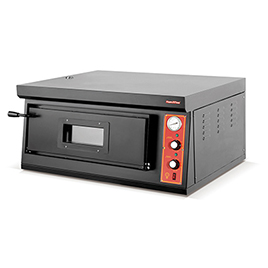
Dough Hydration and Toppings
Even the most advanced commercial pizza oven cannot compensate for incorrect dough formulation. Dough hydration, flour quality, fermentation, sauce moisture, cheese composition, and topping density all influence the required pizza oven temperature and time. Professional buyers should therefore evaluate equipment together with real production recipes rather than relying solely on laboratory specifications.
Higher hydration dough generally requires increased thermal energy to evaporate excess moisture while preserving crust structure. Dense toppings such as vegetables, seafood, or multiple cheeses also extend baking duration. These variables affect thermal recovery, production scheduling, and hourly output.
Reliable Manufacturers normally conduct application testing using representative recipes before shipment. This process reduces commissioning time after installation and minimizes commercial disputes.
- Verify dough hydration range.
- Confirm target crust thickness.
- Evaluate maximum topping weight.
- Measure internal food temperature.
- Document optimized pizza oven temperature.
- Validate repeatability across production batches.
From the supply chain perspective, this validation process becomes valuable documentation during customer acceptance and supports smoother after-sales service.
Recovery After Loading
One frequently overlooked purchasing criterion is thermal recovery after multiple pizzas enter the baking chamber simultaneously. When oven temperature drops excessively after loading, production capacity decreases rapidly, causing inconsistent crust color and uneven baking.
Professional procurement managers request thermal recovery curves from the Manufacturer before approving large-volume purchases. These engineering reports demonstrate how rapidly the oven restores the target pizza oven temperature after heavy loading.
Reliable Suppliers typically verify:
- Heating element recovery efficiency
- Insulation performance
- Airflow circulation stability
- Controller response accuracy
- Energy consumption consistency
- Continuous production capability
Commercial buyers should also evaluate several quality assurance indicators during supplier qualification.
| Evaluation Area | Recommended Verification | Commercial Risk |
|---|---|---|
| ISO 9001 | Current Certificate | Process inconsistency |
| CE Compliance | Technical File | Import restrictions |
| Factory Audit | On-site Verification | Production instability |
| Quality Control | Inspection Records | High defect rate |
| FAT | Performance Reports | Commissioning failure |
| Traceability | Batch Documentation | Warranty disputes |
Evaluating recovery performance alongside documentation significantly reduces sourcing uncertainty for distributors and engineering contractors.
Verification with Test Bakes
The most reliable method of confirming pizza oven temperature and time is comprehensive production testing before shipment. Experienced procurement professionals rarely approve equipment based solely on brochures or demonstration videos. Instead, they require measurable verification using actual recipes and operating conditions.
A complete validation program should include repeated baking cycles, temperature mapping, throughput measurements, product consistency evaluation, and detailed reporting. This approach provides objective evidence that the commercial pizza oven can meet production expectations.
Professional Manufacturers usually prepare standardized testing procedures covering:
- Multiple dough formulations
- Different topping combinations
- Continuous production simulations
- Energy consumption measurement
- Internal food temperature verification
- Surface color consistency evaluation
- Production capacity confirmation
- Operator training documentation
In addition to technical verification, international buyers should review the supplier’s Supply Chain management capability, Incoming Quality Control (IQC), In-Process Quality Control (IPQC), Final Quality Control (FQC), export documentation, packaging standards, spare parts inventory, and long-term service commitment. These factors determine whether a Supplier can support distributors throughout the equipment lifecycle.
Our company assists global importers with complete sourcing solutions, including engineering consultation, customized production, documented testing, compliance verification, and comprehensive export support. By combining validated pizza oven temperature performance with strong manufacturing management, buyers achieve lower operational risk, higher customer satisfaction, and improved long-term profitability.
Choose Proven Performance Instead of Procurement Guesswork
Select a Manufacturer that validates every pizza oven temperature and time parameter through documented testing, certified quality systems, and transparent audit processes. Contact our company today to source a dependable commercial pizza oven with confidence and long-term supply chain security.



 English
  Español
  Français
  Italiano
  日本語
日本語  Deutsch
  Русский
  한국어
한국어  简体中文
简体中文