
• Connect door leakage to recovery and safety
Commercial bakeries lose more than heat when an oven door leaks. Every unnecessary opening, weak seal, or poorly aligned frame increases oven chamber heat loss, extends recovery time, and can create uncomfortable radiant heat around the operator zone. In high-volume production, these small losses accumulate across hundreds of baking cycles and directly affect throughput, energy consumption, and product consistency. The problem becomes more serious where ovens operate continuously in a high-temperature, humid, grease-laden bakery environment and where several ovens share a common electrical supply and exhaust system. A practical solution must therefore connect door geometry, sealing materials, glazing, hinges, ventilation, and operator safety as one system. A professional Manufacturer and Supplier should evaluate the complete operating scenario rather than treating the door as an isolated replacement component.
For commercial bakery ovens, a practical target is a 2-layer or 3-layer insulated glass door, a high-temperature commercial oven door gasket rated around 300–500°C where appropriate, controlled closing pressure, and a frame designed to minimize thermal bridging. As an experienced commercial catering equipment Manufacturer, FLAMEMAX focuses on application-specific oven heat retention, safety, and serviceability.
Retailers, importers, wholesalers, and distributors can continue with the following engineering scenarios to see how actual operating conditions influence door selection, sealing, glazing, maintenance, and system configuration. These examples demonstrate how a professional Supplier can adapt commercial oven doors to different bakery requirements.
• Why does oven heat loss door design matter in continuous bakery production?
In a commercial bakery, an oven door is opened repeatedly for loading, unloading, inspection, tray adjustment, or product rotation. Each opening releases stored chamber energy, but the recovery performance after closing depends heavily on door construction. A weak frame, insufficient insulation, excessive glass temperature, or incomplete gasket compression can allow continuous heat leakage even when the door appears closed.
For a production line operating 8–16 hours per day, the door should be evaluated as part of the oven’s thermal system. The recommended oven heat loss door design considers the relationship between chamber temperature, door surface temperature, glass configuration, gasket compression, hinge geometry, and opening frequency. A well-designed door helps the oven return to its target temperature faster after loading.
- Typical baking chamber range: approximately 160–300°C, depending on product and oven type.
- Recommended gasket selection: high-temperature food-equipment sealing material matched to the chamber environment.
- Target gasket compression: commonly around 15–30%, subject to profile and material design.
- Door frame construction: insulated structure with minimized direct thermal bridges.
- Door closing action: consistent pressure around the complete perimeter rather than concentrated at one corner.
- Inspection interval: check sealing condition whenever routine oven maintenance is performed.
For importers purchasing multiple units, this approach also improves product consistency across an entire installation. A professional OEM and ODM Manufacturer can standardize door geometry while adapting insulation, glass, gasket profile, handle design, or external finish to the target market.
• Evaluate glass layers and visibility
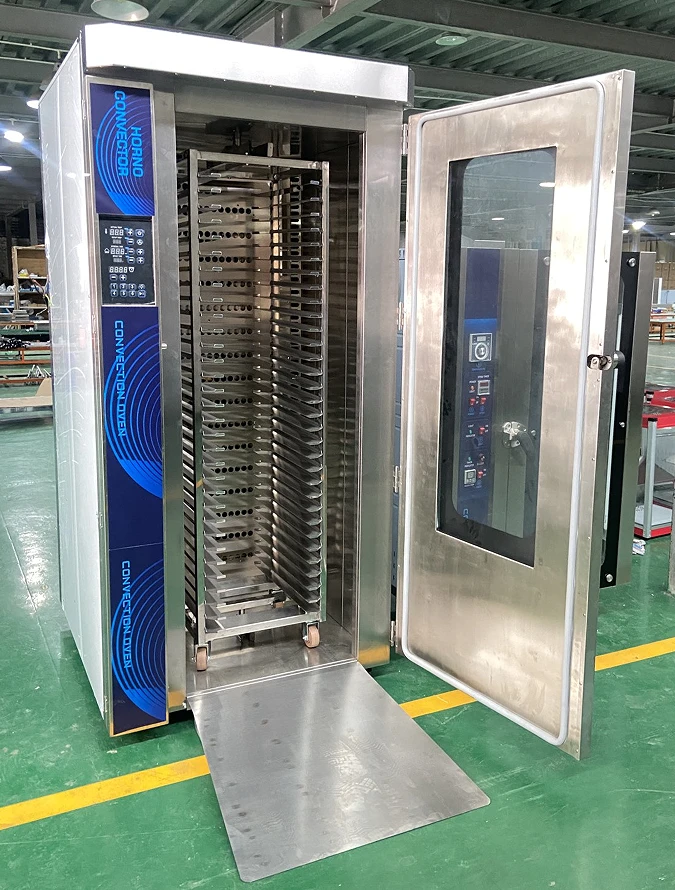
Glass is one of the most important components in a modern commercial bakery oven door because it must provide visibility without becoming an excessive thermal path. Single glazing can become extremely hot externally and generally offers less insulation than a properly engineered multi-layer assembly. For applications involving frequent product inspection, bakery oven double glazing provides a practical balance between visibility, thermal control, and cleaning convenience.
Double glazing normally uses separated glass layers to create an insulating space. The exact glass specification should be determined by chamber temperature, door dimensions, mounting structure, and safety requirements. For larger doors, mechanical stability becomes equally important because repeated heating and cooling can create dimensional changes and stress.
- Use heat-resistant safety glass appropriate to the oven temperature and door construction.
- Provide an insulating air gap or engineered thermal separation between glass layers.
- Keep glass mounting hardware away from unnecessary direct heat paths.
- Allow controlled expansion to reduce stress caused by repeated thermal cycling.
- Design removable glass sections where regular cleaning is expected.
- Maintain clear visibility without sacrificing the door’s thermal insulation performance.
In high-output bakeries, visibility also affects productivity. Operators can monitor browning and product expansion without opening the door, reducing avoidable heat release. For this reason, bakery oven double glazing is not simply a cosmetic upgrade; it can form part of a broader energy and workflow strategy.
• Check hinge alignment and closing pressure
A gasket cannot perform correctly if the door is mechanically misaligned. In daily bakery production, heavy doors experience thousands of opening and closing cycles, and hinges can gradually develop play or lose their original alignment. When one side closes more tightly than the other, the gasket may be compressed excessively in one area while remaining almost untouched elsewhere.
A commercial oven door should therefore be assessed through a mechanical closing sequence rather than only visual inspection. The hinge, latch, handle, frame, and gasket must work together. A professional Manufacturer can establish the required door closing force according to the door size and sealing profile.
- Inspect the door perimeter for uneven gaps after closing.
- Check whether the gasket shows continuous contact around the complete frame.
- Verify that the handle closes smoothly without excessive operator force.
- Check hinge mounting screws and brackets for loosening after repeated thermal cycles.
- Inspect for corner deformation, especially on large-format oven doors.
- Confirm that the door does not spring back open after normal closing.
For distributors serving demanding customers, adjustable hinge systems can be valuable because they simplify field correction. This is particularly useful for OEM projects where the same oven platform may be supplied with different door dimensions or decorative panels.
• Compare gasket profiles and replacement access
The commercial oven door gasket is a relatively small component, but its influence on thermal performance is substantial. In bakery environments, the gasket is exposed to heat, flour dust, moisture, cleaning chemicals, and repeated mechanical compression. A material that works well in a low-cycle application may deteriorate quickly in a continuous production kitchen.
Gasket design should therefore consider temperature, compression behavior, installation method, cleaning requirements, and replacement frequency. A profile that is permanently bonded into a complicated structure may reduce maintenance efficiency, while a properly retained replaceable gasket can reduce service downtime.
- Choose a gasket material compatible with the specified operating temperature.
- Match the gasket cross-section to the door-frame channel.
- Avoid excessive compression that permanently deforms the sealing material.
- Ensure the gasket remains mechanically secured during repeated door cycles.
- Provide accessible replacement points for service technicians.
- Replace gaskets when flattening, cracking, hardening, burning, or permanent deformation is visible.
For OEM and ODM projects, gasket dimensions can be standardized across a product family. This reduces spare-parts complexity for distributors and helps after-sales teams maintain consistent service procedures. A capable Supplier can also provide gasket samples or drawings for confirmation before mass production.
• Adapt door construction to humid and grease-laden bakery environments
Not every bakery has the same operating environment. Bread production may generate considerable flour dust, pastry production may involve butter and sugar residues, and food-service bakeries may combine high humidity with intensive cleaning. These conditions influence how the door frame, gasket channel, glass edge, handle, and fasteners should be selected.
Where the oven is installed close to steam-producing equipment, the surrounding high-humidity environment can accelerate contamination and affect cleaning routines. In production areas with aggressive detergents, exposed surfaces should be selected with corrosion resistance and cleanability in mind. The door assembly should avoid unnecessary dirt traps around corners and mounting points.
- Use corrosion-resistant external hardware where the installation environment requires it.
- Minimize deep grooves and inaccessible cavities around the door frame.
- Design glass retaining structures for practical cleaning access.
- Keep electrical components and wiring away from direct heat and cleaning exposure.
- Use suitable high-temperature insulation around heat-transfer zones.
- Specify cleaning procedures that do not damage gasket materials or glass seals.
This is where application engineering becomes more important than simply selecting an attractive door. A commercial kitchen equipment Manufacturer with production and testing capability can coordinate materials, mechanical construction, insulation, and assembly methods around the actual bakery environment.
• Integrate the oven door with the electrical and ventilation topology
The door does not operate independently from the oven’s control architecture. Modern commercial ovens can include heating elements, thermostats, temperature probes, fans, timers, digital controllers, lighting, and safety switches. In a typical installation, the oven may be connected to a single-phase or three-phase electrical supply, while several ovens can operate through a shared distribution panel and common exhaust or ventilation system.
Door design must account for the thermal environment surrounding these components. Excessive heat transfer through the door frame can raise the temperature near switches, wiring, terminals, or control assemblies. Proper insulation and heat-resistant electrical components help maintain stable operation.
- Use high-temperature electrical wires and heat-resistant electrical spare parts where required by the equipment design.
- Separate heat-producing zones from sensitive control components whenever the internal architecture permits.
- Provide adequate ventilation around control compartments according to the oven design.
- Ensure door-mounted lighting or switches are protected from excessive thermal exposure.
- Confirm electrical ratings according to the destination market and equipment specification.
- Coordinate door insulation with the oven’s overall airflow and cooling architecture.
For multi-oven installations, the system should also consider the effect of frequent door openings on room temperature and ventilation demand. A well-sealed door can reduce unnecessary heat release into the kitchen, supporting a more comfortable operator environment.
• Select different door solutions for deck ovens and convection ovens
Different oven technologies place different demands on the door. A deck oven generally relies heavily on stable chamber heat, while a convection oven uses a fan-driven airflow system to distribute heat around the product. Consequently, door leakage can have different operational consequences.
In a convection oven, a poorly sealed door may disturb the intended airflow pattern and increase the workload required to maintain the set temperature. In a deck oven, uncontrolled heat leakage can affect chamber stability and recovery. For both systems, the door should preserve the intended thermal boundary without creating unnecessary resistance for operators.
| Application | Typical Chamber Range | Door Priority | Recommended Approach |
|---|---|---|---|
| Small bakery / café | 160–250°C | Visibility and easy cleaning | Double glazing, accessible gasket, compact handle |
| High-volume bakery | 180–300°C | Recovery and durability | Insulated frame, robust gasket, reinforced hinges |
| Hotel production kitchen | 160–280°C | Safety and versatility | Multi-layer glazing, reliable latch, easy service |
| Industrial baking line | 180–320°C | Thermal stability and cycle life | Engineered sealing, heavy-duty hardware, controlled thermal bridges |
These values are engineering reference ranges rather than universal operating limits. Final specifications should always follow the oven model, heating system, applicable standards, and actual production conditions.
• Build an OEM and ODM door platform for distributors
Large importers and distributors often need more than a standard catalogue oven. They may require a private label, different control-panel styling, customized external colors, unique carton graphics, or a specific door configuration. An OEM and ODM production model allows these requirements to be integrated into a controlled manufacturing process rather than treated as informal modifications.
A Customizable commercial oven door can include logo placement, handle design, glass configuration, frame finish, gasket specification, control-panel integration, and packaging identification. The engineering objective is to preserve core safety and performance while adapting the visible and serviceable elements to the distributor’s market.
- Confirm oven dimensions and door opening before engineering approval.
- Define glazing layers and glass thickness according to the application.
- Confirm gasket profile, material, and replacement method.
- Specify handle and hinge cycle requirements.
- Define logo, color, control-panel, and carton requirements for OEM orders.
- Approve technical drawings or samples before mass production.
- Perform full inspection before packing and shipment.
For international distributors, this process reduces the risk of receiving visually customized products with inconsistent mechanical performance. A professional Supplier should maintain traceable production standards from material preparation through assembly, testing, inspection, and final packaging.
• Verify the door through testing before shipment
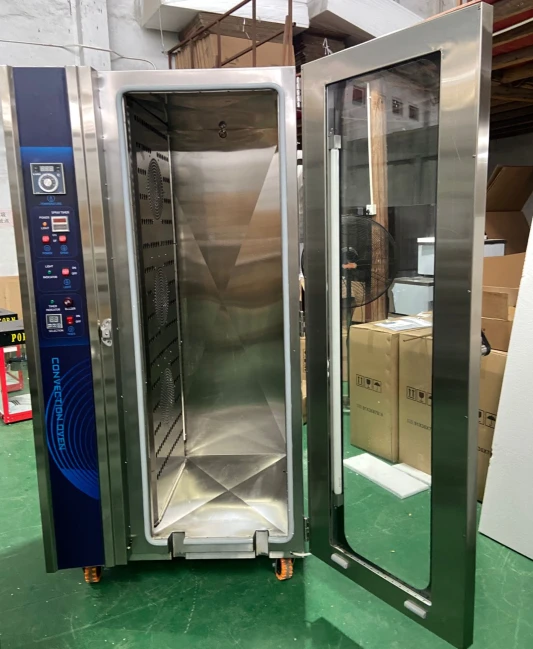
Engineering design is only valuable when the finished door performs consistently. For commercial catering equipment, inspection should cover dimensions, surface finish, glass installation, gasket positioning, hinge alignment, handle operation, electrical safety where applicable, and overall assembly quality.
A manufacturing facility serving international B2B customers can establish repeatable inspection checkpoints rather than relying only on final visual examination. This is particularly important for large orders, where a small dimensional deviation repeated across hundreds of units can create significant after-sales problems.
- Inspect door dimensions and frame squareness.
- Check glass for cracks, chips, stress marks, and incorrect positioning.
- Verify gasket continuity and compression around the perimeter.
- Operate the hinge and handle through repeated functional checks.
- Check fasteners, brackets, retaining clips, and frame connections.
- Inspect external surfaces for scratches, deformation, or coating defects.
- Complete 100% product inspection before packing when specified by the purchasing program.
- Use reinforced 5–7 layer cartons, wooden crates, or plywood packaging according to shipping requirements.
FLAMEMAX operates a large production facility supported by advanced cutting, bending, welding, polishing, assembly, and testing capabilities. This manufacturing structure allows the Supplier to connect engineering requirements with controlled production and international shipment preparation.
• Use serviceability to reduce lifetime operating cost
For a distributor, the purchase price is only one part of the commercial calculation. Door components that are difficult to service can increase technician labor, downtime, warranty claims, and spare-parts inventory. A better door platform considers the entire product life cycle from installation through routine maintenance and eventual component replacement.
The gasket, glass, handle, hinge, latch, and fasteners should be accessible enough for qualified service personnel to inspect and replace them without unnecessary disassembly. Clear technical documentation can further reduce troubleshooting time, particularly when equipment is exported to countries where local technicians support multiple brands.
- Maintain clear replacement procedures for the commercial oven door gasket.
- Keep critical spare-part dimensions standardized where practical.
- Provide technical support for door adjustment and gasket replacement.
- Document glass removal and installation procedures.
- Maintain consistent component identification across OEM product batches.
- Provide responsive after-sales technical support for international distributors.
This service-oriented approach is particularly relevant to importers operating their own warehouse and after-sales network. A capable Manufacturer can support the distributor with technical communication, spare-parts coordination, troubleshooting, and customization for future orders.
• Match the solution to purchasing scale and market positioning
A small café, a regional hotel supplier, and a national bakery-equipment distributor may all require commercial ovens, but their procurement priorities are different. Smaller buyers may prioritize easy operation and attractive appearance, while high-volume importers may focus on price stability, production capacity, spare parts, packaging, and long-term supplier reliability.
For a distributor competing in a price-sensitive market, a standardized door platform can control manufacturing cost while preserving essential thermal and safety characteristics. For a premium OEM program, additional glazing, upgraded finishes, customized controls, and enhanced documentation can create differentiation.
- Standard configuration: optimize cost, availability, and replacement simplicity.
- Mid-range configuration: combine double glazing, improved insulation, and reinforced hardware.
- Premium configuration: add advanced glazing, customized finishes, enhanced controls, and detailed documentation.
- OEM configuration: integrate private-label identity and approved customer specifications.
- ODM configuration: develop application-specific structural or functional improvements.
The correct solution is therefore not necessarily the most expensive door. It is the configuration that delivers the required thermal performance, durability, safety, appearance, serviceability, and purchasing economics for the target market.
• Why choose an experienced commercial kitchen equipment Manufacturer?
Commercial oven door performance is the result of coordinated engineering rather than one isolated component. A gasket cannot compensate for a distorted frame, premium glass cannot solve poor hinge alignment, and a strong hinge cannot correct inadequate insulation. The Manufacturer must understand how mechanical, thermal, electrical, operational, and service requirements interact.
FLAMEMAX brings more than 16 years of commercial kitchen equipment manufacturing experience, a 15,000 m² production workshop, ISO9001 and SGS certifications, advanced production equipment, semi-automated assembly lines, professional testing facilities, and international service resources. Its engineering and production teams can support standard products as well as Customizable OEM and ODM requirements.
- 15,000 m² production workshop for commercial catering equipment.
- 50+ sets of advanced production facilities.
- 10+ semi-automated assembly production lines.
- 10+ professional testing facilities.
- 100% product inspection before packing and shipment.
- Flexible logo, carton, control-panel, and appearance customization.
- 24-hour online technical and after-sales support.
- Free warehouse and loading coordination for international shipping.
For importers and distributors evaluating an oven heat loss door design, the key question is not simply whether a door looks modern. The practical question is whether its glazing, sealing, frame, hinge, electrical environment, operating cycle, cleaning conditions, and service strategy are correctly matched to the application. That integrated approach is what separates a professional equipment Manufacturer from a basic product Supplier.
• Conclusion: engineer the door around the application
A reliable commercial oven door should protect heat, support safe operation, simplify cleaning, withstand repeated cycles, and remain serviceable throughout the equipment’s working life. For OEM, ODM, and wholesale projects, FLAMEMAX can develop application-matched solutions. Importers and distributors can send specifications or inquiry requirements to [email protected] for technical evaluation.


 English
  Español
  Français
  Italiano
  日本語
日本語  Deutsch
  Русский
  한국어
한국어  简体中文
简体中文