
Why Does a Commercial Gas Range Get Dirty, Lose Flame Quality, and Fail When You Need It Most?
Problem: Grease, carbon deposits, blocked burner ports, unstable pilots, and inaccurate thermostats gradually reduce cooking performance. Agitation: Poor commercial gas range cleaning increases fuel consumption, uneven heating, ignition problems, and the risk of grease-related fire. Solution: A documented cleaning and inspection program should combine daily operator care with scheduled commercial gas range maintenance. For restaurants, hotels, central kitchens, and foodservice contractors, the goal is not simply a clean appliance. It is stable combustion, reliable ignition, correct temperature control, and long service life.
What Is the Best Standard for Commercial Gas Range Cleaning and Maintenance?
The best practice is a preventive program covering burner and pilot condition, grease removal, flame quality, doors, thermostats, gas connections, and wear-prone commercial gas range parts. Our company applies factory-based inspection methods to help customers select reliable, Customizable solutions with the correct gas configuration, burner capacity, controls, and replacement components.
Cleaning removes contamination; maintenance verifies performance. The following sections explain what experienced technicians check, why each inspection matters, and which technical indicators should be recorded before a small defect becomes an expensive kitchen shutdown.
Technical Guide to Commercial Gas Range Cleaning and Preventive Maintenance
Burner and Pilot Inspection
The burner system is the first area to inspect during commercial gas range maintenance. Food debris, grease, carbon, and cleaning chemicals can accumulate around burner ports, venturi openings, pilot assemblies, and air shutters. These deposits can restrict gas-air mixing and produce an uneven flame.
Start with the appliance isolated from the gas supply according to the manufacturer’s service procedure. Remove removable burner components and clean them using methods approved for the material. Do not enlarge burner ports with drills, wires, or other tools. A modified port can change the designed gas flow and combustion characteristics.
The pilot should ignite consistently and remain stable. Inspect the pilot orifice, ignition electrode, thermocouple or flame-sensing device, and mounting position. A weak pilot may indicate contamination, incorrect gas pressure, a damaged component, or restricted gas flow rather than simply a dirty tip.
| Inspection Item | Normal Target | Warning Sign |
|---|---|---|
| Burner ports | Clean and unobstructed | Yellow tips, lifting flame, uneven flame |
| Pilot flame | Stable and correctly positioned | Weak, intermittent, or easily extinguished |
| Gas pressure | Within appliance nameplate/manufacturer specification | Pressure outside specified range |
For an international Manufacturer or Supplier, this inspection also protects component compatibility. Natural gas and LPG/propane systems may require different orifices, regulators, valves, and burner configurations. Never interchange these components without confirming the appliance specification.
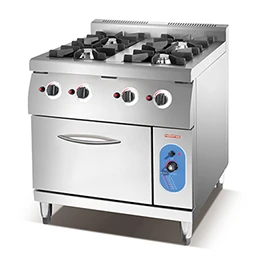
Spillage and Grease Removal
Grease is one of the most persistent problems in commercial kitchens. It does not remain only on the cooking surface. It can migrate into burner wells, drip trays, control areas, cabinet interiors, and ventilation paths. When grease contacts hot surfaces, it can carbonize and become significantly harder to remove.
Effective commercial gas range cleaning should therefore follow a defined sequence. First remove loose food particles. Then remove grease from accessible surfaces using a suitable commercial degreaser. Finally, rinse or wipe according to the chemical manufacturer’s instructions and allow components to dry completely before operation.
- Remove spills promptly before they carbonize.
- Clean grates, drip trays, burner caps, and cooking surfaces at the recommended frequency.
- Inspect hidden areas beneath removable components.
- Keep gas openings and burner ports free from cleaning residues.
- Check for accumulated grease around valves and control components without flooding the assembly with liquid.
A common maintenance mistake is using excessive water or aggressive chemicals around gas controls. Cleaning should never compromise electrical ignition systems, thermostats, valve assemblies, insulation, or corrosion-sensitive surfaces. Stainless steel also benefits from the correct cleaner because chloride-containing chemicals can contribute to pitting corrosion.
For high-volume kitchens, cleaning frequency should reflect actual cooking load. A range used continuously for frying and high-fat cooking requires more frequent grease inspection than a lightly used preparation line. A practical maintenance log should record the date, technician or operator, areas cleaned, defects found, and corrective action.
Flame-Quality Checks
Flame appearance is a useful field indicator of combustion quality, but it should not be treated as the only diagnostic method. A properly adjusted burner normally produces a stable flame consistent with the appliance’s approved gas type and burner design. Significant yellowing, excessive flame lift, flame rollout, soot formation, or repeated flame failure requires investigation.
Technicians should verify the appliance’s gas type, inlet pressure, burner orifice, primary-air adjustment, and combustion condition. These variables interact. Replacing a burner orifice with an incorrect size can change the gas input. Incorrect primary air can also affect flame stability.
| Flame Condition | Possible Cause | Recommended Action |
|---|---|---|
| Stable blue flame | Combustion operating normally | Continue scheduled inspection |
| Persistent yellow flame | Incorrect air/gas mixture, contamination, or supply issue | Inspect burner, air adjustment, and gas supply |
| Flame lifting | Excessive primary air or incorrect gas condition | Check manufacturer specifications |
| Soot or carbon deposits | Incomplete combustion | Stop relying on visual cleaning alone; perform technical diagnosis |
Where required by local regulations and service procedures, qualified personnel should use appropriate instruments to verify combustion performance. NFPA 96 is particularly relevant to commercial cooking operations because it addresses ventilation and fire protection requirements. Appliance installation and gas-safety requirements must also follow applicable local codes and the relevant product standard, such as ANSI Z83.11/CSA 1.8 where applicable.
Our company treats flame quality as a performance issue, not simply an appearance issue. This approach helps a Manufacturer or Supplier deliver equipment that remains stable under real commercial cooking loads.
Door and Thermostat Checks
Temperature control problems are often mistaken for burner problems. In reality, a damaged oven door gasket, misaligned hinge, faulty thermostat, or poorly calibrated temperature sensor can cause long recovery times and inconsistent cooking results.
During commercial gas range maintenance, inspect the oven door for alignment, hinge condition, latch operation, and gasket compression. Look for gaps that allow excessive heat loss. A damaged gasket can increase burner cycling and fuel consumption because the oven must work harder to maintain its target temperature.
The thermostat should be checked against an appropriate reference instrument following the appliance manufacturer’s procedure. Do not assume that the temperature shown on a control knob is the actual oven temperature. Commercial cooking equipment can exhibit differences between setpoint, measured air temperature, and food temperature because of load, recovery, sensor location, and airflow.
- Check door alignment and gasket sealing.
- Inspect hinges for wear or deformation.
- Verify thermostat response during heating and recovery.
- Compare indicated temperature with a suitable calibrated reference.
- Investigate excessive temperature overshoot or slow recovery.
When replacement is necessary, use correctly specified commercial gas range parts. Thermostats, valves, igniters, thermocouples, gaskets, burner assemblies, and control components are not automatically interchangeable simply because they appear similar. Correct part number, gas type, temperature range, mounting configuration, and certification should be verified before installation.
For OEM and project customers, our factory can support Customizable configurations according to application requirements, including burner arrangement, gas configuration, control options, dimensions, and selected service components. This is particularly valuable for distributors and foodservice contractors who need consistent specifications across different commercial kitchen projects.
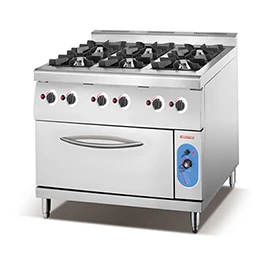
Build a Preventive Maintenance Schedule, Not Just a Cleaning Routine
A professional maintenance program should divide responsibilities according to frequency. Operators can handle routine surface cleaning and visual checks, while qualified service personnel should perform gas-system inspection, pressure verification, combustion diagnosis, and component replacement where required.
- Daily: Remove food debris and grease from accessible cooking surfaces, grates, and drip areas.
- Weekly: Inspect burner ports, pilot condition, removable components, and visible grease accumulation.
- Monthly: Review flame quality, door sealing, thermostat behavior, and component condition according to operating intensity.
- Periodic service: Verify gas-system performance and safety devices using the manufacturer’s procedures and applicable local requirements.
This approach reduces reactive repairs. It also creates useful service data. If a burner repeatedly requires cleaning, if a thermostat continually drifts, or if a pilot repeatedly fails, the maintenance record can reveal a pattern before the problem becomes a production interruption.
Why the Right Commercial Gas Range Parts and Supplier Matter
Cleaning cannot compensate for incorrect or worn components. A restricted regulator, deteriorated gasket, incorrect burner orifice, weak ignition component, or faulty thermostat can continue to cause performance problems after the appliance looks perfectly clean.
For this reason, buyers should evaluate a Supplier not only on purchase price but also on technical documentation, component traceability, gas configuration support, spare-parts availability, and after-sales service. A capable Manufacturer should be able to identify the correct commercial gas range parts and provide installation or service information appropriate to the model.
For distributors and commercial kitchen contractors, Customizable equipment can also reduce unnecessary modifications at installation. Specifying the correct gas type, burner capacity, working dimensions, controls, and service-access requirements before production is generally more efficient than modifying equipment after delivery.
Final Maintenance Checklist
Reliable commercial gas range cleaning starts with grease control, but professional reliability requires much more: clean burners, stable pilots, correct combustion, effective grease removal, sound door sealing, accurate temperature control, and compatible commercial gas range parts. Work with our factory for Customizable commercial ranges, technical support, and long-term maintenance planning. Contact our team to discuss your gas type, configuration, and project requirements.


 English
  Español
  Français
  Italiano
  日本語
日本語  Deutsch
  Русский
  한국어
한국어  简体中文
简体中文